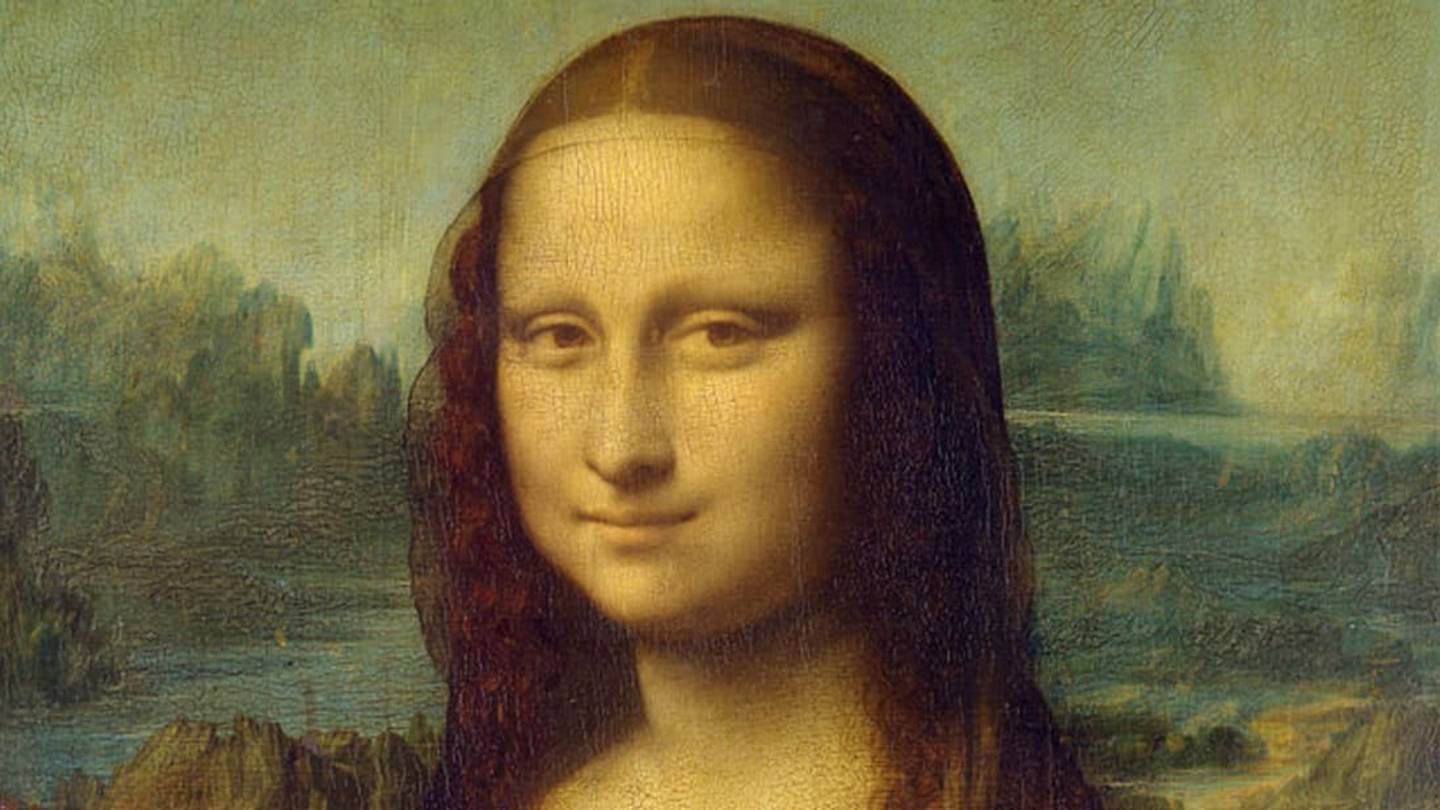
While some claim that Leonardo da Vinciâs most famous painting is a self-portrait of the artist himself in drag, research has concluded it is likely a portrait of a woman named Lisa Gherardini, a member of a prominent Florentine family and wife of a wealthy silk merchant. Leonardoâs father allegedly knew Gherardiniâs father very well, and the painting was possibly commissioned by him.
Da Vinciâs other most famous workâwhich can be seen in the Convent of Santa Maria delle Grazie in Milan, Italyâoriginally included Jesusâ feet. But in 1652, while installing a doorway in the refectory where the painting is on view, builders cut into the bottom-center of the mural, lopping off Jesusâ feet.
The small town depicted in Vincent van Goghâs The Starry Night is Saint-Rémy-de-Provence in the south of France. Van Gogh painted the work while he was a patient at the Saint-Paul-de-Mausole, a psychiatric hospital in Saint-Rémy. Presently, the hospital has a wing named after the painter.
The marble slab that was eventually turned into the sculpture of David by Michelangelo in 1504 was cut 43 years earlier for an artist named Agostino di Duccio, who planned to turn it into a statue of Hercules . Di Duccio abandoned his sculpture, which was originally to be installed in a Florentine cathedral, and the marble was unused for 10 years until another sculptor, named Antonio Rossellino, decided to work with it. Rossellino also abandoned his work because he found marble too difficult to sculpt, and eventually Michelangelo began work on his sculpture in 1501.
Michelangelo painted the fresco ceiling of the Sistine Chapelâincluding the most famous panel called âThe Creation of Adam,â which depicts God giving life to the first manâentirely standing up. The artist invented a series of scaffolds specially designed to attach to the chapel walls with brackets so he and his assistants could be close enough to the ceiling to reach above their heads to work and paint.
There are technically five separate versions of Expressionist artist Edvard Munchâs most famous work, The Scream . The first two, from 1893 and created with tempera and crayon on cardboard, are located in the National Gallery in Oslo and the Munch Museum, respectively. A privately owned third version created in 1895 with pastels recently sold for nearly $120 million at auction. Yet another version from 1895 is a black and white lithograph. A final version, done in 1910 by Munch due to the popularity of the previous incarnations, is also held in the Munch Museum, and it made headlines in recent years for being stolen in 2004 and recovered in 2006.
Picassoâs abstract depiction of five Barcelona prostitutes was deemed immoral when it debuted at the artistâs studio in 1907. Picasso created over 100 preliminary sketches and studies before setting his vision down on canvas, and in previous incarnations the figure at the far left was a man .
Though there are now dozens of casts of Auguste Rodinâs famous sculpture The Thinker around the world, it had a much smaller origin. Rodin originally created a 70cm version in 1880 as the central component to a bigger sculptural work called âThe Gates of Hell.â Inspired by Danteâs Inferno , the pieceâfirst called The Poet âwas conceived as a representation of Dante himself. The re-dubbed sculpture was exhibited on its own in 1888, then was enlarged to the depiction we know it today in 1904.
Much like the Mona Lisa , the subject of Johannes Vermeerâs Girl with a Pearl Earring has been highly contestedâbut for the most likely candidate, Vermeer didnât have to look far. The model for his painting is thought to be his daughter Maria.
Another famous painting with interesting models is Grant Woodâs American Gothic , which can be seen on view in the collection of the Art Institute of Chicago. To depictâfor better or worseâthe ideals of rural America, Wood wanted to use his mother, Hattie, as a model for his painting. Wood determined that standing for so long would be far too exhausting for his mother, so he had his sister wear his motherâs apron and pin while posing. For the male subject in the painting, Wood used his 62-year-old dentist.
Another painting in the collection of the Art Institute of Chicago is Edward Hopperâs Nighthawks . Hopper allegedly based the painting on a diner that was located in New York Cityâs Greenwich Village in an area where Greenwich Street meets 11th Street and 7th Avenue called Mulry Square. But he actually based the painting on an all-night coffee stand. âI simplified the scene a great deal and made the restaurant bigger,â he said. âUnconsciously, probably, I was painting the loneliness of a large city.â
Though the notoriously plucky artist Salvador Dali sought to never explain his own work, he has said that the idea for his iconic melting clocks came from chunks of Camembert cheese he observed melting in the sunâalthough he may have been joking.
Abstract Expressionist Jackson Pollock is known for his many drip paintings, all of which he created by placing the canvases horizontally on the floor of his backyard studio and carefully dripping layers of paint onto them. For Autumn Rhythm (Number 30) , Pollock created the work using non-traditional items like sticks, trowels, and knives.
Dutch artist Piet Mondrian moved to New York City in 1940, and would base his famous work Broadway Boogie Woogie on the iconic grid layout of the cityâs streets.
Andy Warholâs 1962 Pop Art depiction of a Campbellâs Soup can actually comes in a set of 32 silkscreened canvases, each representing the 32 separate soup varieties that the company sold at the time. Warhol never gave instructions on how to display them, so the Museum of Modern Art arranged them chronologically in the order in which the soups were introduced by the Campbell's.
Loading recommendations... Please wait while we load personalized content recommendations