More than 50 years after her death, Sylvia Plathâthe American writer, poet, and scholar who committed suicide in 1963 at the age of 30âremains as relevant as ever. Scholars discuss the authorâs work at academic conferences, celebrities like Lena Dunham spark Twitter dialogues about her seminal 1963 novel The Bell Jar , and a character in 2017âs Spider-Man: Homecoming even dons a T-shirt emblazoned with Plathâs image.
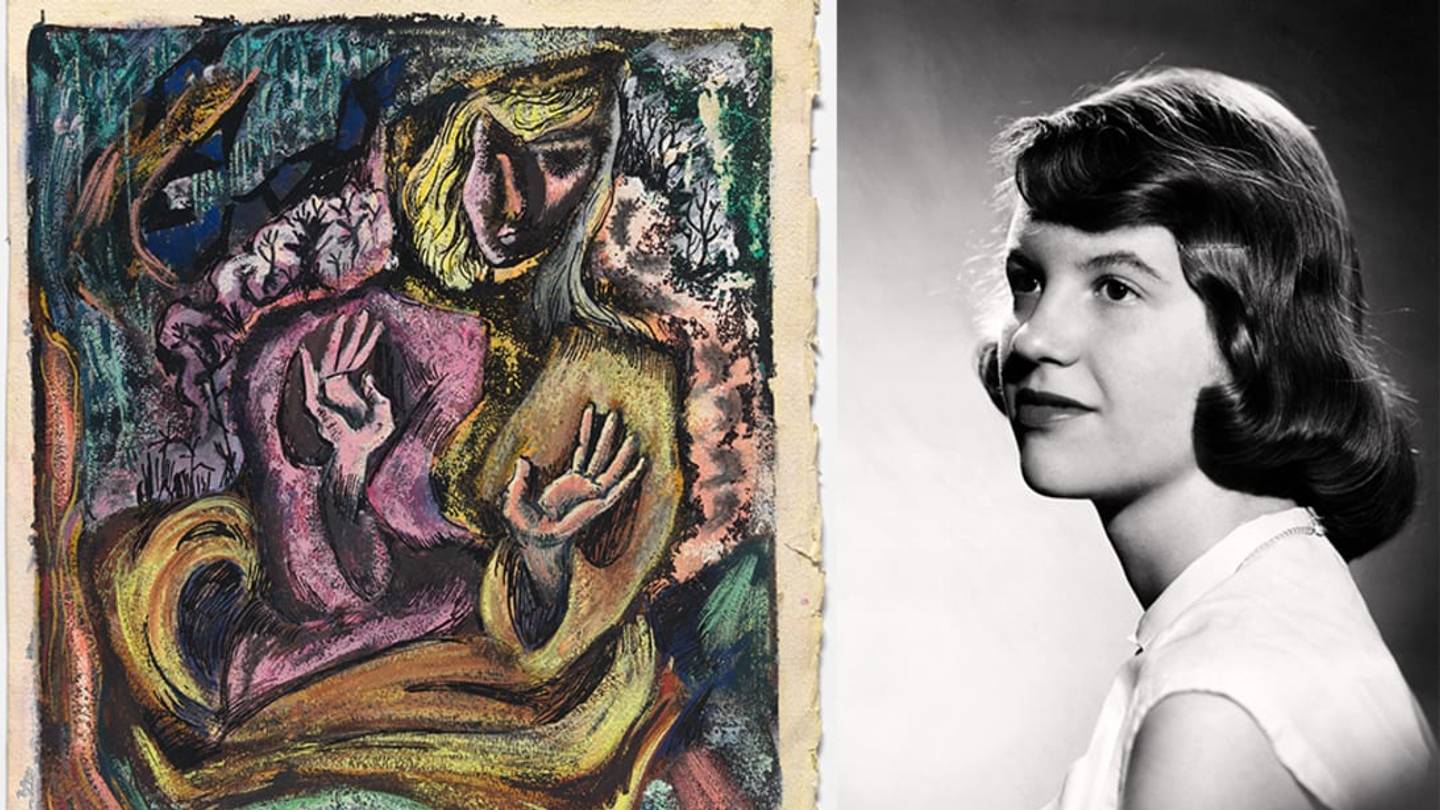
Thatâs why Dorothy Moss, curator of painting and sculpture at the Smithsonian National Portrait Gallery, became inspired to co-organize an exhibition devoted to Plathâs life and workâbut with a twist: â One Life: Sylvia Plath ,â which opened in June and runs until May 20, 2018, focuses not on Plathâs writing, but on her visual artwork.
The popular narrative of Plathâs life focuses on her literary genius, her mental illness, and her tumultuous marriage to English poet Ted Hughes. But the authorâs lifeâand talentsâwere far more complex, Moss tells Mental Floss. In fact, Plath, who attended Smith College in Northampton, Massachusetts, had originally intended to major in studio art.
âI think that once you know that she drew and painted and sketched constantly as a child, and realize that she went to college to major in art, youâll start seeing how vivid her descriptions are, and how beautifully she put visual images into words,â says Moss, who co-curated âOne Lifeâ along with Karen Kukil, associate curator of rare books and manuscripts at Smith College. âI was very curious in her interest in the visual arts, and how that translated into her writing,â Moss says.
âOne Lifeâ features a selection of Plathâs self-portraits, collages, and drawings, culled from the Plath archives at Smith College, Indiana University's Lilly Library, and private collections. Completed at various stages of her life, collectively, they present a woman âwhoâs filled with joy as much as she was filled with moments of darkness,â Moss says. âShe had a very wonderful, whimsical sense of humor. She also understood how to explore the depths of her fears and anxieties in writing and in images.â
In addition to Plathâs artwork, the exhibition also includes letters, manuscripts, photos, and personal items like the author's writing desk, which was constructed by Hughes from a rough-cut piece of elm wood; her childhood ponytail, lopped off by Plathâs mother when she was 13 years old; and her typewriter, âas a reminder of the way that writing was a physical process," Moss explains. Together, they provide a nuanced view of an author who's commonly viewed as a dark, brooding intellectual.
Perhaps best exemplified by The Bell Jar âs famous fig tree passageâin which character Esther Greenwood likens her many prospective futures to the treeâs branchesâPlathâs work is often preoccupied with themes of self-identity. Her letters and journals are characterized by her efforts to âsynthesize the various parts of herself,â Moss says, as is her artwork.
Contrary to popular belief, these parts arenât necessarily tragic: âI really wanted her life to be seen as full, and not to be overshadowed either by her tragic death or her marriage to Ted Hughes,â Moss says. "She was much more than that."
Loading recommendations... Please wait while we load personalized content recommendations