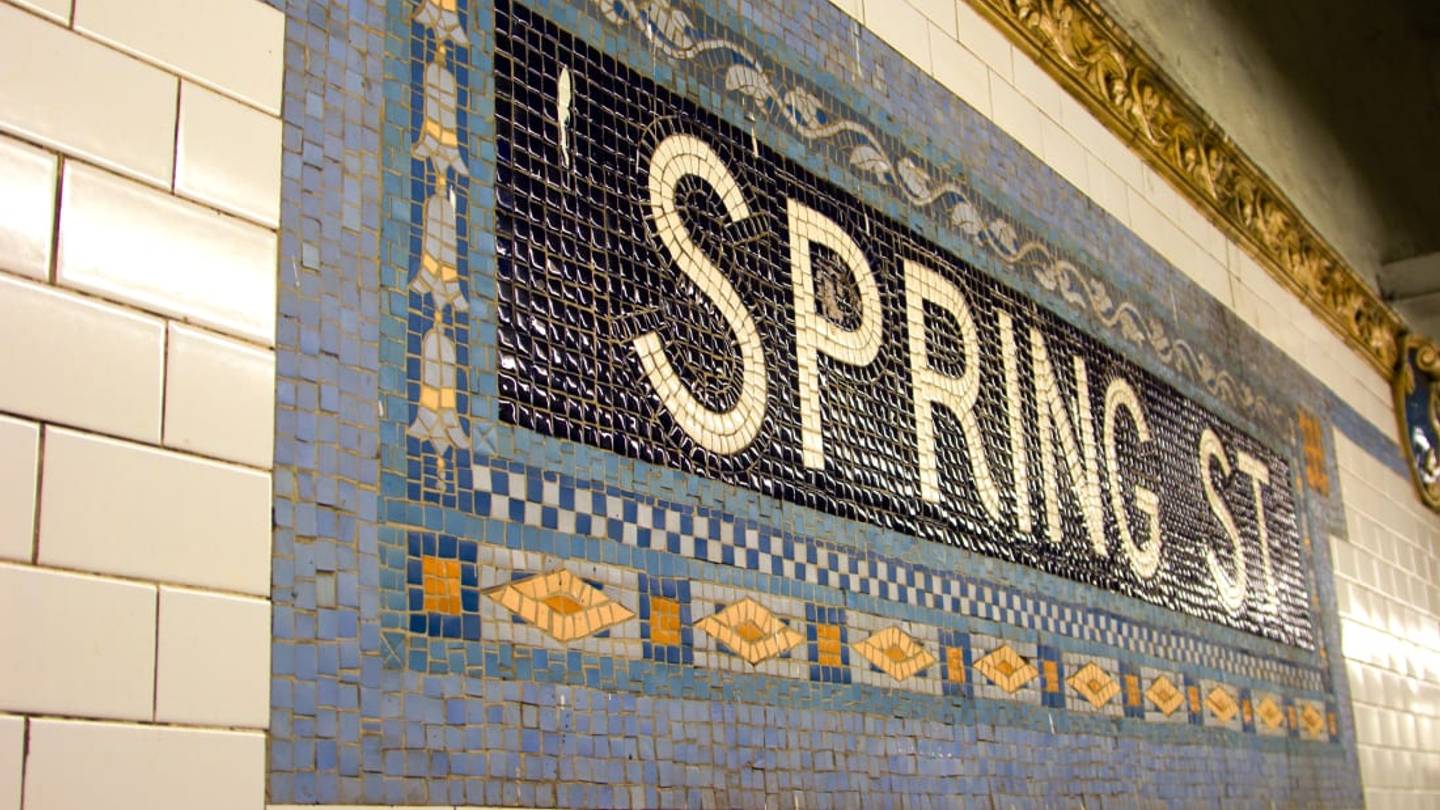
The aesthetic appeal of New York City's subway system is often hidden behind a layer of grime or simply ignored by commuters. Philip Ashforth Coppola has been admiring those finer points of public transit for more than 40 years.
The New Jersey-based artist began sketching and researching the subwayâs interior in 1978, Atlas Obscura reports. His pen drawings are in black and white, but Coppola notes the exact colors and the historic significance behind each. The beaver plaques at the Astor Place station, for example, represents real estate mogul John Jacob Astor, who first made his fortune in the fur trade.
âIâve spent a lot of years on it,â he says in the 2005 documentary One Track Mind (also the title of his 2018 book ). âBut I havenât accomplished that much.â The former art student is selling himself short: Coppola has drawn at least 110 of the cityâs 472 stations, resulting in 2000 sketches spanning 41 notebooks.
In an interview with WNYC, Coppola admitted that he wasnât a train enthusiast as a child. âWhen I was a kid, I liked to draw pictures and tell stories or write them down,â he says. âThat sort of ... filed into this new adventure.â
Coppola sees the drawings as a way to preserve the subway system's overlooked details. âThe idea is to make a record of what weâve got, before more of it is lost," he says.
Even irritable commuters realized the significance of his endeavors. âPeople were just thunderstruck when they saw [Coppolaâs] artwork,â says Jeremy Workman , the documentary's director. âIt reminded them of art they had seen themselves and maybe didnât notice. We thought that was a powerful message: Reminding people of the beauty thatâs right in front of their eyes.â
Loading recommendations... Please wait while we load personalized content recommendations