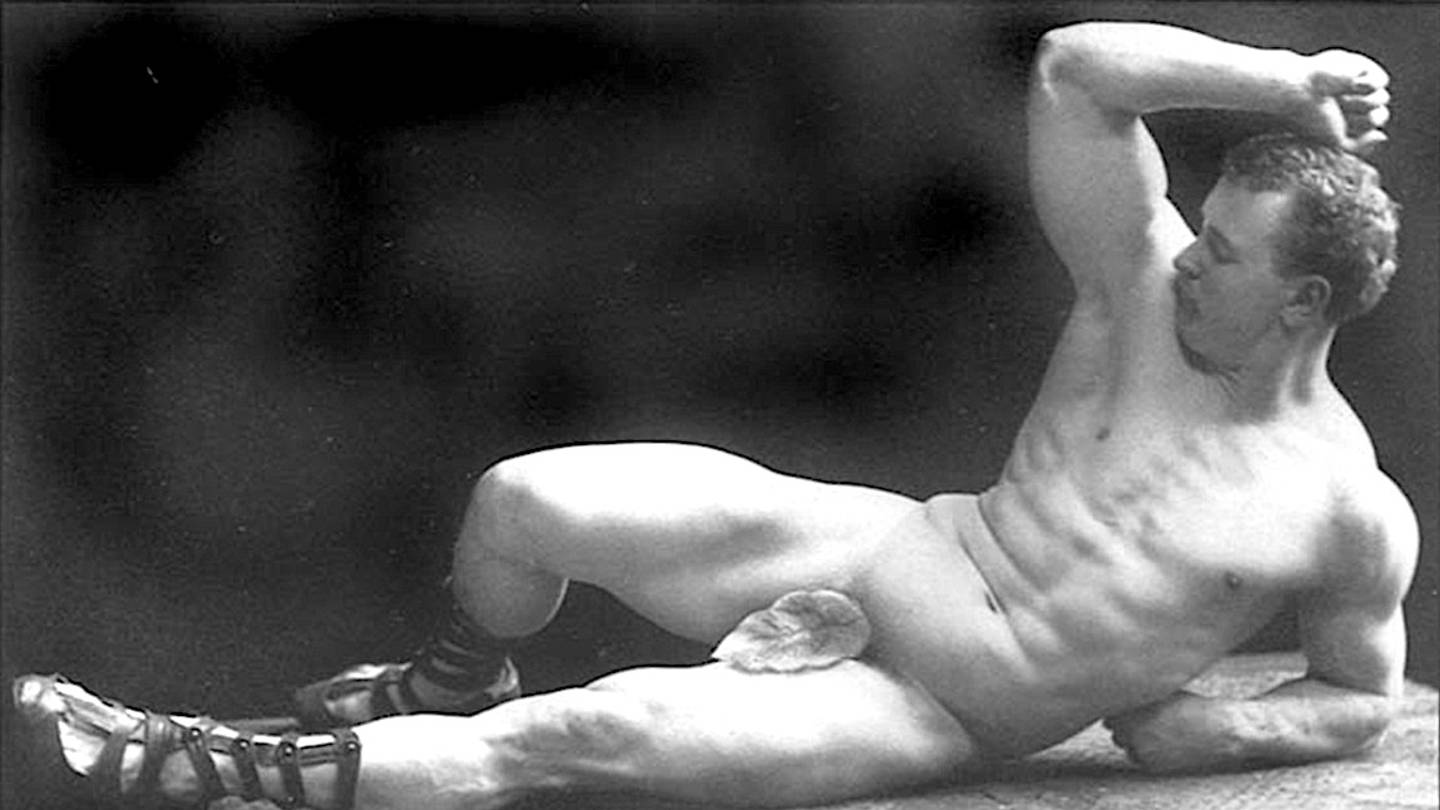
The London strongman scene was never the same after Eugen Sandow . Now called the âfather of bodybuilding,â Sandow crushed his weightlifting competitors, revolutionized the way the world viewed personal fitness, and was arguably the most famous athlete in the world in the late 19th and early 20th centuries. His body was compared to a Greek godâsâso itâs no real surprise that a statue was made to immortalize it. But not everyone was in favor of the final product.Â
One of Sandowâs fans was Professor Ray Lankester, a curator at the British Museum âs South Kensington building (now the Natural History Museum). Lankester wanted to show the public that anyone could look like the stunning marble statues in the British Museum if they dedicated themselves to a scientific weightlifting program like Sandow did. Thus, he had the idea to create a cast of Sandowâs body. âIt furnishes a striking demonstration of what can be done in the way of perfecting the muscles by simple means,â he reportedly said .Â
He also saw such a statue as representing âa perfect type of a European man.â Reflecting popular eugenicist sentiment at the time, Lankesterâs larger vision for the museum was to put together a series of statues all demonstrating a âperfect specimenâ of each race. So when the Sandow statue went up in 1901, after a £55 commission (roughly £8,300 or $10,500 today) and a monthâs worth of labor , it was actually titled Homo Europiensis.
Reception of the statue was immediately mixed. Some complained about the museum lowering its standards by displaying the image of a popular performer, seeing it as crass and unprofessional. Others criticized the statue itself, calling it a âmonstrosityâ because of its flaws. The cast had been taken in small sections, and in the end some of those sections didnât fit together perfectly. Some were even distorted in size because of Sandowâs movement during the casting process. But these flaws reflected the intense physicality of creating the statue, during which Sandow had to hold his muscles fully flexed for upwards of 15 minutes while the plaster set.
âI should like to say that I regard it as the greatest feat of endurance I have ever performed,â Sandow said , according to a 1939 Iron Man Magazine article. âThe strain is awful. One feels as if he is being suffocated, especially when the mold of the face is being taken ⦠Of course I was only too glad and proud to do it. I grudge no trouble and time in the cause of physical culture. However, I donât think Iâd go through with it again for any amount of money.â
Unfortunately for Sandow, his efforts resulted in his statue being on display for just three months. Museum guests were shocked by viewing a famous living manâs exposed genitalia and buttocks. Lankester defended the statue in the name of science, and a fig leaf was even commissioned to cover Sandowâs front. But it wasnât enough. The statue was relegated to the museumâs basement, where it would forever stay.Â
Sandowâs envied form wasnât completely lost to time, however. In the 1990s, Arnold Schwarzenegger , himself a renowned former bodybuilder, had the museum make a copy of the statue for his personal memorabilia collection. And all over the world, bodybuilders train in hopes of winning the ultimate prize: the Sandow , a gilded statuette of Eugen Sandow awarded to Mr. Olympia. His statue may have been too explicit for Victorian eyes, but Sandow remains a legend in the history of fitness.Â
Loading recommendations... Please wait while we load personalized content recommendations