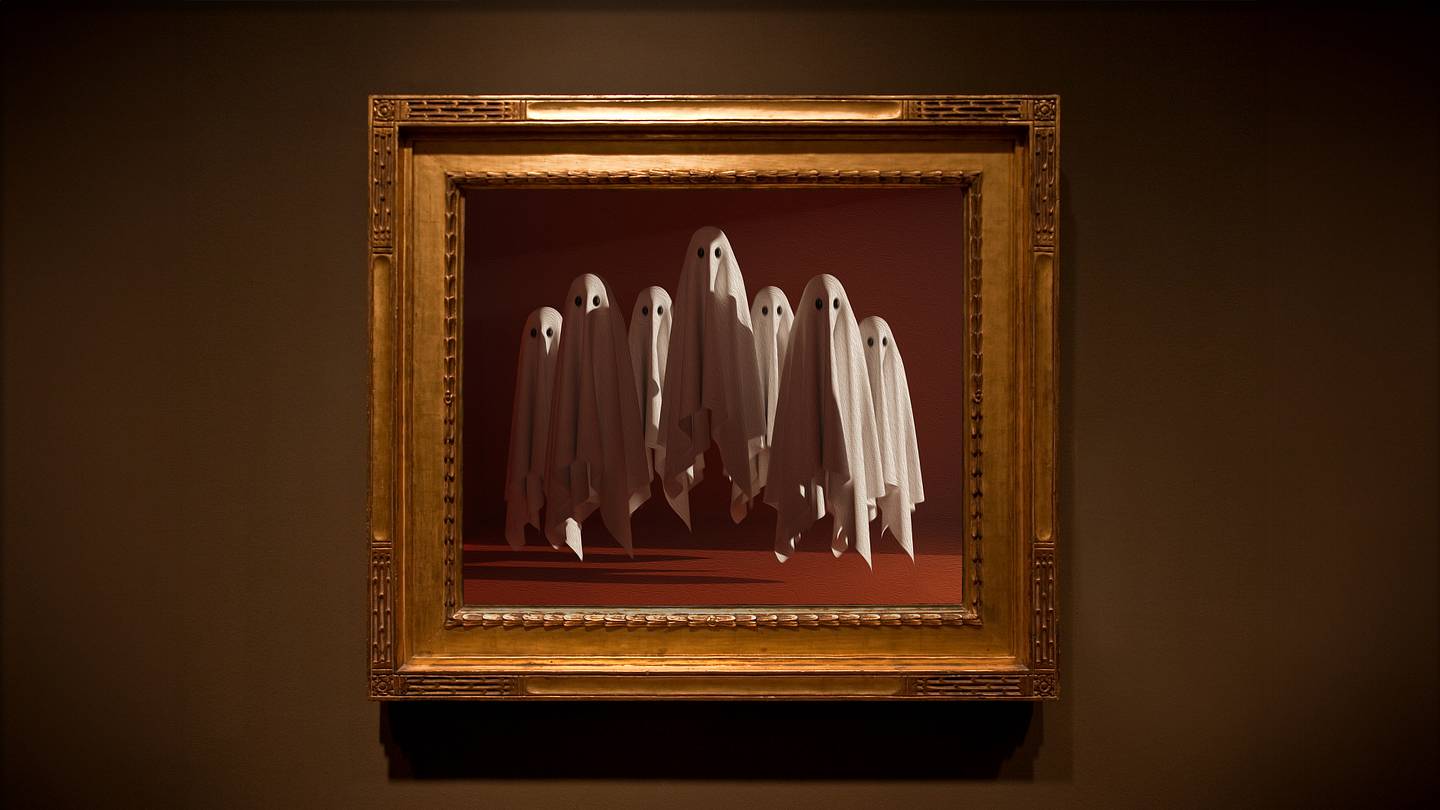
Many artists have explored themes of the supernatural and visions of ghosts and haunted places in their work. Some, like Lizzie Siddalâs The Haunted Wood (1856), show these supernatural forms directly, while others, like William Holman Huntâs The Haunted Manor (1849), take a more oblique approach to the portrayal of haunted places. But what about when an artwork itself is said to be haunted? The 2019 film Velvet Buzzsaw explored the idea of haunted art in its central storyline, but a number of real-life works also carry legends of supernatural disquiet. Here are a few of them.
The Parthenon Sculptures , also known as the Elgin Marbles, were taken from Athens to London in the 19th century by a diplomat named Lord Elgin; they remain at the British Museum, despite calls for their return to Greece. Among them is a caryatid from 421â406 BCE that originally stood at the Acropolis with five similar statues, until Elgin removed it . The story goes that the caryatid was heard weeping in the box in which she was transported from Athens to London. Noah Angell, who began looking into the museumâs hauntings in 2016, told The Economist in 2020 that the stories surrounding the caryatid and other objects taken from countries around the world âseem to suggest that the objects themselves are restless.â
Jean-Gabriel du Theil was a French politician who served Louis XV of France as his secretary for foreign affairs. He was involved in the Treaty of Vienna in 1738, in which France was given control of the Duchy of Lorraine. This portrait , painted by artist Jacques André Joseph Aved between 1739â40, shows du Thiel signing that treaty; it now hangs in the Cleveland Museum of Art in Ohio. The portrait is rumored to be haunted by the spirit of the man it depicts, who is said to have been seen looking at his own image in the gallery before disappearing into it.
Another potentially haunted painting in Clevelandâs collection is Jean-Honoré Fragonardâs A Boy in a Red-lined Cloak , which dates back to the 1780s. Itâs been suggested that the subject of the painting is Fragonardâs son, Alexander Evariste Fragonard (though this has never been officially confirmed). The painting is believed to be haunted because it sometimes moves from one exhibit case to another without explanation, leading some to believe itâs moving of its own accord.Â
The Louvre has reportedly seen its fair share of supernatural occurrences over the centuriesâand, not surprisingly, thereâs a haunted painting in the mix: Jacques-Louis Davidâs unfinished portrait of Napoleon, painted in 1797â98. The legend goes that a soldier who fought in the Napoleonic Wars was a great admirer of the emperor, and longed to see his portrait; unfortunately, he died at the Battle of Waterloo before he had the opportunity. Itâs said that his ghost lingers around the portrait in the Louvre. Some visitors claim to have seen him give a military salute, while other say theyâve spotted him in tears.
Lady Ossington was a Victorian entrepreneur who built a âcoffee palaceâ in the town of Newark, England, in 1882. It was intended to provide a place to stay for travelers who wanted to avoid alcohol, which wasnât sold on the premises. A portrait of Lady Ossington, painted in 1863 by an unknown artist, was on display in the coffee house. Almost a century later, when the building was sold and converted into a pub, stories began to circulate about the portrait flying off the wall (perhaps because Lady Ossington wasnât pleased that booze was being served). A few years later, the portrait was taken down and put into storage, but can now be viewed online .
Edwin Landseerâs 1864 work Man Proposes, God Disposes , on display at Royal Holloway, University of London, portrays two polar bears eating remains of the wreckage of a ship from Sir John Franklinâs doomed mission to the Northwest Passageâand itâs disturbing for more than just the scene it depicts. Not only is it believed to be unlucky to take an exam in front of the painting, thereâs even an urban legend that a student died after doing so (although thereâs no truth to the story). Still, the legend has caused such disquiet that since the 1970s, staff have taken to covering the painting during exams.
A supposedly haunted portrait of a young girl has made a number of headlines in the last few years. The painting was bought in a UK charity shop, but the buyerâwho said they found it creepyâreturned it just a couple of days later. The second person to buy it from the shop also ended up returning it after experiencing similar unease, then changed their mind and came back to buy it again.
Nothing is known about the portraitânot when it was painted, or by whom, or the name of the subject it depicts (or, for that matter, the title of the painting itself). The mystery surrounding the work and its âcreepy auraâ has led to speculation that itâs haunted or cursed, and rumor has it that misfortune will come to whoever owns it. It was purchased last year by the London Bridge Experience, a tourist attraction that has since reported experiencing bad luck after acquiring the artwork.
Read More About Art: