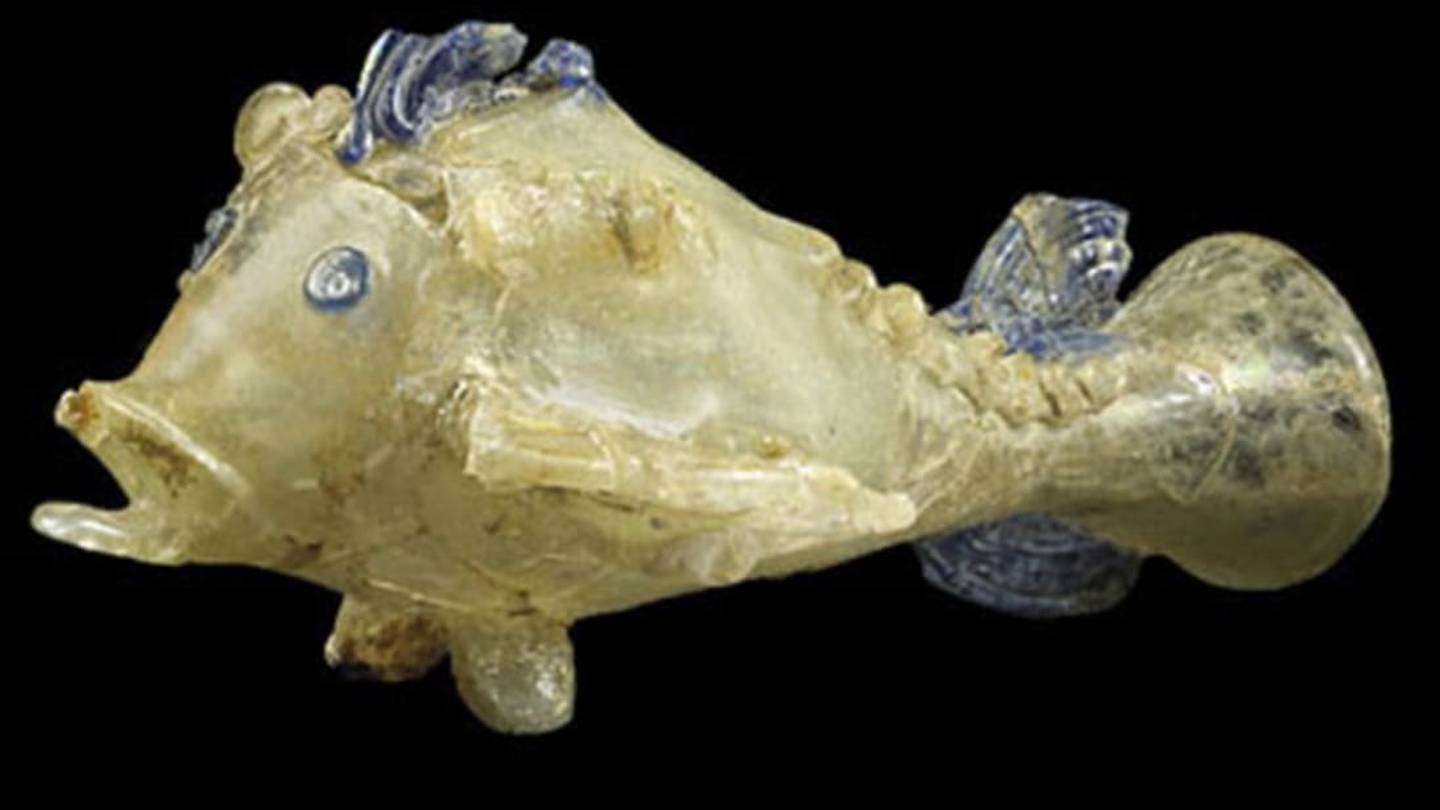
In Begram, Afghanistan, a storeroom was found containing 180 ancient glass vessels. Archeologists date the collection to around 100 AD, due to similarities with Roman glass work of that time. But some of the pieces in the Begram collection are very odd, most notably a series of glass animals clearly produced by glassblowing (in which an artisan blows air through a tube into a blob of glass, inflating it), which was a brand new technique at the time. From the British Museum Blog :
In other words, we can imagine that an enterprising glassblower picked up the basics of the technique in the Roman world, hit the road, and made some awesome fish in Afghanistan. 1,900 years later in 2011, the British Museum put them on display.
Glassblowing is a special form of art, requiring lots of practice, speed, confidence, and a really hot furnace (not to mention plenty of spare glass in various colors and a variety of hand tools). I have only personally seen glassblowers at work at Blenko , the famous West Virginia glass company (indeed, as I write this I'm drinking water from a blue Blenko pinch glass). Watching the video below, I recognize all of these techniques. It's just wild to think that some of the earliest blown-glass pieces ever created have managed to survive nearly two millennia.
In this video, Bill Gudenrath of the Corning Museum of Glass makes a rough replica of the Begram fish using modern glassblowing techniques, to demonstrate how a modern glassblower would make this kind of piece. While it's not all that difficult for a skilled glassblower today, imagine pulling this off 1,900 years ago -- and what you could charge for this kind of work.
Read a bit more from the British Museum Blog for the full story.
(Via The Kid Should See This .)
Loading recommendations... Please wait while we load personalized content recommendations