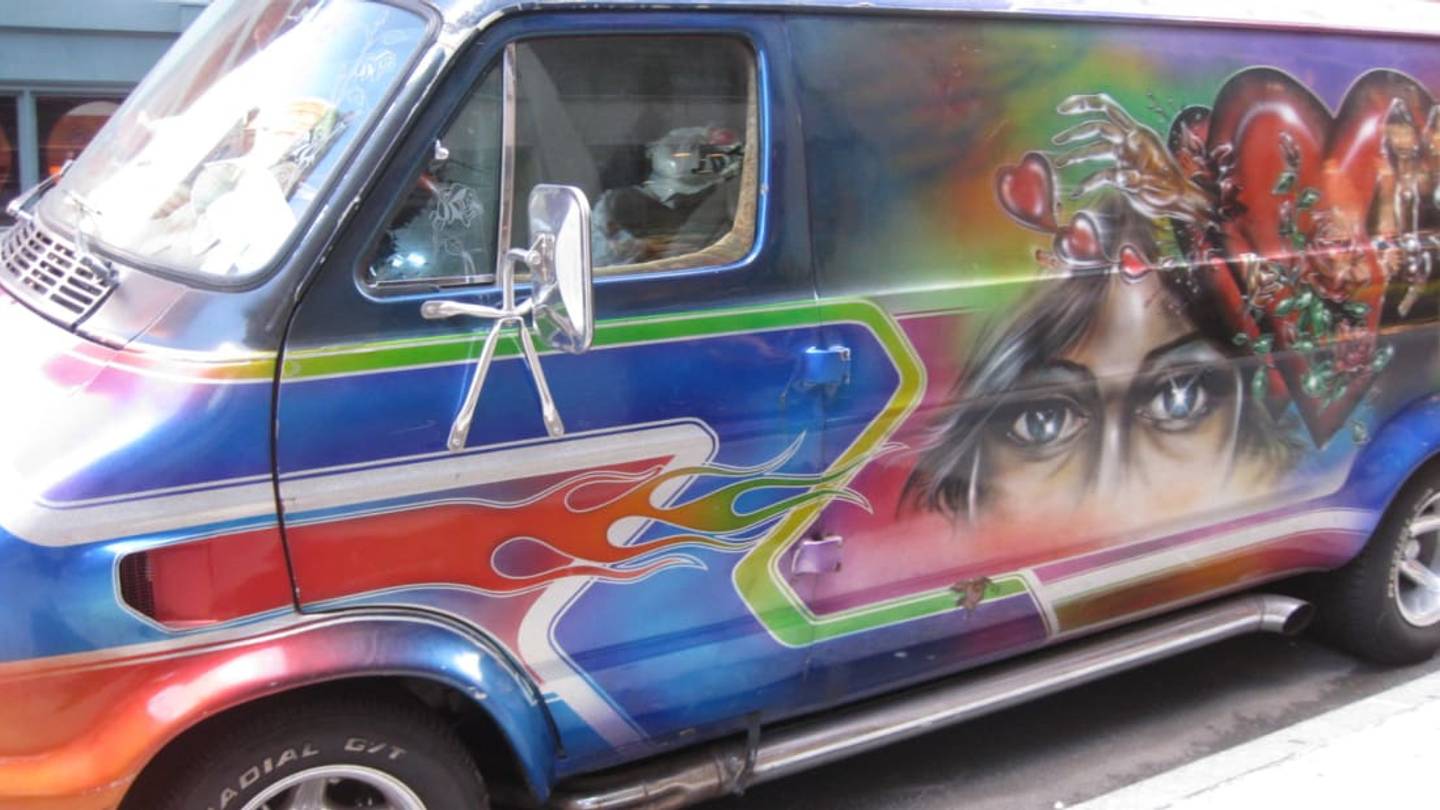
In the 1970s, pop culture was on display in some unique places. Iron-on T-shirt transfers showed off your favorite movie (probably Star Wars ) or beer brand. Underoos let kids have a secret superhero identity. And throughout the streets, vans were being used as canvases for elaborate murals. It was pop art on wheels.
The custom van craze was an offshoot of the muscle car phenomenon of the 1960s, when young rebels bought, tweaked, and drove muscle cars. But as insurance premiums crept up and new low-emission standards were introduced, the next generation needed a new way to express themselves on the road. That's where vanning came in.
Vehicles with âpersonalitiesâ were nothing new. There was, of course, the Oscar-Mayer Wienermobile . And in the 1960s, acid enthusiast Ken Kesey tricked out an old school bus with an elaborate and abstract mural and drove it around the country to endorse the benefits of tripping. (Of both the driving and drug varieties.)
Later, West Coast surfers migrated from station wagons and Volkswagen Microbuses to panel delivery trucksâthe kind you usually see plumbers or other tradespeople driving. The vehicles had room for their surfboards, as well as enough space to lounge in the back.
In the 1970s, vanners took these portable living rooms a step further, scooping up Ford Econoline and Dodge Tradesman vans, then renovating their interiors like they were disco-era Property Brothers. Shag carpeting, refrigerators, and elaborate stereo systems were installed. Captainâs chairs, bubble windows, and waterbeds were also on tap, leading some to dub the plush accommodations Sultanâs Dens . Demand for customization grew to the point that becoming a van refurbisher became a lucrative career choice.
All of it was clearly meant to make the van a cozy place for copious amounts of marijuana inhalation as well as a place to bring dates, which led some people to refer to them as shagginâ wagons âvehicles designed to facilitate partying. The kind of vehicle that had curtains for its windows.
âA kid didnât have money for a motorhome, but he did ... for a van,â onetime Hot Rod magazine editor Terry Cook told Autoweek in 2017. âHe was a plumber during the week and heâd take all of the pipes and sh*t out, put a bed in it for the weekend, go off and party.â
But what really made a vanner stand out was the artwork that appeared on the side of their ride. Drivers would often solicit the help of local artists to illustrate everything from album covers to fantasy landscapes.
The airbrushed art put a heavy emphasis on wizards, dragons, unicorns, grim reapers, and other scenes that were probably best appreciated under the influence of something. Tie-dye designs, cowboys, Star Wars characters, and custom color schemes were also popular choices. They were, in a sense, automobile tattoosâa way of broadcasting your psyche as you cruised through town.
Florida-based Skip Gage, who was once dubbed the âvan Gogh of vans,â was a popular artist. After studying commercial art briefly in college, Gage went on to open a mural art shop in Naples. Customers plunked down $175 and got a Gage original, though it probably wouldnât have outdone his own van: Gage illustrated a cobra on the sides with the head in the front. With the flip of a switch, a fire extinguisher would spray water from the cobra's mouth.
Other artists were paid as much as $3000 for a custom paint job, depending on its complexity and the number of sides.
People even named their rides. Stop at a light and you might see a van adorned with a âRipped Van Winkleâ insignia or a âVanatomyâ slogan.
Brands were also quick to hop on as a kind of counter-counterculture advertising move. Coca-Cola and Leviâs teamed up to create a limited-edition Econoline van, the Denimachine, complete with denim upholstery.
Before long, vanningâs subculture got organized. Enthusiasts would arrange van runs to show off their wheels, or attend âshow and shineâ van shows in mall parking lots where people could wander around and admire the customized art. Some shows even had judges that awarded trophies to the most impressive set of wheels.
In 1973, the movement grew large enough to fuel a National Truck-In in Colorado, which drew 1000 vanners from around the country. It was organized by Hot Rod magazine, which optimistically requested that participants not bring any drugs with them. (The Truck-Ins were later split into factions, with revelers breaking off from the more straitlaced vanners.)
Vanner culture even made it to the movies. In 1977âs The Van , an aimless slacker picks up a cool van and spends most of the movie motivated by his hormonesâwith his custom van being the perfect ice-breaker for meeting women. (A sample pick-up line: "Hey, you like vans?")
That was the same year TIME magazine declared vanning an âAmerican craze.â
By the end of the '70s, van murals and customization were starting to fall out of style when rising fuel costs made it prohibitively expensive to attend van events, and vanners were getting older and starting families. The boxy vans were once again relegated to tradespeople, potential criminals, or cartoon characters. As one contemporary vanner, Matt Grayson, told The New York Times in 2015, âVans have kind of gotten a bad rap because youâve got these people running around yelling âScooby-Dooâ or â A-Team â or âkidnapperâ or whatever. But itâs kind of like having a hot rod that you can still do all the same hot-rod stuff to, except itâs a van instead of a car. Itâs a blank canvas.â
Today, vehicular expression is usually made in the form of bumper stickers, but there are still signs of vanner life. Clubs devoted to the craze have sprung up; local artists in Brooklynâs McCarren Park sometimes roll up school buses adorned with murals; classic vans with their artwork intact pop up on the used car market from time to time, âGood Times Machineâ emblazoned on the side; and gatherings, while infrequent, are still held, with guests imploring each other to have a âvantastic day.â
Loading recommendations... Please wait while we load personalized content recommendations