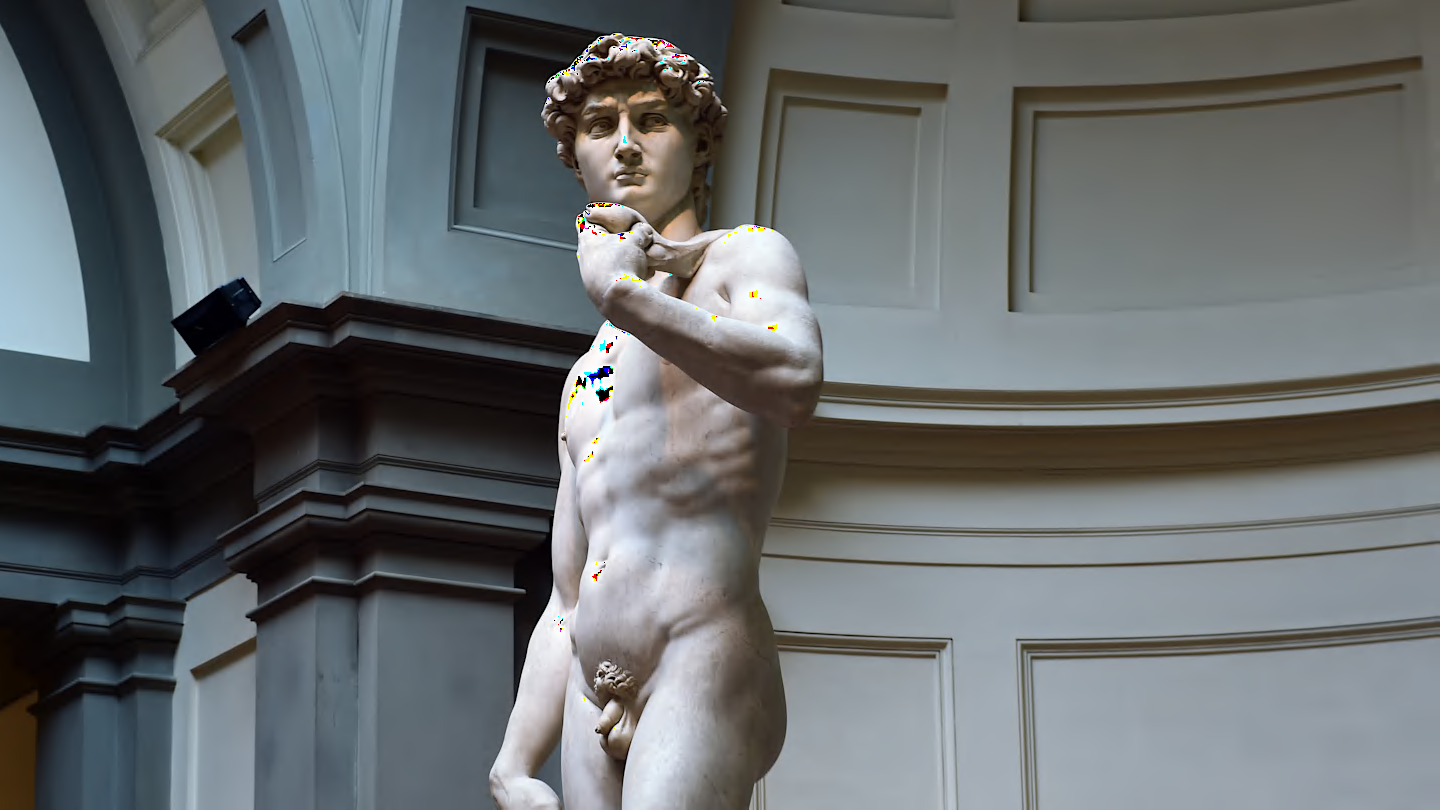
If you spend enough time with classical statuary, you may begin to ask yourself some questions that seem more appropriate to middle school health class than an art history discussion. Namely: Is it just me, or are all these dudes kind of ⦠small?
Youâre not the only one whoâs wondered at the ancient penis sizes depicted in artâeven Saturday Night Live mentioned it in a recent musical sketch about Rome. Even while assuming that most statues feature flaccid penises, why wouldnât classic sculptors have made their subjects more well-endowed? Surely nude sculpture is as subject to exaggeration on this topic as locker room talk.
As it turns out, a lot has changed over the last few thousand years, including how we think about penis size. Ellen Oredsson of the blog How to Talk About Art History explains in one post that âcultural values about male beauty were completely different back then. Today, big penises are seen as valuable and manly, but back then, most evidence points to the fact that small penises were considered better than big ones.â
Photographer Ingrid Berthon-Moine , who took close-up photos of the testicles of Greek statues as part of her 2013 series Marbles , reiterated this sentiment in an interview about her photos with Hyperallergic . âAncient Greece was a highly masculinist culture,â she explained . âThey favored âsmall and tautâ genitals, as opposed to big sex organs, to show male self-control in matters of sexuality.â In his play The Clouds , one of Aristophanesâs characters describes the ideal male form as having âgood chest, a clear complexion, broad shoulders, a moderate tongue, sturdy buttocks, and a small genteel penis.â
But it was important to show some skin. As art historian Anna Tahinci wrote in a 2008 article in the journal Sculpture Review , nudity was âseen as the âperfect formâ for the sculptural representation of the human bodyâ in ancient Greece and, later, Rome. âConsequently, nudity in sculpture came to represent the ideals of innocence and purity.â
Frederick M. Hodges, a scholar who writes about circumcision, noted in a medical history journal in 2001 that âthe Greeks valued the longer over the shorter prepuce [foreskin] in relation to the length of the entire penis, and the smaller over the larger penis as a whole.â Indeed, an elongated foreskin was considered both attractive and more modest than an exposed penis (ancient Greeks considered circumcision barbaric and associated it with enslaved people). An erect, bare penis would have been considered dishonorable, according to his research, and thus, in most art, the male genitals are featured âunretracted, teat-like, and neatly tapered.â
Another scholar finds that while Greek men were shown to have properly dainty genitals in public, they often have ârakishly protuberant phalluses in private,â as seen in erotic art, especially on vases. In the 1995 article âThe Unheroic Penis: Otherness Exposed,â Timothy McNiven chalks this up to giving men portrayed in art âthe best of both worlds."
Big or small, a statueâs genitals are a sign of the times.
Discover More Answers to Big Questions:
A version of this story ran in 2016; it has been updated for 2024.