Behind the Headlines: Iraq Invasion - Ten years later Sott Talk Radio Sott.net Sun, 24 Mar 2013 19:00 UTC
Sott Talk Radio Sott.net Sun, 24 Mar 2013 19:00 UTC
"We're an empire now, and when we act, we create our own reality."
BUSH: My fellow citizens, at this hour American and coalition forces are in the early stages of military operations to disarm Iraq, to free its people, and to defend the world from grave danger. On my orders, coalition forces have begun striking selected targets of military importance to undermine Saddam Hussein's ability to wage war. These are opening stages of what will be a broad and concerted campaign. More than 35 countries are giving crucial support, from the use of naval and air bases to help with intelligence and logistics, to the deployment of combat units. Every nation in this coalition has chosen to bear the duty and share the honor of serving in our common defense. To all the men and women of the United States Armed Forces now in the Middle East, the peace of a troubled world and the hopes of an oppressed people now depend on you. That trust is well placed. The enemies you confront will come to know your skill and bravery. The people you liberate will witness the honorable and decent spirit of the American military. In this conflict America faces an enemy that has no regard for conventions of war or rules of morality. Saddam Hussein has placed Iraqi troops and equipment in civilian areas attempting to use innocent men, women and children as shields for his own military, a final atrocity against his people. I want Americans and all the world to know that coalition forces will make every effort to spare innocent civilians from harm. A campaign on the harsh terrain of a nation as large as California can be longer and more difficult than some predict and helping Iraqis achieve a united, stable and free country will require our sustained commitment. We come to Iraq with respect for its citizens, for their great civilization and for the religious faiths they practice. We have no ambition in Iraq except to remove a threat and restore control of that country to its own people. I know that the families of our military are praying that all those who serve will return safely and soon. Millions of Americans are praying with you for the safety of your loved ones and for the protection of the innocent. For your sacrifice, you have the gratitude and respect of the American people. And you can know that our forces will be coming home as soon as their work is done. Our nation enters this conflict reluctantly, yet our purpose is sure. The people of the United States and our friends and allies will not live at the mercy of an outlaw regime that threatens the peace with weapons of mass murder. We will meet that threat now with our army, air force, navy, coast guard and marines, so that we do not have to meet it later with armies of firefighters and police and doctors on the streets of our cities. Now that conflict has come, the only way to limit its duration is to apply decisive force. And I assure you, this will not be a campaign of half-measures and we will accept no outcome but victory. My fellow citizens, the dangers to our country and the world will be overcome. We'll pass through this time of peril and carry on the work of peace. We will defend our freedom. We will bring freedom to others and we will prevail. May god bless our country and all who defend her.
NARRATOR : Steele made a strong impression with the high-level, even battle-hardened Iraqis he worked with. GENERAL MUNTHADER AL-SAMARI: The best description for him is that he lacks human feelings. I mean, the number of wars he's witnessed and the various methods of torture that must have been committed, whether in Iraq or elsewhere, somehow their hearts have died. NARRATOR: General Munthader al-Samari is a former general in the Iraqi army. After the invasion, he worked with the Americans to rebuild the police force. But Munthader was very disturbed by the abuse and torture he witnessed being committed by the police commandos. He tried on a number of occasions to stop it. He has never spoken before about the part the U.S. played in running the special police commandos. GENERAL MUNTHADER AL-SAMARI: The Ministry of Interior had 14 to 15 prisons. They were secret, never declared. But the American top brass and the Iraqi leadership knew all about these prisons. The things that went on there, drilling, murder, torture, the ugliest sorts of torture I've ever seen.
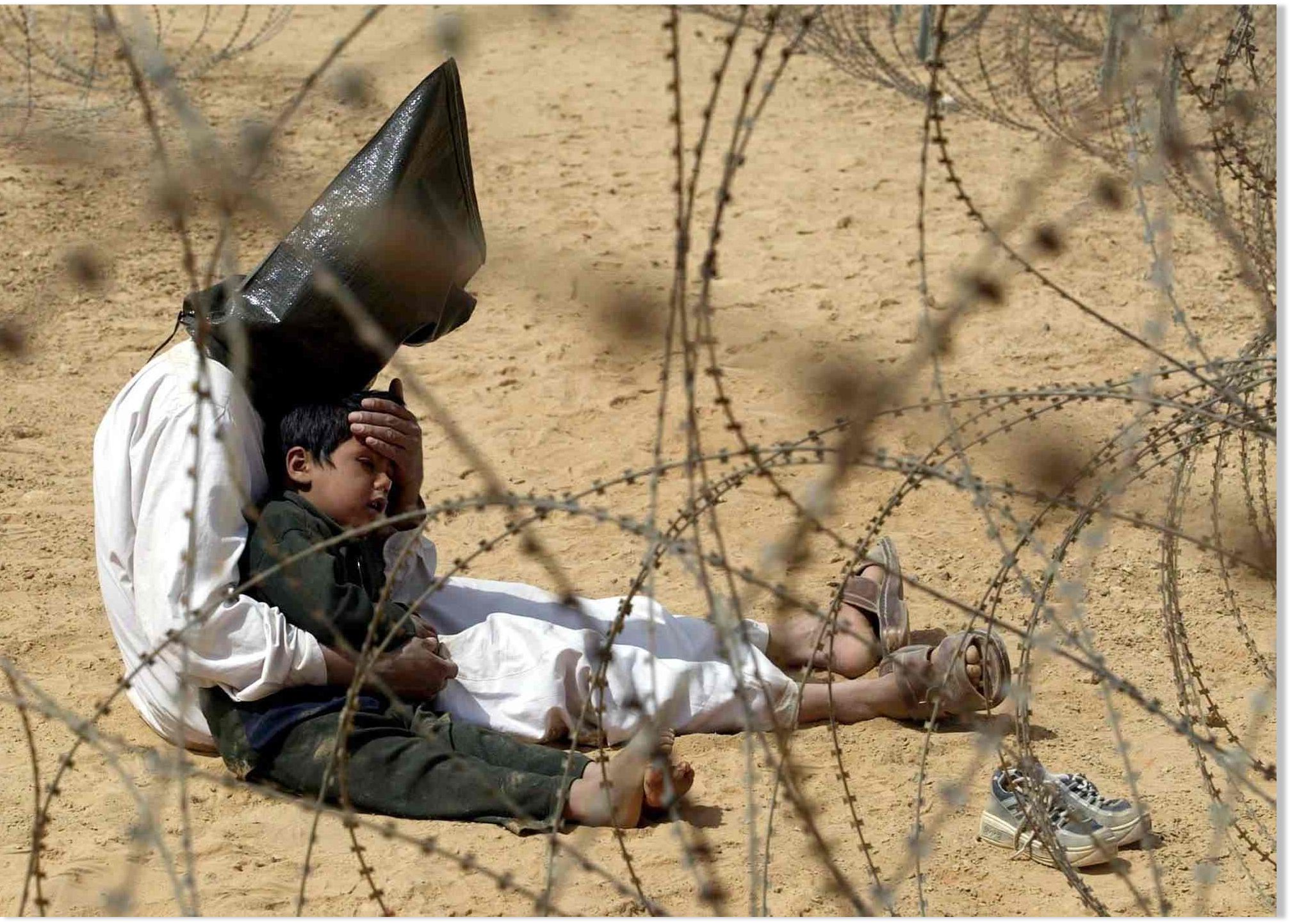
PEREZ : What I heard is prisoners screaming all night long, at which point you have the young U.S. captain saying to his solider "Don't come near this thing". NARRATOR : Gilles Perez' stark, black and white photographs capture how the commandos worked in Samara. James Steele crops up in these photographs repeatedly. MAASS : I was staying at the base in Samara, an American base, and I overheard American soldiers at this base talking about having watched prisoners be kind of strung up like animals after a hunt, over a bar, having watched prisoners be actually tortured. NARRATOR : Adnan Thabit and the American military made the joint decision to set up the commando headquarters and interrogation center in the city's main library. We spoke to two men from Samara who were imprisoned in the library. Still fearful, they asked us to conceal their identities. PRISONER : We would be blindfolded and handcuffed behind our backs. Then they would beat us with shovels and pipes. We'd be tied to a spit or we'd be hung from the ceiling by our hands and our shoulders would be dislocated. PRISONER : They electrocuted me. They hung me from the ceiling. They were pulling at my ears with pliers, stamping on my head, asking me about my wife, saying they would bring her here. MAASS : The interrogation center was the only place in the kind of mini-green zone in Samara that I was not allowed to visit. However, one day Jim Steele said to me "Hey, they just captured a Saudi jihadi. Would you like to interview him?" NARRATOR : Maass and Perez were about to get an unprecedented glimpse into this clandestine world. MAASS : We kind of walk into the entrance area and the first thing that I see is one of the Iraqi guards beating up one of the Iraqi prisoners. And then I'm taken not into the main area, kind of the main hall, although out of the corner of my eye I can see there were a lot of prisoners in there with their hands tied behind their backs, I was taken to a side office where the Saudi was brought in. And there was actually blood dripping down the side of a desk in this office. PEREZ : We were in a room in the library interviewing and I was looking around I see blood everywhere. MAASS : And while this interview was going on, me and the Saudi with Jim Steele also in the room, there were these terrible screams. There was somebody shouting "Allah, Allah, Allah" but it wasn't you know, kind of religious ecstasy or something like that. These were screams of pain and terror.