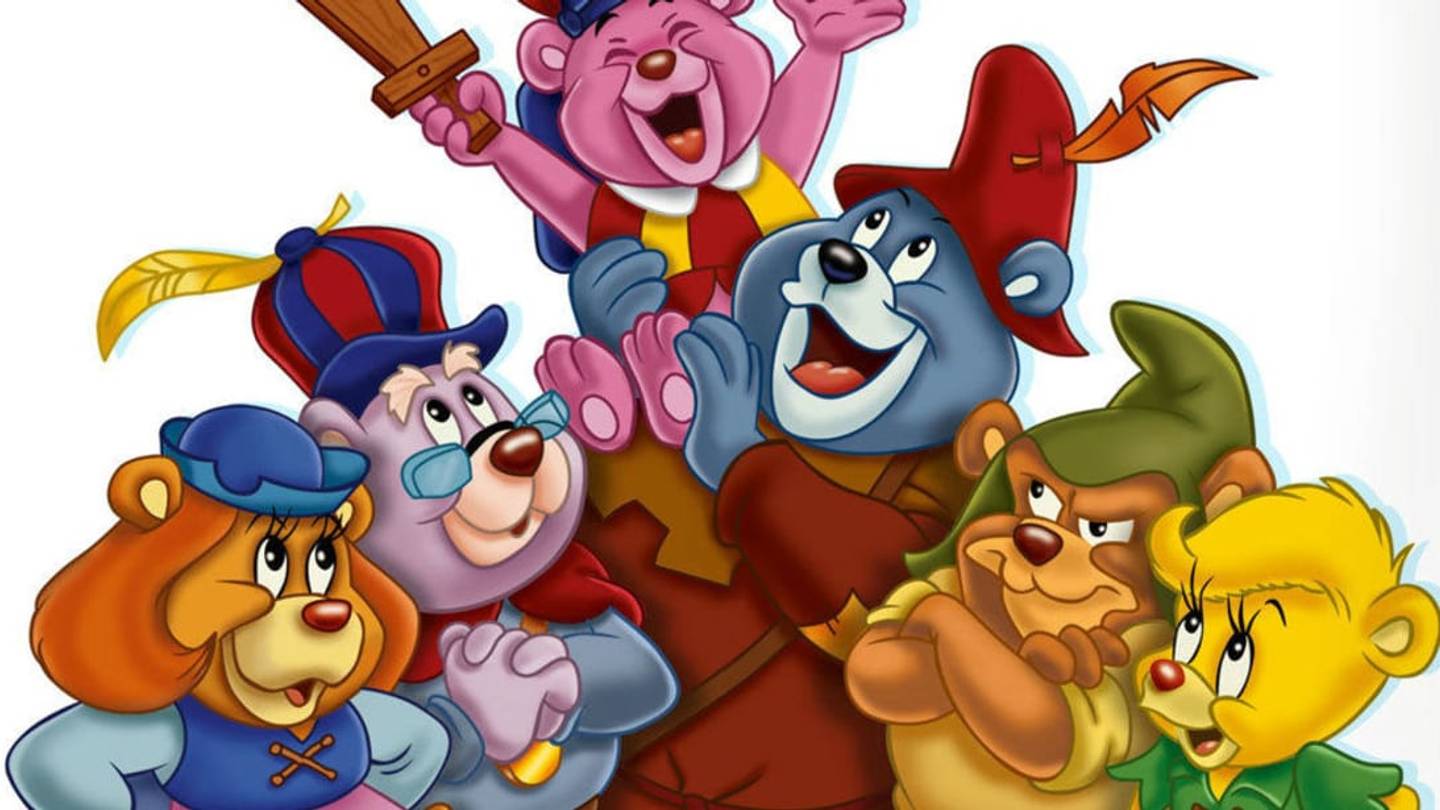
Before DuckTales , Tale Spin , and House of Mouse , Disneyâs first foray into television animation was Adventures of the Gummi Bears , a 1985-1991 series that aired Saturday mornings and featured a troop of benevolent bears with magical powersâvery loosely based on the popular German candiesâwho help a young human boy oppose a tyrannical duke looking to seize their potent âGummiberry juice.â Running for 65 episodes, the series helped usher in an era of Disney-produced television that would later help populate their growing Disney Channel programming block.
Like most â80s toons, it took plenty of cues from The Smurfs . Unlike those knockoffs, it retained much of the Disney touch. Check out some facts on the showâs origins, its controversial animation techniques, and why executives didnât have much respect for the candy that inspired it.
When Michael Eisner was brought on as Disney's CEO in 1984, one of his first official acts was to revisit the companyâs longstanding policy of staying away from television series animation. Eisner believed that exposing the Disney brand on broadcast networks would be instrumental moving forward, so he started up an official television animation division. The first two projects were Gummi Bears and The Wuzzles , the latter based in part on a Hasbro toy concept about cross-breed animals like a Bumblelion (a bumblebee-slash-lion). While Wuzzles fizzled after one year, Gummi Bears aired on NBC, ABC, and in syndication through 1991.
During brainstorming sessions for potential series ideas, Eisner waved off any suggestion of bringing Mickey Mouse to Saturday mornings. The mouse was deemed too special to put on TV, according to Disney animation employee Tad Stones. Instead, Eisner pitched a mythology involving the Gummi (nee Gummy) Bears, a candy Eisnerâs kid enjoyed. Although Eisner felt certain anything with the Gummi Bears label would be a hit, his creative team wasn't so sure ...
When Eisner assembled a creative think tank to ponder series ideas, Gummi Bears co-creator and former Disney recording studio staffer Jymn Magon admitted to being a little perplexed by Eisnerâs insistence on developing a cartoon based on a candy. âWe went into a coffee shop and kinda looked at each other and scratched our heads and said, âHeâs crazy,ââ Magon told the Great Big Beautiful Podcast in 2016. âWell, I mean, you know, itâs like, hereâs your main character and we eat him every week, you know. Thatâs stupid! You know? ... So I went back to producing records, and I get a call on the phone, and itâs the president of the company: âHey Jymn, itâs Michael.â âOh, hi.â âWhereâs my show?â I thought, Great , you know, and I instantly start typing some of the worst ideas on the planet. We had a bad guy named Licorice Whip. We had a villainous, traitor gummy called Scummi Gummi. Oh, it was horrible.â
As a kind of public domain treat, Gummy Bears didnât come with the burden of trying to negotiate a licensing fee from any candy manufacturer. Much like "jelly beans," âgummi bearsâ is a generic term with no central ownership, meaning Disney could bank on a childâs familiarity with the name without having to pay for the rights. This wasnât a total net positive, however: Critics, like Peggy Charren of the Action for Childrenâs Television (ACT) group, chastised Disney for creating a show that might encourage kids to eat sugary candy.
Outside the scope of the show, they were doing everything but. Jon Lang, a marketer for the series, once told press that Gummys were like âa cross between three-week-old Jell-O and flavored rubber bands.â
For reasons that may never be entirely clear, Saturday morning television in the mid-1980s was very preoccupied with the adventures of anthropomorphic bears. At the same time Gummi Bears aired, CBS was broadcasting The Berenstain Bears , an adaptation of the popular book series; ABC had landed The Care Bears , who used love and hugs instead of mauling their opponents; and Ewoks , a spinoff of the Star Wars franchise that featured the furry Endor creatures, who bore a heavy resemblance to teddy bears. Â
Unlike the labor-intensive animation process of Disneyâs feature films, Gummi Bears marked the companyâs foray into the kind of time-conserving limited animation needed to meet a television production schedule. Animation was done in Japan and featured what was considered dialogue-driven scenes, with minimal movement of character faces and limbs as opposed to the conventional Disney technique of animating the entire body. While it was more impressive than most Saturday morning content, Disney purists still complained it was diluting the companyâs famous devotion to quality cell animation. Â
Because it was so difficult to do Disney-level animation on a television budget, there were occasional suggestions that the company could save itself some headaches by leaving the Disney brand off the series. Both Eisner and fellow executive Jeffrey Katzenberg disagreed, believing that the Disney theme parks would need a stream of new characters to use and that, regardless of what the title of the show was, a Disney-produced program couldnât go on the air âand look like trash.â
The 1994-1997 Disney animated series Gargoyles , about a band of stone-encased warriors from Scotland who reawaken in modern New York City, drew critical raves for its mature tones. Oddly, it came about because co-creator Greg Weisman was a big fan of Gummi Bears . âSo we set out very consciously to create a show like Gummi Bears  with that kind of rich backstory and mythology to it, but that would get more respect, honestly,â Weisman said in 2015. âSo we did a couple things right off the bat with that in mind. One was, instead of cute little multicolored bears, we did cute little multicolored gargoyles!â
The impact of violent imagery in childrenâs entertainment has been a perpetual topic of debate. In a 1993 Australian psychology experiment , researchers Ann Sanson and Christine Di Muccio observed behaviors in preschool children following exposure to one of two series: Gummi Bears and the comparatively violent Voltron . The authors then gave the children toys from each series. The group that watched and was then handed Voltron toys seemed to engage in more aggressive play than those who were exposed to the Bears. The apparent moral? Gummi Bears may have promoted cavities, but at least kids would keep their teeth on playgrounds.
Loading recommendations... Please wait while we load personalized content recommendations