The word cake is about 800 years old, and you're gonna want to make some for these scrappy newcomers turning 100. Let's celebrate the centennial of all of them. And don't forget the candles (which are at least 1100 years old).
Did you know that the term World War 2 is essentially turning 100 this year? That's rightâin February 1919, just a few months after World War 1 ended, a story appeared in the UK's Manchester Guardian called âWorld War No. 2.â The Oxford English Dictionary describes it as a "reference to an imagined future war arising out of the social upheaval consequent upon the First World War.â The actual second world war wouldnât start until 1939.
It refers to a ballet devotee. If you love ballet, this is you.
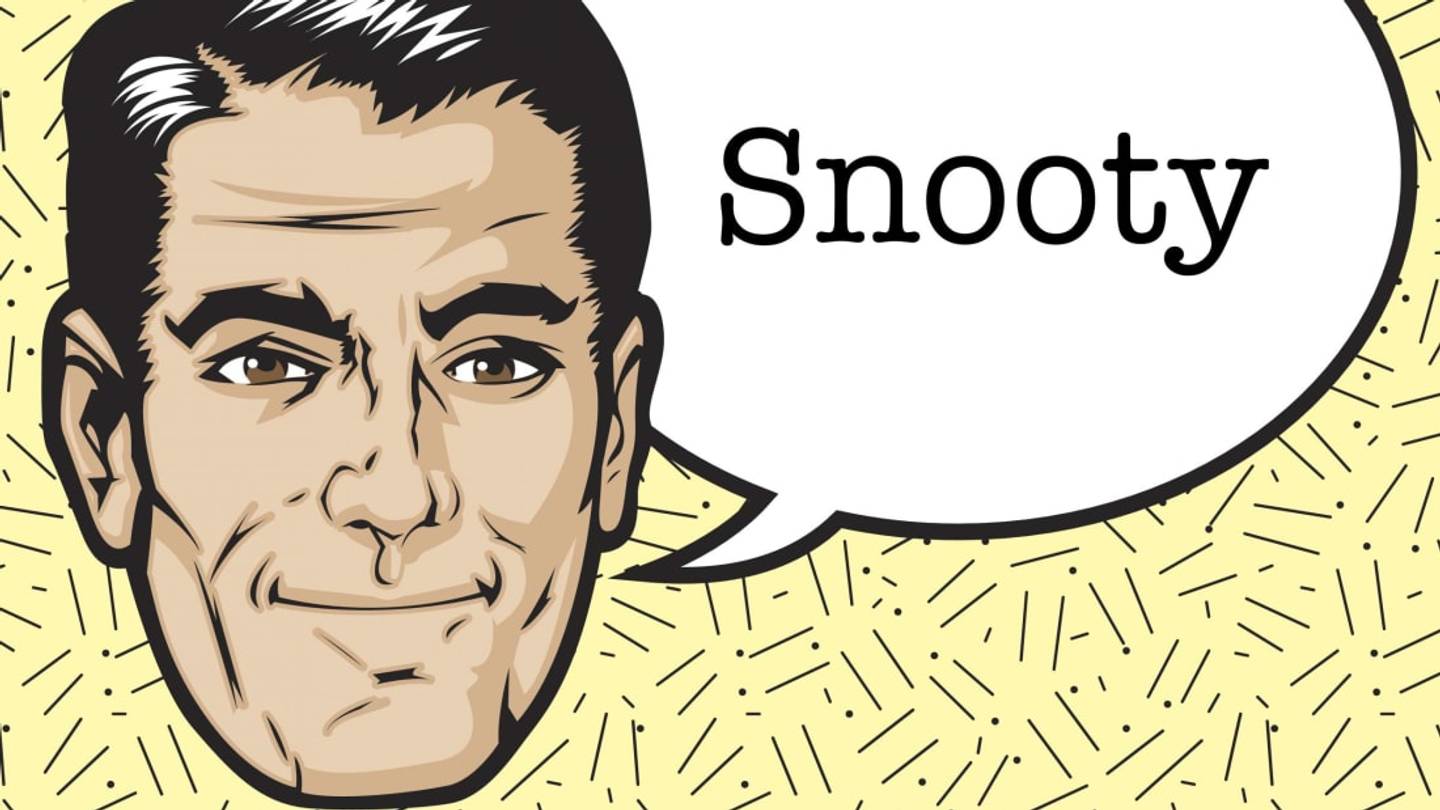
Don't look down your nose at this one.
The term originated to describe young, male baseball enthusiasts, but now it can be applied to just about everything from Batman comics to cricket.
This is a rather odd/fantastic way to accuse someone of behaving childishly, and you may need it for the fanboy in your life.
The original meaning of dunker had nothing to do with someone who could dunk a basketballâit was someone who dunked cookies. Dunking a basketball wouldnât come along until a few decades later.
Fun fact: The optimal time to dunk an Oreo in milk is three seconds !
If you know a snooty fanboy and a dunker, you might also know a bimbo, though sources disagree whether that's from 1919 or 1918. Either way, back then the term would have been used to describe a man.
But if you want an unusual 1919 term for a woman, how about undergraduette , which is the female version of an undergraduate.
Henry Ford created the moving assembly line to build automobiles in 1913, and their burgeoning popularity also brought forth a lot of new terms.
Meaning the kind you take off the road.
Before the motors, "scooters" were just people who moved fast.
Presumably to haul undergraduates around in.
If youâre more into water sports, hydrofoil âthe apparatus that lifts watercraft hulls up out of the water to increase speedâalso comes from 1919.
Speaking of increasing speed, although it wouldn't be applied to transport for a few more decades, supersonic , meaning higher than humans can hear, is also turning 100.
It comes from a French word that means âgluing.â
Also from French, and from 1919, pissoir is a public urinal.
The English language also borrowed vino from the Italians that year.
And the penne to go with it.
Keeping on the food theme, I think Iâm going to go cold turkey âa phrase whose modern meaning is 100-years-young and still has mysterious origins. One theory is that it comes from the phrase talking turkey meaning âto be frank.â
Moving on to something you probably shouldnât eat: silica gel .
Hereâs a little secret, though: Despite being marked âDO NOT EAT,â chowing down on the packets, if you decided to do it, probably wouldnât be that bad for youâthe warnings are mostly there because silica gel is a choking hazard for children. Plus eating it in large quantities isnât advisable.
Itâs believed T.S. Eliot coined the term polyphiloprogenitive in 1919, which describes one who is prolific in making babies.
Those babies will probably need a lot of post-primary education , which is turning 100 just as primary education is turning 201.
Similarly, weâve had behavior since the 15th century , but behavioral is a 1919 word!
And isolationism is from 1919 versus isolation from 1833 .
Although it was circulating in the jazz world earlier, Blue note entered the popular lexicon in 1919. It refers to a type of flattened musical note that often pops up in blues and jazz.
And on that (ahem) note ... jazzman , meaning jazz musician, also turns 100 this year.
Speaking of professionals, chartist as a term for market analysts comes from 1919.
As does the job of air marshal , although it meant an officer in the Royal Air Force when it was coined.
There's also this new-to-1919 rank, which is the equivalent of a Brigadier (one star) General.
Those words get all the sky-related glory, though. With the post-WWI rise of airplanes, we also got airfield .
If you're gonna have an airfield, you're gonna need this.
And if you've got airplanes, you may as well have them haul some cargo.
As you might guess, you'd use this word to describe a highly successful pimp in 1919.
And if we're just adding super to a title, perhaps the most epic job title ever is superagent , which was a title given to the Golden Ghost, âsuper-agent of Anarchismâ who is surprisingly not a comic book character.
Someone who may have made a good superagent, Svengali is also on our list. Svengali was an evil hypnotist character in the 19th century novel Trilby , and by 1919, it had become a generic term.
Xanadu became a word meaning âidyllic placeâ in 1919, but it first entered public consciousness thanks to poet Samuel Taylor Coleridge in 1816.
Some people may think that the movie Xanadu is more telefilm quality, which is a good burn but also a word you wouldnât have used before 1919.
Also that year, people finally had the good sense to put bell and curve together to get the above.
Now letâs cover some words that are important in the medical field. We got this phrase almost 60 years after Louis Pasteur laid the groundwork for modern germ theory. Thankfully, we've got something to fight them.
There's also blood typing , though blood types have possibly been around since earlier than 20 million years ago. Also according to one survey, nearly 50 percent of people donât know their own blood type.
After having been an advertising term for a few years, diaper rash entered the lexicon, and became another issue we needed a word for, in 1919.
Staying with medicine: swine influenza dates from 1919, possibly as a result of the Spanish flu that was ravaging the globe at the time.
Split personality is 100 years old, though it was first used to refer to patients with schizophrenia. The term used now to describe someone with multiple personalities is dissociative identity disorder.
The technique has been used since the days of Aristotle, but it officially became a field during the 20th century, when music was used as therapy for hospitalized veterans of both World Wars.
Perhaps thanks to this increased focus on music, things began to be musicalized , which is when a novel or play is set to music.
Copacetic was first found in print in 1919, and its etymology is unknown. There are similar phrases in a few languages, but no proof for any one being the originator of the word. We do know that vaudeville performer Bill âBojanglesâ Robinson claimed to have invented it, and that it probably popped up around the 1880s in African-American slang in the south.
We got feedback in 1919, but only to reference a mechanical process. An example of a mechanism using feedback that existed around that time is an audio amplifier. It wasnât until around the 1950s that it started to refer to a reaction someone gives.
The OED records other modern-seeming words that emerged in 1919âthough with odd meanings. For example, offline , which referred to something that was away from a railroad line.
There's also broadband , which referred to a broad band of frequencies.
And, 50 years before Apollo 11, moonwalking meant a type of sleepwalking.
Some fun hyphenated adjectives emerged in 1919. Run-of-the-mill , originally meant the substance that came out of a mill before going through quality control, but it gained its modern meaning around 1919.
The modern meaning of mixed bag ââa diverse or heterogeneous assortment of people or things,â according to the OEDâturns 100 this year. Before that, it was a hunting term for an assortment of game.
Preslice was coined before the invention of sliced bread. It wasnât until 1928 that Otto Rohwedderâs invention started preslicing bread.
And if youâre going to preslice something, maybe you should also presoak it.
Antioxidant is 100, although oxidant , which came from a French word, has been around since the mid-19th century.
Then we have putsch , which we got from the Swiss German language. According to Merriam-Webster, itâs a âsecretly plotted and suddenly executed attempt to overthrow a government.â
There's no better way to watch out for attempted putsches than with binocs , a slang term for binoculars from 1919.
On the technological front, electron tube is 100. Versions of these devicesâwhich basically control electron flow in electronics like radios and computersâ had been around since the 17th century, but it wasnât until 1904 that John Ambrose Fleming invented a working one.
We also got critical mass in 1919, which nowadays is used to describe something very science-y: how much fissionable stuff you need to keep a chain reaction going. But Merriam-Webster simply defines it as âa size, number, or amount large enough to produce a particular result.â
If you do reach critical mass, watch out for a meltdown , which originally was just used for anything that melted down, before referring to nuclear materials in the 1950s.
And on that radiation note, we got radiobiology in 1919âthe type of biology that focuses on radiation and radioactive materials.
A few more science related terms also come from 1919, like special relativity , even though the theory was formulated 14 years earlier .
They used to be called rectifiers, but William Henry Eccles crafted the term diode to delineate from tetrodes when they were invented .
You can bond with your friends over this 100-year-old word during your science trivia night.
The rise of 20th century industrialization also gave us a need to name these harmful environmental toxins.
A lot of science at the turn of the century was probably done in a white room , which is a 1919 term for what we now call a clean room.
And things in the white room might have been measured with a minimeter , an instrument that could get accurate readings down to one millionth of an inch.
And one more science term: electrodessication , which the OED defines as "destruction of abnormal tissue or sealing of blood vessels using a monopolar high frequency electrical current.
Encode has a few meanings nowadays, but in 1919, it meant âconvert ... from one system of communication into another.â
Code name is a word that was used before 1919 to describe a moniker given to a ship or company so you wouldnât have to write out the full name in Morse Code. But a 1919 newspaper says infantry commanders would use codenames to avoid giving their position away to the enemy, which appears to be when it started getting its modern usage. They're also pretty handy for superagents.
Bull session , meaning âan informal discursive group discussion,â is officially 100, which should give you something to chat about at your next bull session.
Just like it sounds, this word means to resupply a formerly demilitarized nation or organization.
Pokey officially became slang for jail in 1919.
On the other end of the spectrum, ritzy also became slang for stylish that year.
And hopefully this list can posh up your vocabulary a bit.
And if you want to make your last minute Christmas gift card sound ritzy, maybe call it a paxmas , which is a word coined in 1919 meaning âa telegraphed money order written and sent at any time but delivered on Christmas morning.â
Beavertail got its name in 1919. It â s a type of cactus found in the southwestern US and northern Mexico. So ... not animal-related.
Another animal-but-not-animal phrase, the word bats joins our list, though only to mean batty . The cute animal had already gotten its name by 1600.
Another animal term we humans have made about ourselves: horse around . We donât know exactly who came up with the phrase, but experts say itâs probably a spinoff from horseplay , a word from 1589.
While we're at it, defang started being used in a figurative way.
And delouse started being used in a literal way.
Delouse became a word thanks to WWI solders going through a delousing process after they demobbed , short for demobilized.
And they demobbed and deloused while completing prereturn , or what was required before returning to daily life.
This one also may have a military connection: One story goes that the slang term for underwear came from the U.S. Navy.
We got overbreathing in 1919, but you probably just refer to it as hyperventilating.
And non exploitive , just 61 years younger than its friend exploitive .
To be fair to interrogees , thereâs currently debate in the legal and grammar worlds about whether they should be called interrogees or interrogatees .
But that's nothing to be too alarmed about.
Beltline is 100. It means the âline of an automobile body along the side of the vehicle just below the windows.â
Self-validation comes from validate , which has been around since the mid-17th century. Go ahead and do it to yourself.
But don't try this on yourself. Outgas might not mean what you initially thought. Itâs just used to refer to taking gases out of an area, typically with heat.
While not technically coined in 1919, a lot of very familiar words were added to the dictionary that year, like blimp .
Convertible falls under the same category as blimp .
As does Hooverize , which meant to be economical with regard to food. It was named after then head of the US Food Administration Herbert Hoover, who suggested economizing on food for the war effort.
You may need one to make quick trips between your private islands.
Remember hydrofoil ? This is basically the same thing but for air. You can thank an airfoil every time your air taxi takes off.
Another thing to cheer, especially in the spring, summer, fall, and winter.
It turns out the people of 1919 were as focused at battling stress as we are.
Last but not least... activated charcoal , which came to public attention thanks to its use in World War I gas masks and is now found in every hipster cafe in America!
Loading recommendations... Please wait while we load personalized content recommendations