Why optimizing your menu is critical
Driving revenue with personalized menu recommendations
Learning how menu items affect guest behavior
Your online menu is the most critical touchpoint for restaurants today — and, an underutilized way to boost revenue. It's likely the most visited page on your website — 83% of diners review a restaurant’s menu online before their visit. (As an over-planner, I personally cannot fathom how the other 17% live their lives.) Menu visits aren’t just casual browsing; they’re a make-or-break conversion point. If the experience isn't seamless, brands risk losing out on a rapidly growing channel: digital orders represent 18% of total restaurant sales. When optimized, however, this page becomes your most effective salesperson, your data goldmine, and your chance to convert. To truly succeed, you need to treat your online menu as a personalized, data-driven experience. After all, the market expectation is clear: consumers reported spending 50% more with brands that offer personalized experiences. So how can you create a better experience for your guests with your online menu? What insights can you learn about your guests from how they interact with your menu, and how can you use that to increase conversions and average order value (AOV)?
Providing a personalized menu experience can boost revenue by making the checkout process fast and seamless and creating enticing offers to increase AOV. For example, think of how first-time guests and regulars experience your menu in different ways. First-timers will need guidance and look for menu signals to identify what’s popular at the restaurant. On the other hand, regulars expect acknowledgement. They want to quickly reorder their favorites and receive suggestions of new things to try based on their tastes — just like an experienced server might provide. Brands leveraging personalization suites built into online ordering solutions, like Olo Serve, can create a menu that adapts and appeals to each guest personally. Olo’s personalization suite features Local Favorites, For You, and Recent Items sections at the top of the menu and Smart Cross-Sells conveniently in the cart. Brands can manage the appearance of these recommendations with just the click of a button.
These features create a customized experience for each guest, making it easy and seamless for the guest to decide and order. So what does this look like in practice? Waffle House incrementally rolled out all of Olo’s personalization features, seeing an increase in revenue with each addition. The brand had a total passive revenue lift of 1.6%, just toggling the features on. Today, 36% of Waffle House’s online revenue comes from recommendations from the personalization suite. However, that wasn’t the full effect of these features. Waffle House is known for its hospitality and aims to provide guests with the same welcoming experience online through personalization. The number of returning guests has continued to increase since implementing Olo, which the brand takes as a sign that guests enjoy the online ordering experience. Read the full case study here.
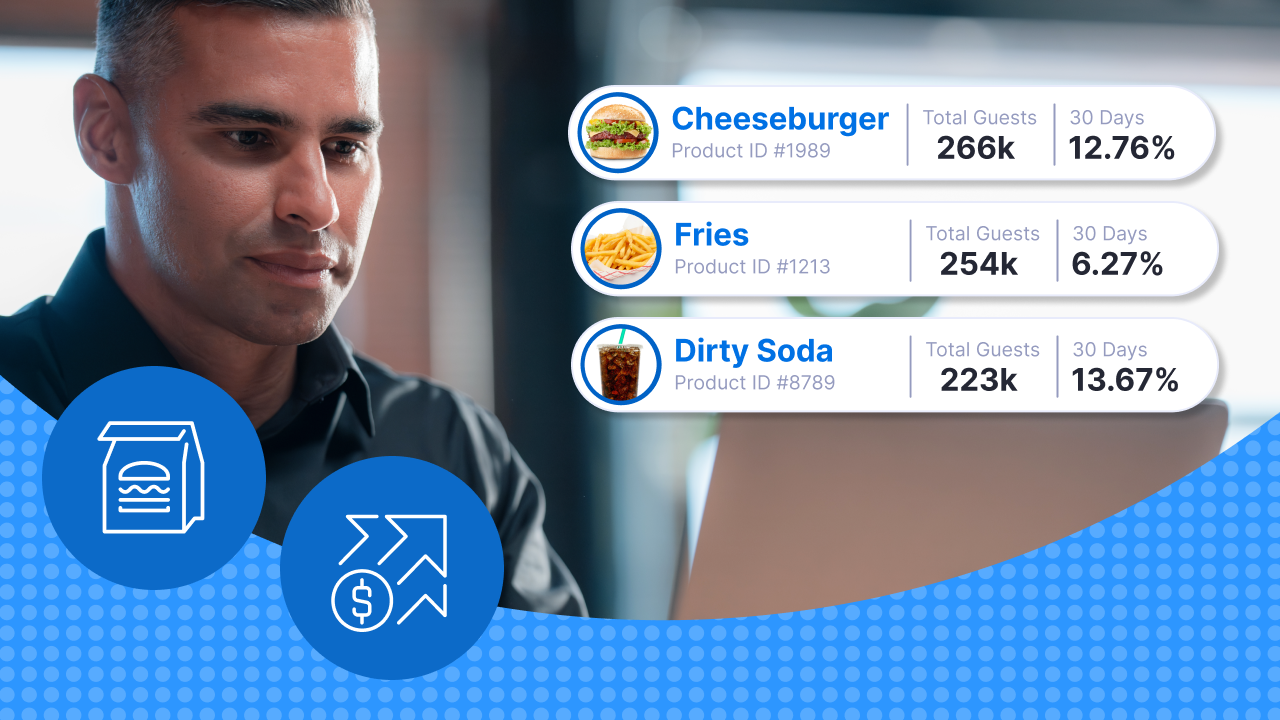
You probably know the top sellers on your menu — but that's just scratching the surface. Your online ordering system is capturing dozens of behavioral signals that provide guidance on how to increase order values and frequency. Which menu items are more likely to result in a guest never returning? Which menu items create regulars? And are your marketing campaigns really driving sales? Sure, you’d love to know how menu decisions impact guest behavior. But who has time to get data from so many different tools, much less comb through it? Through Olo’s Guest Intelligence (OGI), brands can now see how menu items influence traffic and frequency with Menu Intelligence. With easy-to-read visualizations and filters, you can discover which dishes drive churn, which build loyalty, which correspond with high order value, and which have seasonal appeal. For example, a coffee brand could easily see from OGI that guests who order their most popular coffee drink are very likely to return. But two different items — a muffin and another house drink — have a higher AOV. With this information, the brand could advertise its most popular drink heavily on social media. But, in the follow-up email after a first visit, the brand could send a promotion to steer guests toward the items that generally have higher AOV. Armed with these powerful insights, brands can confidently optimize their menus, make more informed advertising decisions to boost guest retention, and turn restaurant guest data into actionable growth strategies.
Transform your guest experience today.