The New Mexico Supreme Court is reviewing a bold proposal to amend Rule 1004 of its Rules of Civil Procedure. Under Proposal 2025003 , plaintiffs could soon request court approval to serve a defendant via direct message on social media, email, or even by text message when traditional service methods have been exhausted.
For some, this sounds futuristic. For those of us in the process serving and legal technology industries, it sounds like overdue modernization. And the good news? The tools to handle this change already exist.
What’s Being Proposed in New Mexico
Under the proposed amendments, if a plaintiff can’t serve a defendant after diligent attempts at personal service, abode service, or workplace service, they may petition the court to allow electronic service.
The plaintiff would need to prove:
If granted, the court would require the plaintiff to send the documents electronically and mail a copy to the defendant’s last known physical address.
The push for electronic service recognizes a simple truth: people live online. Traditional service methods don’t always reach the modern defendant who relocates frequently, avoids mail, or prefers digital communication.
But the proposal also raises concerns:
These concerns are valid. However, the alternative — defaulting to publication, which few people ever read — is often even less effective.
Impact on the Process Serving Industry
Contrary to some fears, this proposal doesn’t eliminate the need for professional process servers. Instead, it reinforces their importance.
The future of service of process will blend boots-on-the-ground diligence with digital precision.
ServeManager Is Ready for This Shift
At ServeManager, we’ve been preparing for this evolution.
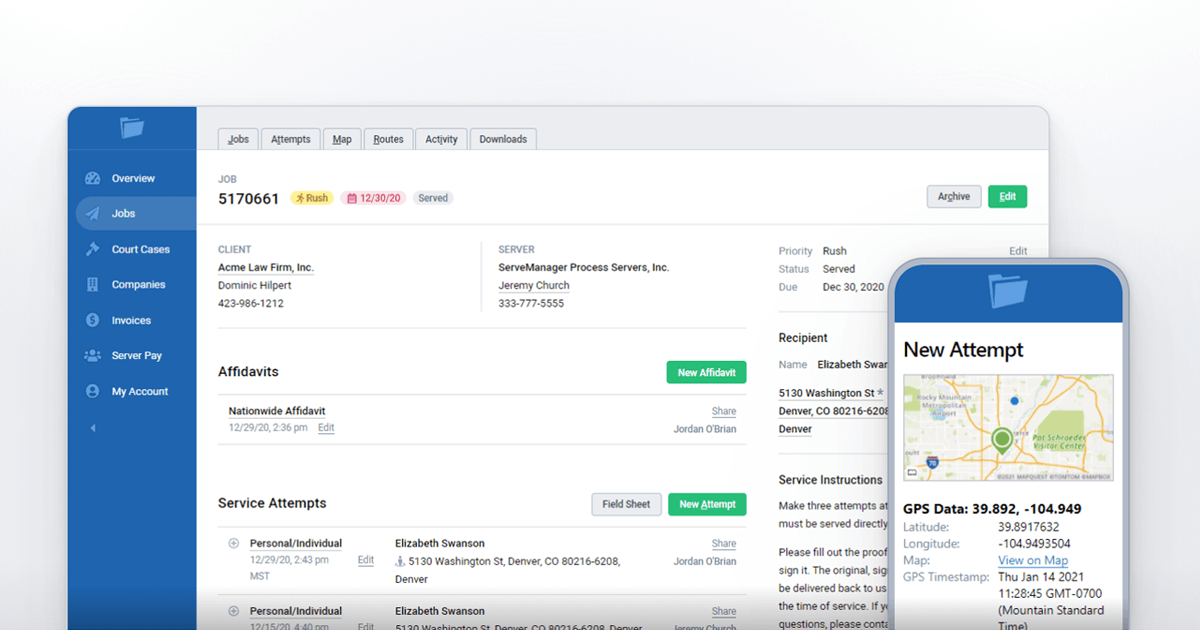
Our Digital Service of Process (DSOP) workflow already enables process servers to digitally notify recipients and meticulously track and document every service event. DSOP creates a verified, court-friendly record of the service attempt and recipient interaction.
We’re not theorizing about how to handle electronic service — we’re doing it now.
For more information on how DSOP works, you can read the full product description here: DSOP Updates .
Where the Industry Is Heading
States like Texas, Illinois, and New York have already embraced limited electronic service. If New Mexico adopts this rule change, it will only accelerate a national trend.
Process servers who embrace technology and compliance will thrive. Those who rely solely on traditional methods risk falling behind.
One thing is clear: service of process is evolving. At ServeManager, we’re proud to lead that evolution and support the process servers and law firms navigating these changes.