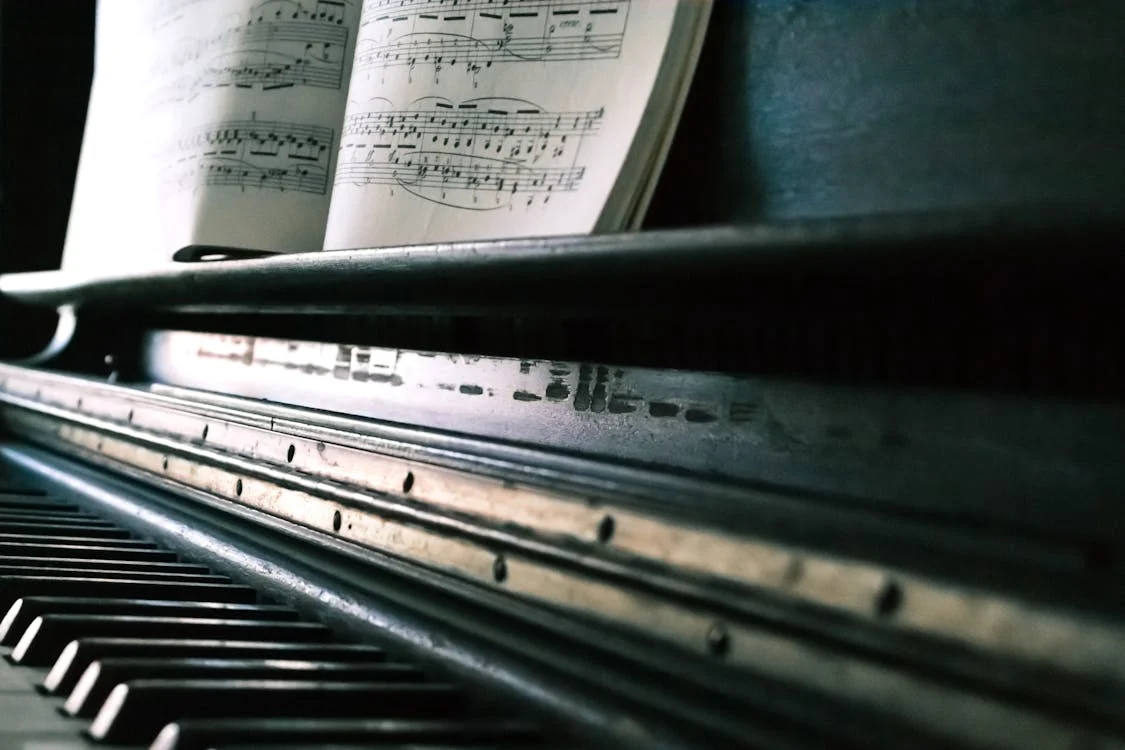
Discover the evocative Aeolian mode on piano, a cornerstone of melancholic and introspective music. Learn its scales, explore its deep emotional resonance and see how Skoove can guide you through this expressive mode.
What is the Aeolian mode? In this article we’ll unravel the essence of the Aeolian mode, dive into its scales and keys, and offer practical steps for playing it on the piano. By the end, you’ll be ready to bring this deeply expressive mode to life in your music.
The Aeolian mode, also known as the natural minor scale, is the sixth mode of the diatonic scale, one of seven musical modes found in a major scale . Known for its dark and melancholic tone, it contrasts sharply with brighter modes like Ionian and Lydian. Associated with sadness and introspection, the Aeolian mode is a staple in both classical and contemporary music.
Rooted in ancient Greek traditions, this mode evolved into the foundation of minor key tonality in Western classical music and remains prominent in genres like rock, folk and film scores, where its emotional depth continues to resonate.
The interval structure of the Aeolian mode is as follows:
(W = Whole Step , H = Half Step )
For example, the A Aeolian scale (the natural minor scale of A) looks like this:
A – B – C – D – E – F – G – A
This interval pattern includes a minor third (A to C), minor sixth (A to F), and minor seventh (A to G), all of which contribute to its melancholic sound.
This sequence of intervals creates the sound that gives the mode its character; it can be thought of as the Aeolian mode formula.
Compare this to A Ionian (A-B-C#-D-E-F#-G#-A), and you’ll notice:
The Aeolian mode can begin on any of the twelve chromatic notes. Each starting note produces a new key, while the interval pattern remains consistent. Here’s a table showcasing the Aeolian modes in all 12 keys:
Diatonic modes of the major scale, such as Aeolian, can be formed by playing a major scale from a specific degree. The Aeolian mode is formed by playing from the sixth degree. Let’s break this down:
1. Start with a major scale : For example, in C major (C Ionian), the notes are: C, D, E, F, G, A, B, C.
2. Begin on the sixth note : Start on A instead of C.
3. Play the same sequence of notes as the major scale starting on the sixth degree : A, B, C, D, E, F, G, A.
Now you have constructed the A Aeolian mode from the sixth degree of a major scale. Well done!
This process works for any key, try forming some more examples of the Aeolian scale and check them against the table we just looked at.
As with any of the piano scales you may have practiced, mastering the Aeolian mode on the piano opens up a world of expressive possibilities. Its distinctive minor feel with a natural sixth makes it perfect for crafting soulful melodies and emotional improvisations.
In this section, we’ll break down the steps to play the Aeolian mode , starting with basic fingerings and progressing to advanced techniques that will enhance your practice routine.
Start with A Aeolian (A natural minor scale):
Practice with the left hand:
Once you’ve mastered the basics:
Platforms like Skoove can enhance your practice by offering interactive lessons and exercises tailored to your level. Whether you’re mastering scales or looking for how to play piano for beginners , Skoove provides real-time feedback, helping you refine your technique and deepen your understanding.
Here are three great songs you can learn with Skoove to dive into the unique character of Aeolian music while improving your piano skills!
This timeless classic shines with Aeolian improvisation with its natural minor tonality present in its chord progressions lending a reflective and soulful character to its elegant melodies.
This iconic ballad embraces the Aeolian mode, its melancholic minor sound deepening the song’s raw emotion and timeless appeal.
The Aeolian mode amplifies the song’s edgy intensity, with its natural minor scale infusing a gritty, dramatic undertone to the driving bassline.
The Aeolian mode, with its melancholic and introspective quality, is a powerful tool for expressing emotion in music. As the foundation of the natural minor scale, it has influenced a wide range of compositions from classical symphonies to contemporary ballads. By practicing the Aeolian mode on piano, you’ll deepen your understanding of minor key tonality and enhance your expressive capabilities. With tools like Skoove offering guided lessons and creative exercises, mastering this evocative mode becomes a rewarding journey. Happy Practicing!
Author of this blog post: Susana Pérez Posada
Susana Pérez Posada, Master in Music Therapy, Skoove Piano Educator With over seven years in piano education and a deep passion for music therapy, Susana brings a unique blend of expertise to Skoove. A graduate in Music Therapy from SRH Hochschule Heidelberg and an experienced classical pianist from Universidad EAFIT, she infuses her teaching with a holistic approach that transcends traditional piano lessons. In her writings for Skoove, Susana combines her rich musical knowledge with engaging storytelling, enriching the learning experience for pianists of all levels. Away from the piano, she loves exploring new places and immersing herself in a good book, believing these diverse experiences enhance her creative teaching style.