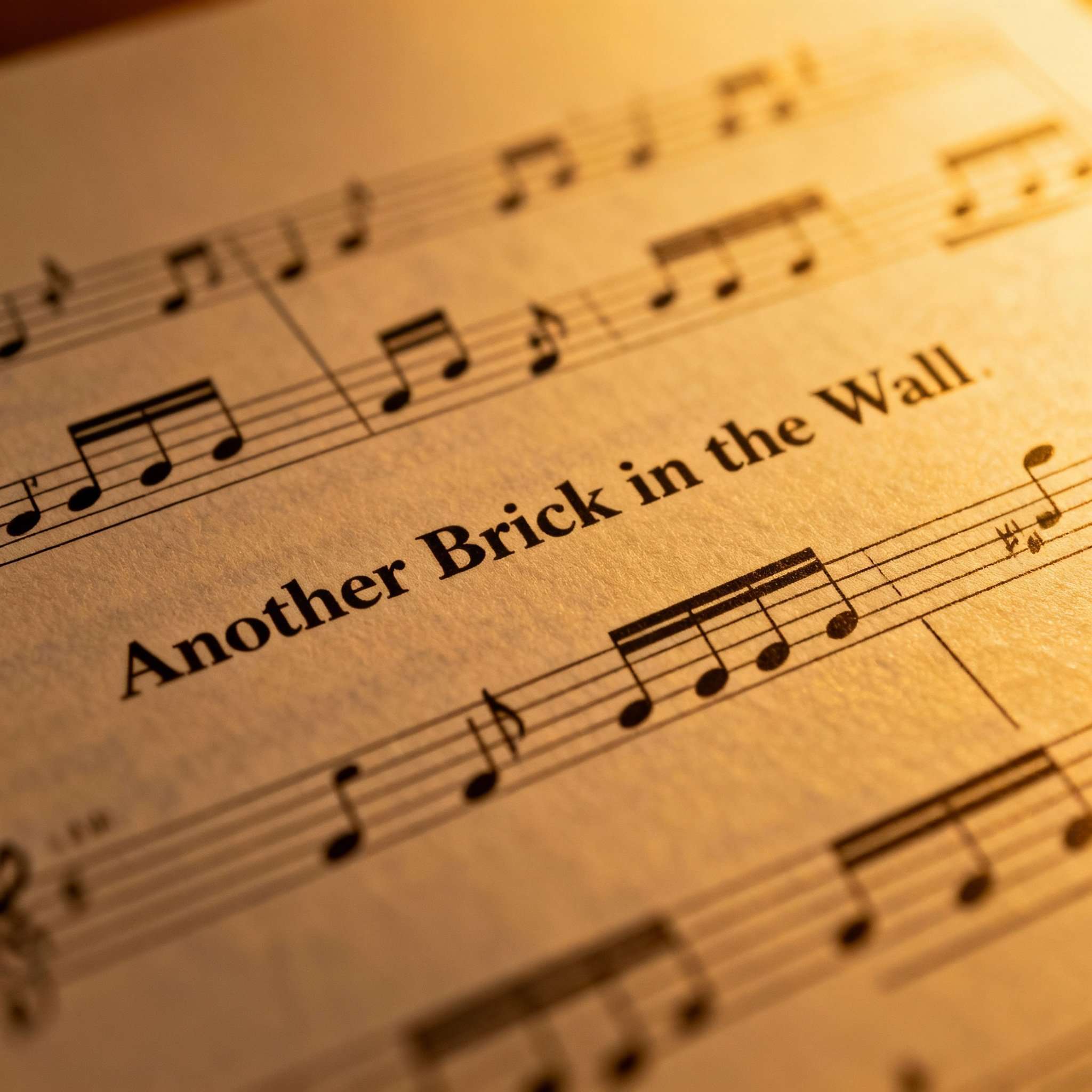
When Pink Floyd recorded “Another Brick in the Wall (Part 2),” they added something unforgettable, a choir of schoolchildren singing the famous line “We don’t need no education”. Producer Bob Ezrin invited kids from a London school into the studio and their voices gave the track its powerful, rebellious sound.
Ready to play a rock classic the easy way? In this step-by-step guide, we’ll show you how to play “ Another Brick in the Wall” on piano, with simple notes, beginner-friendly fingering and clear practice steps. We keep things straightforward so you can move quickly from reading to playing.
Skoove makes “ Another Brick in the Wall” on piano easy and gives you control and groove. Whether you’re an adult beginner, a parent supporting a child, or a motivated kid, you’ll get a piano song that’s fun, friendly, and doable.
By the end of this article, you’ll know the essential “ Another Brick in the Wall” piano notes. Ready? Let’s get started!
Before diving in, let’s look at the notes you’ll be playing. The arrangement sits nicely in D minor, which gives the song its moody and rebellious feel. As the range is small and the rhythm is steady, this song is very approachable for beginners.
Let’s break it down hand by hand.
Your right hand plays the famous vocal riff that everyone recognizes. You’ll only need a small group of notes and they repeat often. Place your thumb on D above middle C and relax your hand over the white keys. Here’s a line of the opening right-hand notes:
D(1) – E(2) – F(3) – E(2) – D(1) – E(2) – F(3) – E (2)
You’ll notice that the melody mostly moves step by step, which means your hand can stay relaxed in one position.
The left hand keeps things very simple by holding down single notes (bass notes) that match the harmony. In this arrangement, you’ll often see the same note repeated across several measures, this gives a steady, grounded feel.
Place your left-hand little finger on D, since most of the accompaniment centers around it. Later, you’ll add other simple bass notes like C and F when the harmony changes.
D (1) – D(1) – D(1) – D(1)
If you’re just starting out, it’s perfectly fine to practice the left-hand notes alone first, letting them ring out clearly.
Now that you know the notes, let’s put everything together. This is where the melody in your right hand meets the steady bass in your left hand and you’ll hear the full song come to life. The following “ The Wall” song video tutorial will walk you through both hands, show finger positions in real time and lets you hear exactly how it should sound. Follow along slowly, then rewind and repeat sections as needed.
Learning this Pink Floyd classic is all about keeping things simple and steady. Here are a few practice strategies to help you sound confident and enjoy the process:
You’ve just played your way through one of rock’s most iconic anthems. With just a few notes and simple chords, you’ve built the foundation of “ Another Brick in the Wall” on piano.
This is only the beginning. Imagine what it will feel like when you can sit down and play any piano song you love, when you can switch from rock to pop, or even dive into jazz, all with the same step-by-step support. That’s exactly what we’ve built at Skoove . With interactive lessons that guide your hands, listen to your playing and help you grow at your own pace, the music never stops at just one song.
Keep exploring the piano and let every song become the next step in your piano journey.
Author of this blog post: Matthew Dickman
With over a decade of experience in music education Matthew holds a BA in Music from Paul McCartney’s LIPA and an MA in Composition from the University of Salford. Mathew has developed a distinctive compositional voice and approach to music theory education through his research and work in the music industry. Matthew’s writing for Skoove combines experience from orchestral and media composition, and as a gigging jazz musician, to create a wholistic and accessible pedagogy for musicians of any level. Away from music, he enjoys reading and exploring nature to expand his horizons and knowledge contributing to his holistic teaching style.