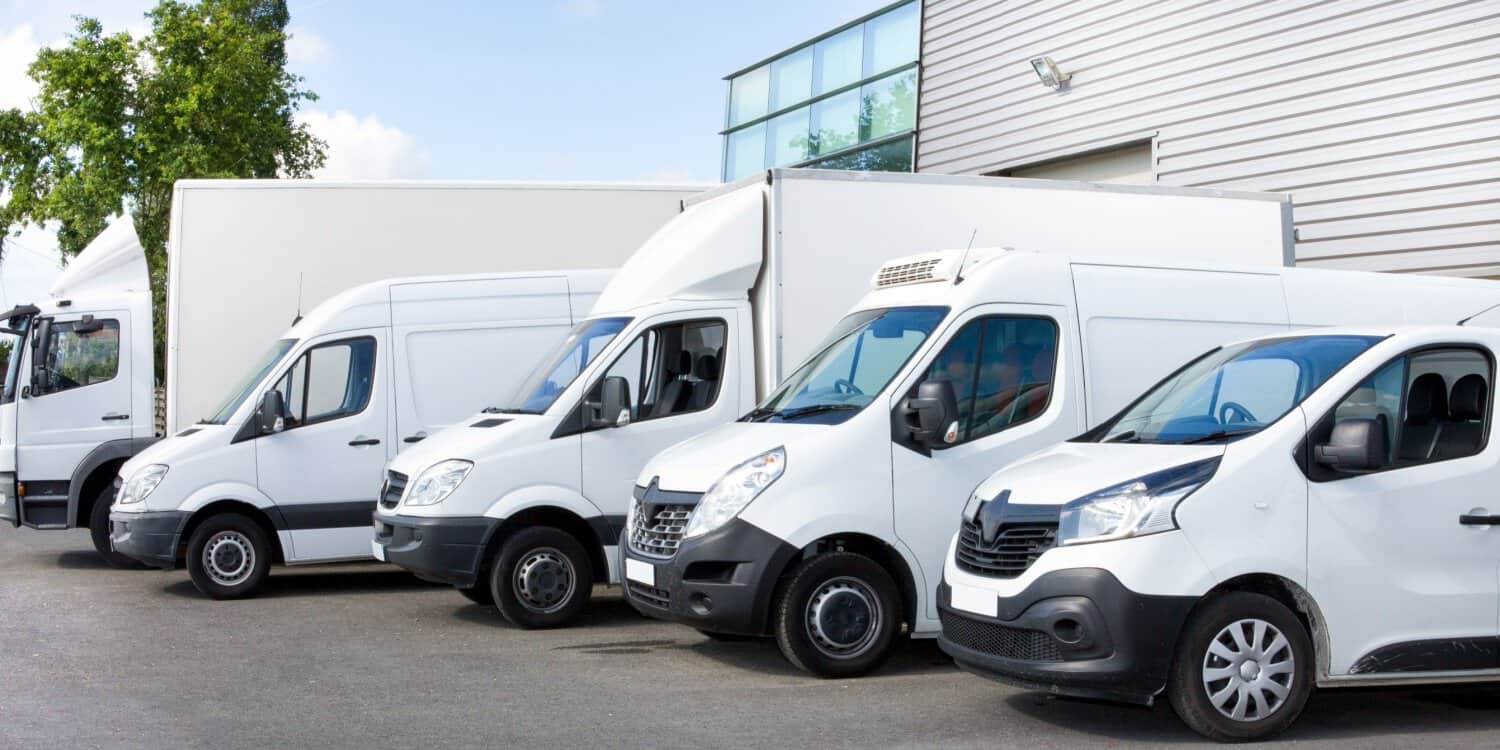
If you own or use a vehicle through your limited company, the amount of tax you pay on it depends on whether HMRC classifies it as a van or car. Understanding the tax treatment of your company vehicle is especially important if there’s a private element to its usage (i.e., if you’re also using it for personal journeys).
The tax areas that rely on the classification of company vehicles are:
Below, we’ll discuss company vehicle classifications and the different taxes and allowances that apply to vans and cars.
HMRC’s capital allowances regime provides tax relief against cars and vans purchased and/or used for business purposes. However, the amount of capital allowance you can claim depends on the type of vehicle in question, i.e., is it a car or another type of vehicle, like a van.
The definition of a car for capital allowances purposes is any mechanically propelled vehicle other than:
If your vehicle fits the definition of a car, you can only claim ‘writing down allowances’. This lets you deduct a percentage of the car’s value from pre-tax profits each year, based on the vehicle’s CO2 emissions:
If your company vehicle is a van and does not fit the definition of a car, you can claim the ‘annual investment allowance’ (AIA). This lets you deduct the full value of the van from pre-tax profits in the first year of owning it.
From 6 April 2025, HMRC will reclassify most double cab pickups as cars for tax purposes based on their primary suitability for carrying passengers or goods. Consequently, these vehicles will no longer qualify for AIA but will be eligible only for writing down allowances, like other cars.
If your company is VAT-registered, you can generally reclaim all of the VAT on a car or commercial vehicle (van, lorry, tractor), as long as you use it exclusively for business. This means that the vehicle must not be available for any private use whatsoever, including travelling between your home and workplace unless the car is:
If the vehicle is also used for personal journeys, you can only reclaim the portion of VAT that relates to business use.
Any company can register for VAT, even if it does not meet the £90,000 turnover threshold. Doing so allows you to reclaim VAT on all the goods and services you purchase through your company. Get started today with Rapid F ormations’ V AT Registration S ervice .
The definition of a car for VAT purposes is any motor vehicle that has three or more wheels, is normally used on public roads, and meets one of the following conditions:
The following are not classed as cars for VAT purposes:
You can also reclaim all of the VAT on fuel if the vehicle is used exclusively for business. However, if you use the vehicle for any private journeys, you can only reclaim VAT on the business element of fuel. Alternatively, you can reclaim 100% of the VAT and pay a fuel scale charge to cover private usage.
Generally, you can reclaim VAT paid on other business-related costs like off-street parking, repairs and maintenance, and any accessories fitted for business use.
Benefit in kind (BIK) relate to tax on company benefits (e.g., cars, vans, accommodation, loans) provided to directors and employees.
If you have access to a company car for private use (including commuting), the amount of personal tax you pay on the car is based on the list price of the car and the scale of CO2 emissions.
The definition of a car for the purposes of benefits in kind is a mechanically propelled road vehicle that is not:
The benefit in kind charge is different for the private use of company vans . Rather than paying tax in relation to the value of the vehicle and its CO2 emissions, you will pay tax on standard flat-rate values of:
If the van is electric, the benefit in kind rate will be £0, and there will be no fuel charge.
On 6 April 2026, the van benefit charge increased to £4,170. The car fuel benefit multiplier rose to £29,200, and the van fuel benefit charge rose to £798.
Meanwhile, the amount of benefit in kind tax that you pay depends on a car’s P11D value, its CO2 emissions, and the rate of income tax you pay. The sum is:
P11D (value of the car) x Tax (income bracket) x BIK rate (type of car) = How much BIK you will pay
The BIK rate is significantly lower for electric cars than petrol or diesel. For electric cars, it was 2% until April 2025, then 3% for 2025/26, 4% for 2026/27, and will rise to 5% for 2027/28. In contrast, the BIK rate for a car with emissions over 160 g/km is 37%. In 2028/29 it will rise to 38%, and then rise again to 39% the following year.
It’s also worth noting that from 1 April 2025, zero-emissions vehicles will no longer benefit from reduced Vehicle Excise Duty (VED) rates. They will be subject to the same VED rates as internal combustion engine vehicles.
How HMRC classifies your vehicle has a significant impact on the tax reliefs and benefits available, including capital allowances, VAT reclaim, and benefits in kind. When you know how HMRC will tax your vehicle, you can make informed decisions that optimise your business’s bottom line.
Tax regulations are always evolving, so we will keep this blog updated regularly to help you navigate these complexities and maximise the financial benefits for your business.
Thank you for reading. Please leave a comment below if you have any questions about how HMRC classifies company vehicles, and check out our other Rapid Formations blogs for more information on tax, running a business, and more.