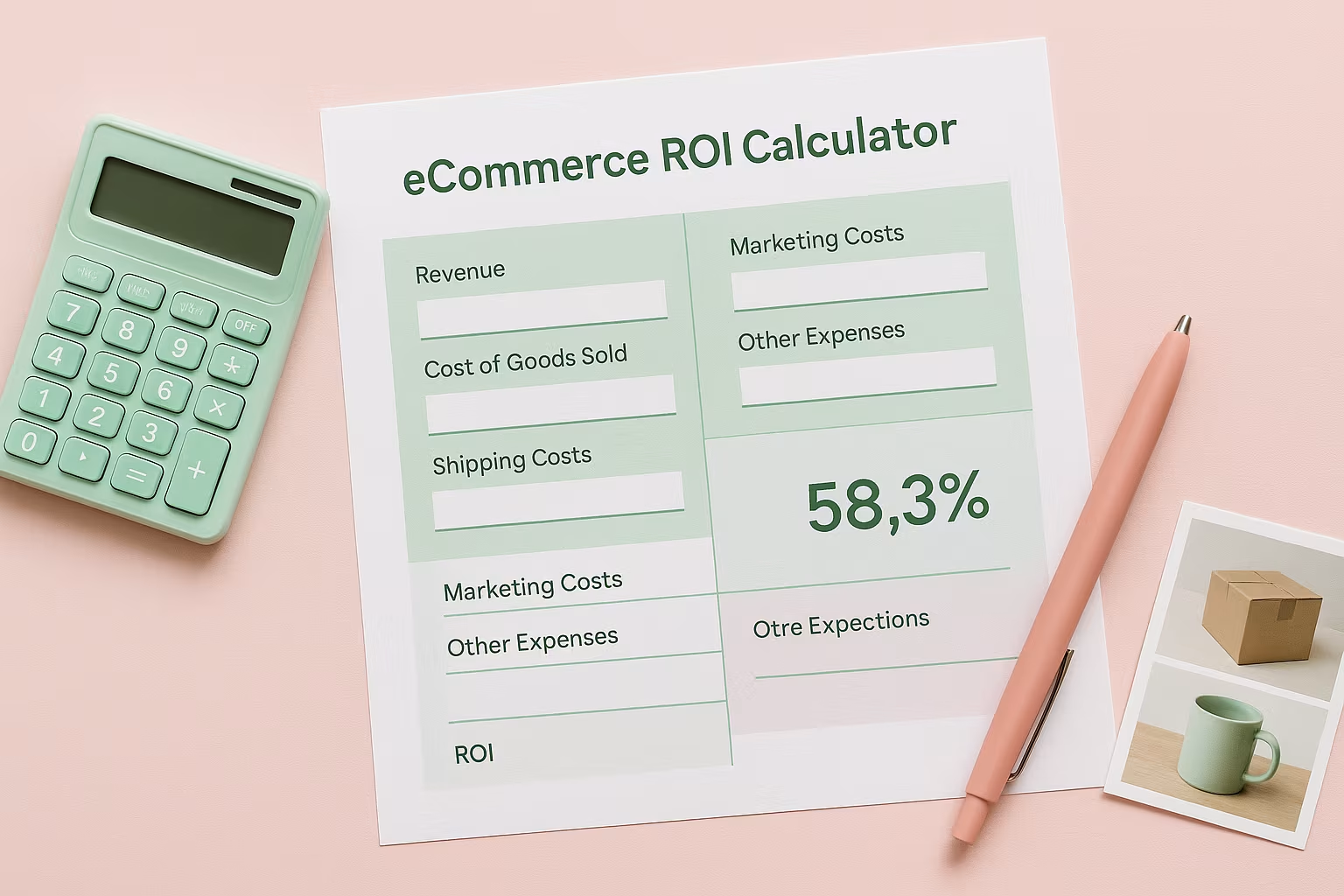
Tracking ROI is one of the most important (yet often overlooked) parts of running a successful ecommerce business. Without knowing exactly how much return you're getting from your marketing and operational spend, it's nearly impossible to scale profitably.
That’s where the Ecommerce ROI Calculator comes in - designed specifically for online sellers and dropshippers, this tool gives you instant clarity on what’s working, what’s not , and how to make data-backed decisions to drive real growth.
Most calculators oversimplify. This Ecommerce ROI Calculator was built to reflect the real-world complexity of modern ecommerce. Here’s how it mirrors real operational inputs:
These are your non-negotiable base costs. That includes manufacturing , kitting , and pick-and-pack , not just raw COGS.
Pro tip: If you’re bundling products, factor in volume discounts and per-unit packaging costs like inserts or labeling fees. Your ROI is only as accurate as the inputs.
Shopify, Stripe, PayPal — they all take their cut. This tool bakes in platform and transaction fees (e.g., 2.9% + $0.30/order) so you know your real profit after fees, not just your revenue.
Even premium apps can erode margins if you’re not tracking them.
This is where most sellers lose ROI without realizing it. You might spend $500 on ads and celebrate clicks, but if your conversion rate is 2%, your CAC may be unsustainable.
This calculator connects traffic , conversion , and orders placed so you know exactly how much you're earning on each dollar spent.
Returns quietly eat into profits, especially for health, beauty , or apparel categories. Sellers from a private labeling platform need to factor in product satisfaction , shipping errors , or seasonal return spikes . The calculator subtracts lost revenue from expected returns so you aren’t misled by top-line revenue.
The tool is straightforward but surprisingly powerful . With a few inputs, like product cost, shipping, ad spend, and visitor conversion rate, you get detailed insights into:
Everything is built for real-world scenarios where variables shift constantly. It’s ideal for testing pricing models , validating new SKUs, or adjusting spend during Q4 and high-traffic campaigns.
To see the ecommerce ROI calculator in action, let’s break down a real-world scenario using a popular product type.
This example highlights how each input, product cost , ad spend , conversion rate , and more, directly influences overall profitability. It also shows how even small adjustments can lead to significant improvements in ROI and margins.
After plugging those values in, the calculator returns:
The insights here are clear. Despite a solid selling price, platform and marketing costs chip away heavily. Any change, say, a bump to 4% conversion or negotiating a lower fulfillment fee, could improve profit by 30% or more.
This calculator isn’t just for pre-launch modeling. Veteran ecommerce sellers use it in multiple scenarios to sharpen operations:
Estimate expected ROI before you sink $2K into Meta ads . Know how many sales you need to break even, and at what AOV.
Quickly compare the profit margins of multiple products to decide which ones deserve top placement or ad budget.
Use real return data to calculate how it’s affecting your bottom line , and whether a policy tweak could help.
Switching from Etsy to Shopify ? This helps you compare platform fee structures and see how they impact margin.
Once you've run the numbers through the ecommerce profit calculator, the next step is knowing how to optimize your metrics. For private label sellers in the e-commerce or dropshipping space, there are five levers that most directly affect profit and ROI.
Each lever isn’t just a metric; it’s a decision-making zone that sellers can actively control, test, and improve.
Improving your site’s conversion rate has a compounding effect on ROI . More conversions from the same traffic mean a lower cost per acquisition and higher revenue per dollar spent on ads.
Even moving from 2.5% to 4% conversion can double ROI without increasing ad spend.
Fullment costs include picking, packing, kitting, and labeling. These costs can vary based on packaging choices, weight tiers, and SKUs per order.
Opportunities to optimize:
Evaluate which SKUs cost more to fulfill than they earn, and revise or remove them.
Advertising is where ecommerce profitability often bleeds . Using the calculator helps identify when your ad strategy isn’t sustainable.
Instead of cutting spend, optimize spend per SKU based on actual ROI performance.
Returns are often excluded from early profit models , but in reality, they’re a margin killer. Especially in beauty, wellness, and apparel, returns should be treated like a direct expense.
Smart ways to reduce returns:
Build the return rate into your calculator inputs and track changes over time.
Many sellers underprice out of fear, not strategy. Use the calculator to test new price points and see how even a $3–$5 increase affects profit margin, even accounting for a slight drop in conversion.
Scenario testing with the calculator can help:
Sometimes, increasing price is the most straightforward way to double profit, without touching your costs.
Want to really squeeze value from this calculator? Use it in reverse . Instead of inputting your actual conversion rate, test different ones to find out what conversion rate would be needed to hit a target ROI, say, 25%.
Then optimize your landing page , pricing, and offer stack until you hit that number.
Example: With the same product setup, increasing conversion from 3% to 4.2% boosts ROI from 18% to 35%. No need to increase ad spend, just better optimize your site experience.
Whether you’re launching your first SKU or scaling a multi-product brand , profit clarity should be non-negotiable. Tools like this ecommerce ROI calculator turn vague assumptions into concrete strategies.
Use it before l aunching new SKUs , adjusting pricing, or doubling down on campaigns. Then revisit it monthly to refine and adapt.
Your margins will thank you.
Find answers to all of your unanswered questions
Explore our Help Center for detailed answers, expert advice, and step-by-step guides.