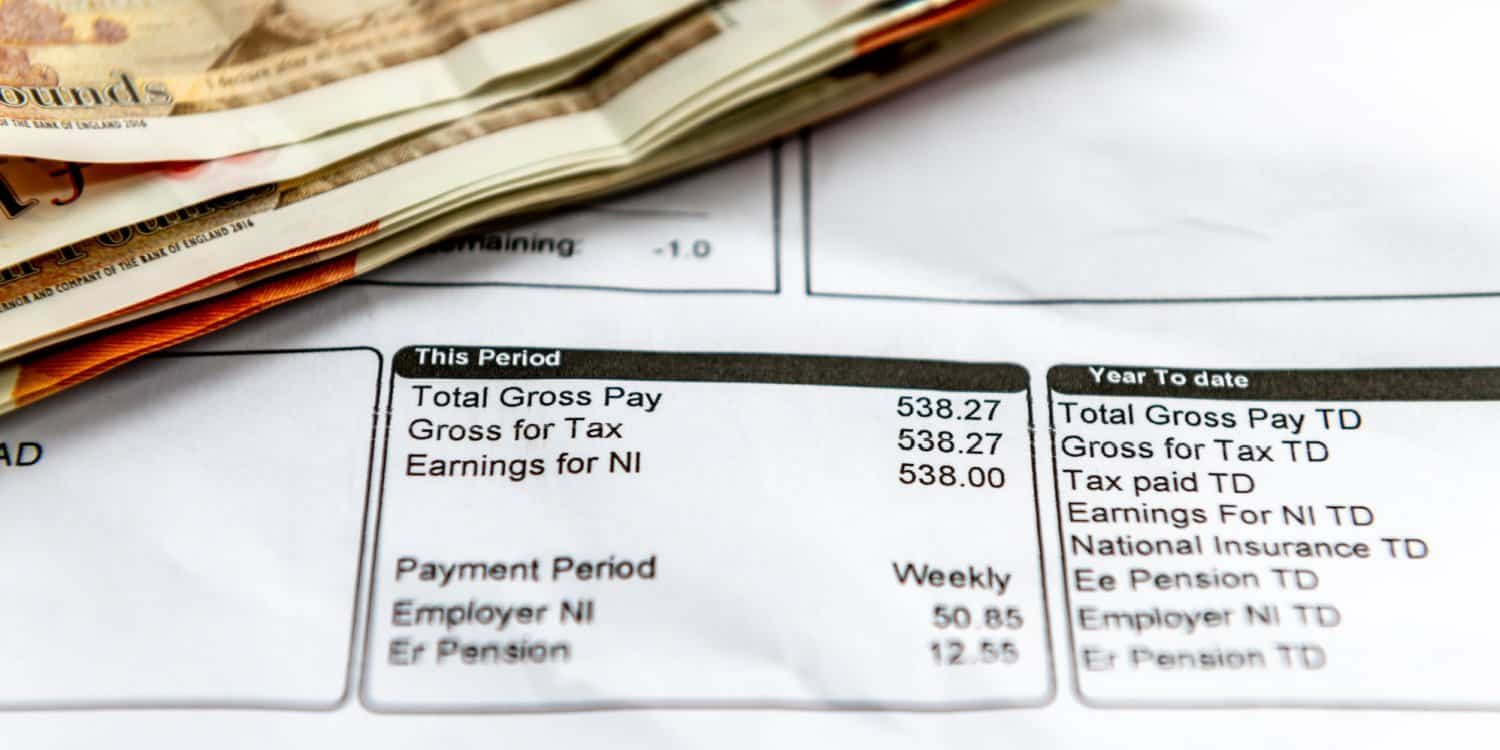
Employers are required to assign the correct National Insurance category letters to employees when running payroll. These letters enable employers to calculate the National Insurance liability on each person’s pay, ensuring the necessary contributions are made to HMRC.
In this post, we provide an overview of each category letter and the corresponding contribution rates for employees and employers.
National Insurance contributions (NICs) represent the second-biggest source of revenue (after Income Tax) for the UK government.
Employees (including company directors ) and self-employed individuals are liable for NICs on their wages or profit above certain thresholds. Employers must also pay NICs on employees’ earnings above the Secondary Threshold, which is £5,000 for the 2026-27 tax year.
Most individuals over the State Pension age do not pay employee or self-employed National Insurance contributions. However, employer NICs are still due on their pay.
To determine how much is payable, employers must assign each employee a specific National Insurance category letter based on their circumstances. The applicable letter indicates the liability (if any) of both the employee and employer.
There are 17 category letters in total, with ‘A’ and ‘C’ applying to most employees. Each letter corresponds to a specific contribution rate, so it’s crucial to understand which category an employee falls under before processing their pay. We outline these in the tables below.
There are different rules for foreign-going mariners and deep-sea fishermen . HMRC provides detailed guidance for employers of these workers, which explains how to calculate contributions manually for those who must pay National Insurance.
Employees’ wages are subject to Class 1 National Insurance when their earnings exceed certain annual thresholds. These contributions comprise:
The rates payable depend on the individual’s employment status and how much they earn. These factors dictate the applicable National Insurance category letters for the employee and employer. The rates for each category letter are shown in the tables below:
Employers must also pay Class 1A and 1B National Insurance on any employee expenses and benefits they provide. The current rate for the 2026-27 tax year is 15%. Class 1A contributions are also payable on certain other lump sums, such as redundancy payments.
Occasionally, employers may need to change an employee’s National Insurance category letter partway through the tax year. This requirement will arise if the employee’s circumstances change, for example:
Payroll software should automatically change the NI category letter and rate for employees once they turn 21. However, for other circumstances, the employer will need to manually adjust the rate before processing payroll.
All employers must pay employer (secondary) Class 1 National Insurance on the gross earnings of any employee paid more than £96 per week. The rate payable in the 2026-27 tax year is 15%.
Employers must pay their Class 1 contributions through Pay As You Earn (PAYE) monthly or quarterly. This liability will be included in the employer’s PAYE bill alongside the following (where applicable):
Employers must also pay Class 1A National Insurance on any work benefits they provide to their employees. These contributions are paid separately after the end of the tax year.
Your payroll software should be able to automate the calculations of Income Tax and National Insurance payable to HMRC, including any employer NICs due on employees’ earnings above £96 per week. Using software reduces the risk of errors and saves time.
You can also use HMRC’s online calculators and tax tables to manually check PAYE tax, work out employee National Insurance contributions, director NICs, and Student and Postgraduate Loan deductions.
These HMRC resources are also helpful if you want to run ‘what if’ calculations to model various scenarios, determine the potential impact of these values, and logically compare data.
Please leave a comment below if you have any questions about this post. For more small business advice and limited company guidance, explore the Rapid Formations Blog .