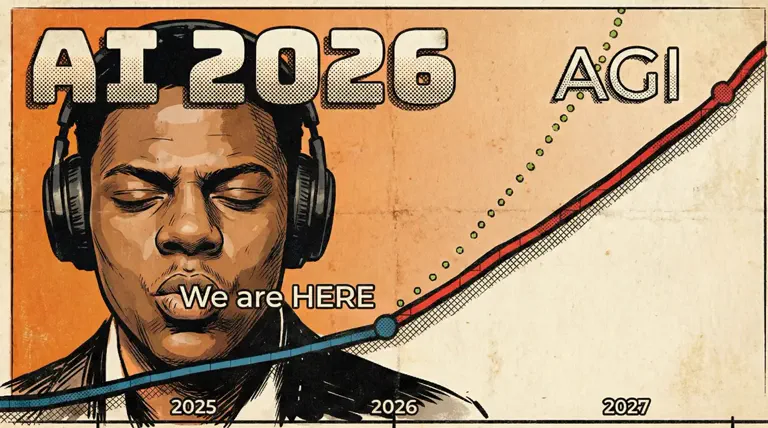
Memes didn't always move. They started as static images with clever captions. Then videos took over. Now, in 2026, motion is the default. Memes dance, react, loop, and perform. If it doesn't move, it barely stops the scroll.
What's changed the most is access. Creating a meme no longer means knowing editing tools or animation tricks. AI has made motion simple. One image is enough, and literally anyone can turn an idea into a shareable meme within minutes.
This is where Viggle sits in today's meme ecosystem, as it bridges the gap between ideas and execution. No heavy setup. No learning curve. Just fast, flexible meme creation that fits how trends actually move online.
In this blog, you'll see how AI is reshaping memes in 2026, how creators are adapting, and where tools like Viggle fit into this modern meme stack.
Memes didn't suddenly become different overnight. They evolved because the way people consume content changed. Faster feed. Shorter attention spans. And a constant need for movement to hold attention. To understand this evolution closely, let's look at 3 very specific transitions.
Originally, memes were static because that's all most creators could easily make. A single image, a caption, and the joke were done. But as platforms started prioritizing video, static memes began losing visibility, not because they weren't funny, but because they didn't move.
Animated memes changed that. Here's how that shift looks in practical terms:
Because motion adds timing and rhythm, the same idea now lands harder and stays visible longer.
Before AI, animating a meme required effort that most people simply didn't have time for. You needed software, timelines, layers, and patience. Even then, the output often felt stiff or overworked:
Now,* instead of creating motion, creators borrow it. *A dance, a walk, a reaction, all of it can be transferred instantly onto a still image. Viggle does exactly this, where a motion clip and a character image are combined in seconds using motion mix.
When creation becomes real-time, creators stop overthinking. And that's important, because most viral memes come from quick, instinctive ideas, not polished planning.
Earlier, most memes were disposable. One joke. One image. One moment. Once it peaked, it was done. AI changed that by making memes modular. Here's how that plays out:
Viggle's viral meme trends follow the same modular pattern. Creators on the platform take a single motion format and reuse it across different characters, captions, and contexts. The clearest example is the MrBeast Rizz dance : creators remixed MrBeast with Viggle, he performed the dance in real life two years later, and the community remixed him again.
This way, the structure stays fixed, while the joke evolves through remixing. This is what allows one meme format to spread quickly without losing relevance.
Memes don't go viral just because they're funny. They go viral because they move fast. Speed decides whether a meme becomes a trend or disappears quietly. This is where AI changes the game completely.
To see how, we first need to understand how meme trends actually work.
A trend cycle is the full journey of a meme idea. It starts when something new appears, peaks when everyone is sharing it, and ends when the internet moves on. Earlier, this cycle used to take days or even weeks. Now, it can rise and fall within hours.
Think of a trend cycle like this: "Trend Cycle Time = Creation Time + Remix Time + Distribution Time."
So the cycle was slow. But with AI:
In simple terms: AI shrinks every step of the cycle. That's why trends today feel faster, louder, and shorter-lived.
Once a meme format appears, its survival depends on remixing. If people can't easily adapt to it, the trend dies early.
AI removes that friction.
Instead of recreating a meme from scratch, creators can reuse the same structure and swap only what matters.
This is what automated remixing enables:
Because remixing is effortless, more people join in. And when more people remix, the algorithm reads it as momentum.
That's how a meme stops being "one good post" and starts becoming a trend.
Most viral memes today are not unique creations. They are basically templates on which AI thrives because they're predictable, repeatable, and scalable.
Here's why template-based memes spread so well:
AI tools make templates easy to reuse without degrading quality. That consistency is crucial.
When dozens of creators use the same base format:
This is how AI turns memes into ecosystems, not just content.
Trends move fast, formats change weekly, and attention drops even faster than that. Interestingly, this is where AI quietly becomes a creator's safety net, helping them adapt without burning out. Let's break down the 3 main ways how creators are actually using it day to day:
Instead of spending days on a single idea, creators now actively test multiple variations quickly and see what sticks. As a result, this helps in:
This speed lets creators stay visible even when trends shift overnight.
Different platforms reward different behaviors. AI helps creators adjust without rebuilding content from scratch. Here are some major platforms and exactly how AI helps in adapting content for them:
Instead of choosing one platform, creators stay active everywhere with minimal extra effort.
Creators no longer have to guess what format might work next. AI makes testing easy.
Over time, this helps in discovering what works for their audience.
Memes today move fast, and keeping up with that speed is half the work. You don't need more ideas or complicated setups. You just need a way to test, remix, and publish quickly. That's where Viggle fits in by turning images into meme videos without slowing you down, so you can react to trends while they're still relevant.
Let's look at how you can use Viggle to create meme videos that can keep pace with the AI-driven meme ecosystem:
From the dashboard, open the "Mix" workspace in the left sidebar.
Once the video is ready, you can repeat the same process with different characters, motions, or clips to react to new trends quickly.
Memes have always reflected how people use the internet. As AI tools become faster and more intuitive, memes are starting to feel less generic and more personal, more reactive, and more connected across platforms. Here are a few trends we're likely to see more of very soon!
Memes are slowly moving away from "this is funny for everyone" to "this is funny for you." AI makes that shift possible without extra effort from the creator.
When someone feels like a meme was made specifically for them, they're far more likely to share it. That's where personalization starts beating virality.
Real-time reaction memes work because they feel instan t. Something happens online, and a reaction shows up almost immediately. That speed is what makes people stop scrolling.
But in practice, reacting fast is harder than it sounds. You need a character, the right expression. And you need everything ready *before *the moment passes.
This is where Viggle makes things easier, as it is structured around quick character selection.
Reaction memes are not about perfection. They're about timing and relatability. Here, Viggle's character library helps you:
That's how, instead of designing a character every time, you simply choose one and move on.
Another big advantage is variety. The same trending moment can trigger different reactions.
With Viggle, you can:
This is especially useful on platforms like Reels, Shorts, and TikTok, where fast iterations matter.
Memes are no longer living on just one platform. A joke might start on TikTok, continue on Reels, and get remixed again on Shorts or X.
So, instead of one-off posts, memes start behaving like mini storylines. You don't just see them once…you keep running into them in different forms.
Memes have always been about timing. Say the right thing at the right moment, and the internet runs with it. What AI has changed is how fast you can get there. Motion, looping, remixing, personalization… all of it now happens in minutes, not hours.
So, if you're a creator, this is actually good news. You can experiment, remix, and move on just as fast as the feed does. Viggle makes that process simpler than ever. Take an image, add motion, test an idea, and see what clicks. If you're curious about where meme culture is headed, try Viggle today and start creating in the same way the internet now moves.
Not really. AI helps with execution, but the joke, timing, and intent still come from humans.
They don't always have to be. If your idea is honest and relatable, AI just becomes a tool to express it better.
Pretty fast. Some trends peak within days, sometimes even hours, before moving on.
Platforms mainly reward what people enjoy watching. If a meme works, it works (whether AI or not).
Yes, especially when they reach the right audience. That's usually where brands and opportunities follow.