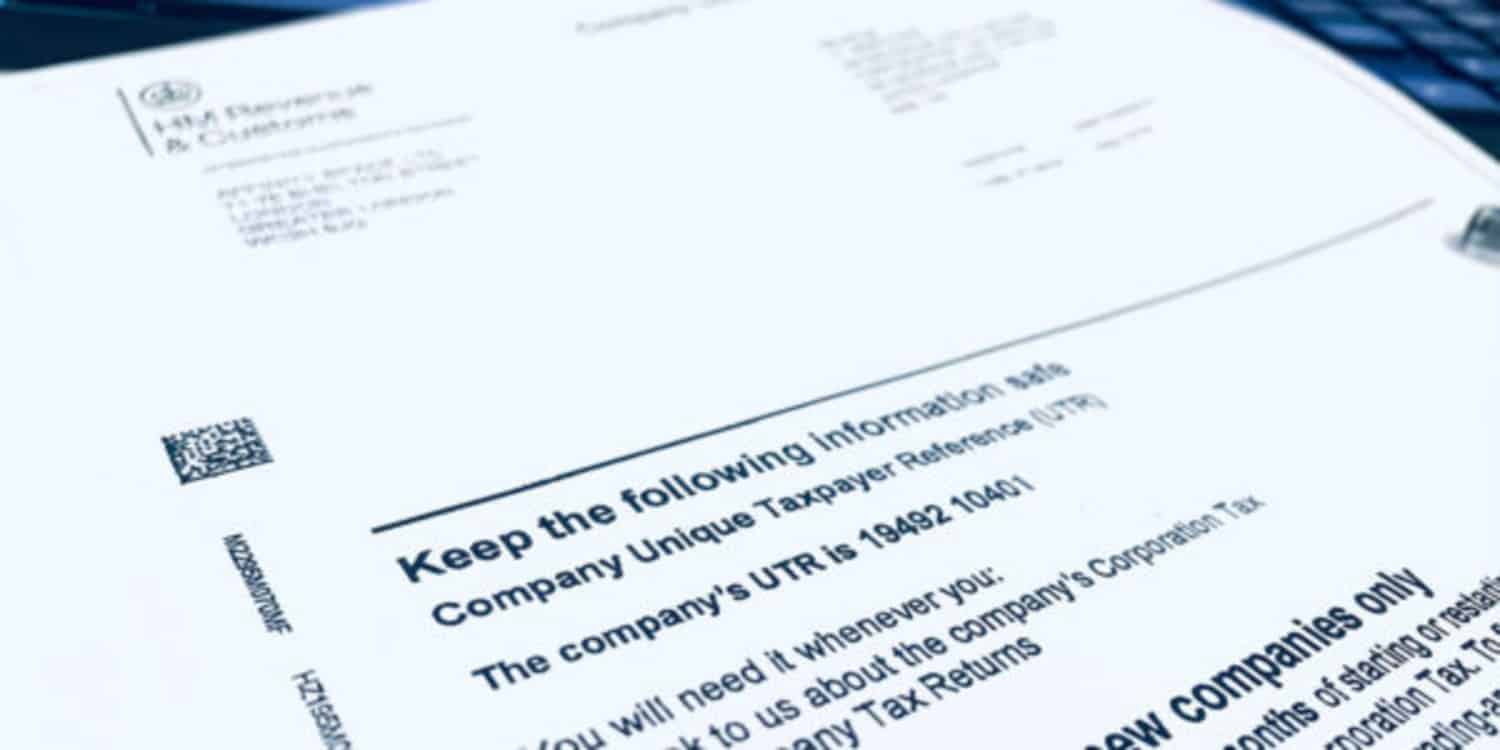
A unique tax reference (UTR) is a 10-digit number issued by HMRC to companies and those who register for Self Assessment. As the name suggests, it is entirely unique to its owner and is a crucial piece of information to keep safe when registering a company.
In this article, we explain everything you need to know about a company’s unique tax reference, including why you need one, how to recover a UTR if you lose it, and tips on keeping your UTR secure.
When you register a limited company in the UK, you will automatically receive a unique tax reference number (UTR).
Once HMRC has received your registration, it will automatically send your UTR to you in a letter to your registered office address within 15 days after you register. If you live overseas, then it may take up to 21 days.
Anyone who has filed with HMRC, as a sole trader or limited company , will need a UTR; however, you don’t need to ‘apply’ for a UTR – you are automatically assigned one upon registration.
UTRs are required to file tax returns with HMRC, which includes self-employed individuals who need to declare income through Self Assessment.
A confusing situation for some new business owners is that you have a separate UTR for Self Assessment and a limited company.
If you are a sole trader and you register a limited company, you will receive a second UTR for the limited company. A limited company essentially exists as a separate legal entity, so it has its own UTR just the same way you do as a sole trader.
The limited company UTR is referred to as a company UTR, and as a sole trader, it is referred to as a personal UTR. Ensure you know which UTR corresponds to which tax return when filing.
Also, remember that the company UTR is also distinct from the company registration number (CRN) and VAT registration number. They serve very different purposes, so be careful not to confuse these numbers.
If you cannot find your UTR on the original letter you received from HMRC when you registered, there are alternative methods for finding it.
Depending on whether you are a sole trader or a limited company, you will have different options for finding your UTR.
If you are a sole trader, you can find your personal UTR:
If you run a limited company and you can’t find your company UTR, you’ll need to apply for a new one by post, as your details must be kept more secure.
You can request a new company UTR via Companies House. As with when you set up your company, you will receive your UTR within 15 days to the registered address of the limited company.
Any time you file a tax return, either as a sole trader or a limited company, you will need a UTR. It is a necessary security measure to ensure that you (or a trusted financial professional) are the ones filing your tax returns.
When you register with HMRC, you must register your company as ‘active’ for Corporation Tax purposes with HMRC within three months of carrying out any business activities or receiving any income.
Here is a checklist to make sure that you have everything you need (including your UTR) to file a tax return correctly.
At this time, you should provide the following information to HMRC.
For more information on what you need to submit as a sole trader and as a limited company, consult the gov.uk website. Note that HMRC will annually review and update its requirements and deadlines, so ensure you stay up to date.
Generally speaking, you need to pay your Corporation Tax within nine months and one day from the end of your accounting period, which you should be able to find in your HMRC account. You should submit your Company Tax Return online no later than 12 months after the end of each accounting period. Remember, you will need your UTR to complete these tasks.
If you have a company but are not trading, then consider exploring our Dormant Company Accounts Service , and save yourself the stress of preparing tax returns.
If you need to check how much corporation tax you might be paying, then you can use our Corporation Tax Calculator to give a rough estimate of how much tax you might need to pay.
While you can technically share your UTR, it is advisable to keep it strictly confidential.
Remember that your UTR is a confidential identification number issued by HMRC, which ensures they are filing the correct returns to the correct company.
If someone else, specifically a bad actor, gained access to your UTR, they could:
Therefore, to avoid this ever happening, ensure that you keep your business records secure, and do not share your UTR with anyone you don’t know or on insecure channels.
For all vital business information, ensure that you keep it protected and only share it via secure channels with those you trust.
Your Unique Tax Reference (UTR) is a crucial piece of information that identifies your business to HMRC. It’s one of the most important details you’ll receive after registering your company.
As a business owner, it’s essential to keep your UTR safe and secure, just as you do with any other vital business information. If you happen to lose your UTR, you can easily find it in existing documents or request HMRC to send it to you by post. Remember, you cannot file a tax return without it, so ensure it’s always accessible.
For guidance on company registration or dormant company accounts services, reach out to our team at Rapid Formations , who can assist you in navigating these essential processes.