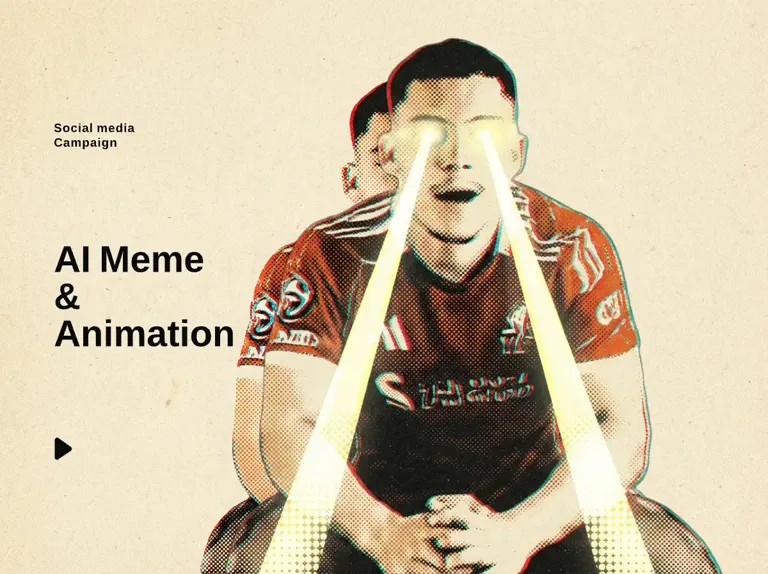
If you manage social content, you've likely seen this happen: one meme works well, but recreating it consistently is hard. The idea isn't the problem, but the lack of a repeatable process is. That's why memes can't stay one-off posts anymore.
Today, AI memes work as campaign-level assets. They're used to test formats, reuse what performs, and publish multiple variations without rebuilding everything each time. Animation is what makes this possible. Motion grabs attention, keeps viewers watching longer, and increases shares when timing and audio are synced properly.
Animated memes simply retain attention better than static ones, and this is where Viggle fits in. In this blog, you will see how to approach AI memes as scalable assets, why animation improves performance, and how Viggle supports meme campaign creation.
That's mainly because they align more closely with how social platforms actually distribute content today. Here are a few key reasons:
Most platforms actively prioritize videos and animated posts over static images because they hold attention longer. For a better understanding, here's a quick overview of platform-wise algorithm preference:
Because of this, meme campaigns built around animation tend to get more consistent reach than single static posts.
AI memes reduce the gap between ideas and publishing. You don't need to plan shoots, design multiple assets, or wait on edits.
This speed makes campaigns more responsive, which directly improves performance on trend-driven platforms.
AI meme campaigns also work well because they're easy to remix rather than reinvent. Mainly due to:
So, when a format is easy to adapt, it stays relevant longer. That's exactly what turns a meme into a campaign asset instead of a one-time post.
AI meme campaigns don't perform the same way everywhere. Each platform rewards different behavior (watch time, shares, loops, or commentary). The best results come when you match your meme format to how the platform actually works.
TikTok is built for discovery. AI memes work here because motion, audio, and exaggeration are already native to the feed. Here are some of its elements and what they work for AI meme campaigns:
Best For : high-energy, trend-led meme campaigns.
Instagram Reels favors recognizable formats and repeat viewing. This makes it ideal for series-based meme campaigns rather than one-offs. For example, these reels show the same crash-out template with different subjects: Rico Dowdle, Florian Wirtz, and others.
That's exactly how campaigns scale:
You can build an entire Reel series around one format, keeping visuals familiar while rotating the subject.
Best For: format consistency and recognizable meme series.
YouTube Shorts works well for AI memes when the content is clear, punchy, and repeatable. Shorts often surface as recommendations, even long after posting. That's why it is a good idea to use YouTube Shorts to frequently group similar meme-style videos together.
This helps campaigns because:
Best For : structured meme series and longer campaign lifespans.
X is fast, reactive, and conversation-driven. AI memes here work best when they're timely and topical, not polished. Here are a few reasons why X works for AI meme campaigns:
Best For : Event-based memes, commentary, and quick cultural reactions.
Meme campaigns perform better when they follow a clear structure. That structure decides what you post, how often, and why it works. Here are a few things to keep in mind:
1. Bollywood : High relatability, strong cultural recognition
2. Hot Picks : Ready-to-use trending formats
3. Fight : Contrast, rivalry, comparison-style memes
4. Singing & Dancing : High-energy, rhythm-driven engagement
5. Motion Impossible : Absurd motion, visual-first humor
6. NFL : Seasonal, match-driven meme formats
7. Baseball : Niche sports audience targeting
8. Anime : Strong subculture appeal
9. Comedy : Situational, everyday humor
10. Meme: The most viral and current trending memes on social media
11. Brainrot: Funny and barely makes sense type of content, brain melting humor
In fact, you can also filter themes by character structure to plan campaigns more deliberately:
Using this filter early helps you avoid overcomplicating your campaign and keeps production aligned with your posting goals.
Once a format works, don't change everything. Keep the same character style, motion type, or pacing, and only swap the joke or audio. Familiarity improves recognition and performance over time.
Consistency matters more than volume. Posting too randomly breaks momentum, while overposting burns out formats.
So, start with 3-5 posts per week, then increase only if engagement stays steady. Ultimately, regular spacing helps algorithms and audiences adapt to your format.
Treat early posts as signals. Look at saves, shares, and watch time (not just likes), and double down on what holds attention. Eventually, campaigns improve when you iterate, not when you constantly reset.
Once you've decided the theme, format, and posting plan, the next challenge is execution. This is where a clear, step-by-step approach matters. Viggle lets you move from selecting templates to producing multiple variations without resetting your workflow each time. So, here's a step-by-step guide to get started:
Once you're in, open the "Mix" workspace from the left sidebar.
Running an AI meme campaign is all about when, why, and how often you post them. Here's how to manage that balance.
Trend monitoring is what separates random meme posting from a performing meme campaign. When you build on trends that already have momentum, you're not asking the audience to "get" the meme from scratch, as the context is already there.
Your job is only to add a twist.
So, before even creating a meme, strong campaigns start by asking one simple question: What format is already working right now?
Here's why trend monitoring matters in meme campaigns
Instead of guessing formats, you're reacting to real performance signals. To make this easy, Viggle already has trend discovery that is native to the platform, not something you do outside and then import.
Here's how to use it practically:
In short : Trend monitoring in Viggle helps you pick formats that already work, scale them faster, and avoid guessing what might perform.
Some memes perform because they're funny. Others perform because they're on time. Cultural moments give your meme instant relevance without extra explanation.
When a show, event, or release is already being talked about, the audience is primed. Your meme just needs to plug into that conversation.
In this example, the meme references Stranger Things Season 5 and Vecna: a topic fans are actively discussing.
(Reel embed: https://www.instagram.com/p/DRx7YUHARyH/ )
The format works because:
How to apply this in campaigns:
When the timing is right, the meme doesn't have to try hard. The moment carries it!
Meme fatigue happens when people recognize the format before they react to the joke. The meme isn't bad. It's just been seen too often in the same way. When that happens, engagement drops quietly. What causes meme fatigue:
Fatigue doesn't kill campaigns instantly. It slows them down until performance flatlines.
So, how to avoid this meme fatigue? Use this as a quick check while running campaigns:
The goal is familiar, not boring. Strong meme campaigns evolve slightly while staying recognizable, and that's exactly how they last.
AI meme campaigns work because they match how people actually consume content today. Instead of chasing one-off virality, brands and creators can build formats that evolve, stay relevant, and perform consistently across platforms.
Viggle removes the heavy lifting from animation and editing, making it simple to turn one idea into multiple variations without slowing down production. If you're looking to run AI meme campaigns without complexity, it's the perfect place to start.
So, try Viggle today and experiment, iterate, to see what formats work best for your audience!
There's no fixed number, but 5-10 variations of the same format usually give you enough idea to see what's working without overdoing it.
Keep them short. Around 5 to 10 seconds works best, but the punchline should land fast, or people scroll.
Yes, as long as you use licensed assets, avoid sensitive references, and keep the humor aligned with your brand voice.
Repeat a format until engagement drops. If it's still getting shares, it's not overused yet.
Yes, especially for LinkedIn and Twitter. The humor just needs to be more situational rather than exaggerated.