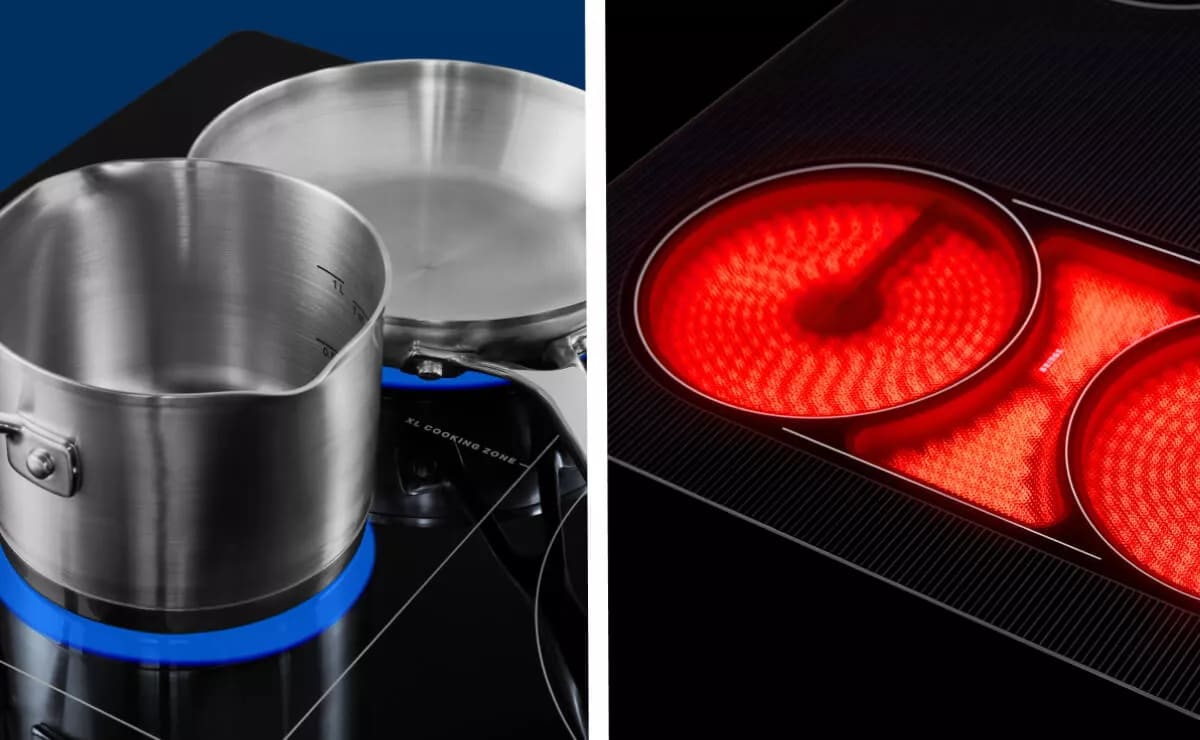
Choosing the right cooktop can make all of the difference in the way you get meals from the fridge to the table. Use this guide to discover how electric and induction cooktops work, the pros and cons of each, and the key differences to help you find the right cooktop for your cooking style, budget and everyday needs.
Induction cooktops are technically a type of electric cooktop, but they heat in a completely different way. Traditional electric models heat from the cooktop surface up, but induction cooktops heat the cookware directly using electromagnetic energy.
These models often use less energy and offer a highly responsive cooking experience when used with compatible cookware.
Induction cooktops use electromagnetic energy to heat your cookware directly, rather than using the cooktop surface itself. This turns compatible pots and pans into their own source of heat, allowing for faster cooking and more precise temperature control.
These cooktops require ferromagnetic cookware—pots and pans made from or containing magnetic materials—which can include options like enameled steel, cast iron or certain types of stainless steel. The cooktop won’t detect cookware without magnetic properties and ultimately won’t heat incompatible cookware.
Whether you’re working with a small space or just want more room for cooking, Maytag ® cooktops offer power, durability and performance for every meal
Induction cooktops can transform your cooking experience, offering impressive speed, precision and control that can help everyday meal prep feel effortless. Explore the key benefits below to see how induction can change the way you cook in your kitchen.
Less heat loss: Induction cooking heats the cookware directly, instead of heating the cooktop surface first and then transferring that heat to the pan. This direct heating method typically wastes less energy than traditional gas or electric cooktops.
Fast cooking: Heating cookware directly allows induction cooktops to bring dishes to a rapid boil and cook foods quickly, helping you get food on the table fast. Use an induction cooktop to serve meals faster and discover more ways to make dinner time easier .
Induction cooktops come with plenty of advantages, but they’re not without a few trade-offs, like the need for compatible cookware and some limitations compared with gas or electric radiant models. Take a look at the potential drawbacks below to help you decide what’s best for your kitchen.
Requires special cookware: Induction cooktops require cookware made with magnetic, conductive materials that respond to electromagnetic energy, meaning pots and pans made from copper, aluminum, glass or ceramic won’t work with this type of cooktop.
Maytag ® induction cooktops help you get dinner done when and how you want it. Select Maytag ® models let you crank up the heat in the kitchen with Power Boost, designed to deliver maximum power so you can reach a boil 2x faster than gas or electric. 1 Temp Cook ™ Induction Technology on select Maytag ® induction cooktops sets a temperature and locks it in. This feature automatically adjusts heat to help keep temps steady, while an XL Cooking Zone on select models features an extra large element design to evenly heat your largest cookware, like oversized pans and griddles .
Electric cooktops technically include induction, coil and radiant models. Coil cooktops use exposed metal coils that transfer heat directly to the cookware. Radiant electric cooktops, however, have coils hidden beneath a smooth ceramic glass surface, heating cookware from below for an easy-to-clean design.
Electric cooktops generate radiant heat—energy that travels through the cooktop surface—to heat cookware. Coil models transfer heat through direct contact with cookware, while radiant electric cooktops hide heating elements beneath a smooth, ceramic glass surface.
Electric radiant cooktops are a popular choice in many kitchens, and with good reason. From straightforward installation and easy cleanup to versatile burner configurations, discover what an electric cooktop can offer your kitchen below.
Simple installation: Electric cooktops generally require a grounded outlet, so you don’t have to worry about adding a gas hookup when you install a new model .
Easy cleaning: The smooth surface of radiant electric cooktops helps make cleanup quick and simple, eliminating the need to clean under or around grates or metal coils.
Smooth surface: Find stability as you navigate pots and pans around the ceramic-glass cooktop surface.
Electric cooktops can feature plenty of perks, but being aware of their limitations can help you make an informed decision. Read on to discover potential drawbacks of electric cooktops when compared with their gas and induction counterparts.
Some heat loss during cooking: Compared with induction cooktops, electric models tend to lose a bit more heat as it transfers from the heating element to the cookware.
Temperature shifts more slowly: Because radiant cooktops rely on heated coils, there’s a slight delay when adjusting the temperature as elements cool down. In contrast, gas and induction cooktops typically respond almost instantly, giving you more precise control while you cook.
Maytag ® electric cooktops offer the features you need to cook up whatever is on the menu. The Maytag ® Exclusive Electric Cooktop with a Reversible Grill and Griddle lets you boil, pan fry, grill, sear, flip and griddle. Flexible features on some Maytag ® models—like the 12/9-inch Dual-Choice™ element—give you the ability to cook with the pan you want and the power you need. Control a slow, even sauté and then intensify the heat for searing.
Induction and electric radiant cooktops may seem similar at first glance, but understanding their functional differences can help you narrow down your search. See the breakdown below to discover how they compare, from heating speed and responsiveness to cost and required cookware.
Temperature control: Induction cooktops respond almost instantly, letting you move from boiling to simmering and back relatively quickly. In contrast, electric radiant coils can take longer to adjust, holding onto some heat after you turn them down.
Heating speed: Induction cooktops heat the cookware directly, rather than the surface beneath it, which means they can reach high temperatures faster and can bring water to a boil more quickly than traditional radiant models.
Bring power and convenience to the kitchen with a Maytag ® induction or electric cooktop. The 10/6-inch Dual-Choice ™ element on select Maytag ® electric cooktops gives you the ability to cook with the pan you want and the power you need. Control a slow, even sauté and then intensify the heat for searing. Get dinner done right the first time with No Guess Presets on select Maytag ® induction cooktops. Set your cooktop to the exact results you want with one-touch cooking modes like boil, saute, simmer and more.
1. Compared to MEC8836HS.
Your subscription was successful
Thank you for signing up. Keep an eye on your inbox for our next newsletter.
Enjoy articles like this? Get helpful guides and appliance care tips sent straight to your inbox.