Not every product in your catalog deserves equal attention. Some SKUs drain your ad budget while delivering minimal returns, while others consistently drive profit and customer loyalty .
Most supplement and wellness entrepreneurs make gut-feel decisions based on incomplete data, leading to bloated catalogs that waste time and marketing spend.
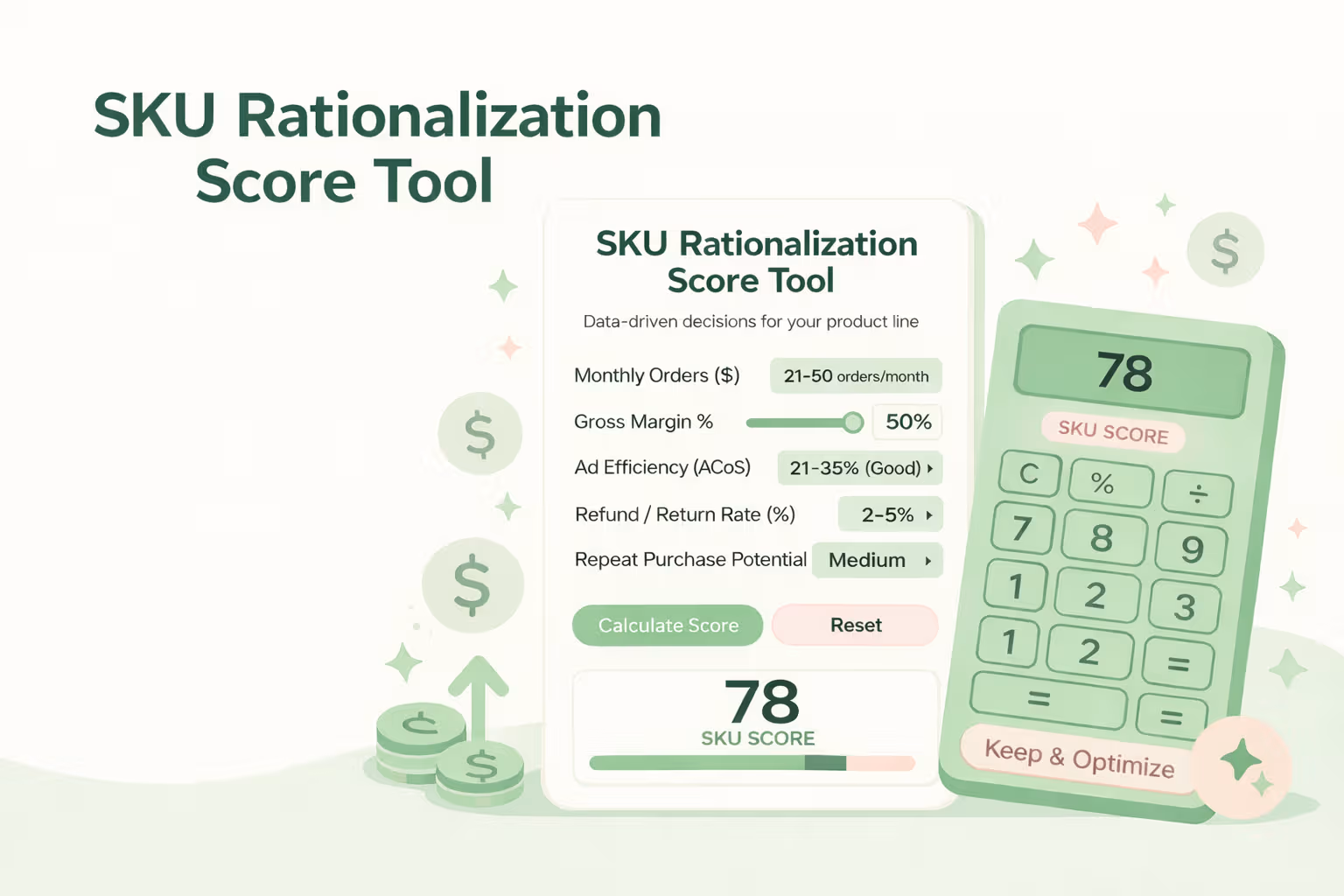
This SKU Rationalization Score tool gives dropshipping brands a data-driven score that tells you exactly which products to keep, optimize, or drop .
SKU rationalization is systematically evaluating every product you sell to determine if it's profitable or sabotaging your bottom line. For private label supplement businesses, this matters because products have varying repeat purchase rates, margins, and acquisition costs.
Without regular rationalization, here's what happens:
When you analyze 20 supplement SKUs, you'll typically find 5 products generating 80% of profit , 10 barely covering ad costs, and 5 actively losing money. This tool helps you identify which is which so you can double down on winners and cut anchors.
With a dropshipping model , you can test aggressively and cut quickly without excess inventory penalties, making rationalization even more powerful.
The tool requires five inputs that capture what matters for supplement performance:
How many units move per month? This reveals genuine market demand . Products selling 100+ units monthly have fundamentally different economics than those struggling to hit double digits.
For fitness supplements , low velocity often signals weak product-market fit that marketing can't fix.
Your selling price minus product cost. Healthy margins (40-70%) determine how much room you have for customer acquisition . A skincare product with 60% margins can afford aggressive testing versus a 30% margin item barely covering ad spend.
Your Advertising Cost of Sale reveals true profitability . Spending 50% of revenue on ads for one-time purchases isn't sustainable. Smart brands using TikTok Shop target 20-35% ACoS, knowing repeat purchases will improve blended CAC over time.
High refunds destroy supplement brands. Rates above 10% signal product quality issues , overselling benefits, or wrong customer targeting. These damage reputation and increase customer support costs dramatically.
This differentiates winners from losers. A digestive health supplement reordered monthly has 5-10x better economics than seasonal one-time purchases. High repeat potential creates subscription revenue opportunities.
You'll get a 0-100 score with clear recommendations and specific next steps.
Your score reveals exactly what action to take. Here's how to interpret each range and implement the right strategy immediately.
Your winners deserve maximum investment . Strong velocity, healthy margins, efficient ads, low refunds, and solid repeat purchases are working together.
Give this priority in your store design , email campaigns, and creative resources.
Profitable products with improvement potential . A few targeted optimizations can push them into the top tier.
Yellow flag territory . Potential exists, but significant issues need rapid resolution.
Avoid sunk cost fallacy; every day running unprofitable SKUs wastes resources you could invest in winners.
These products actively hurt your business . They consume resources, inflate your catalog, and dilute brand equity.
Take immediate action:
With a dropshipping model, you're not stuck with inventory; make clean exits and test new products without penalty.
Using this tool once won't transform your business. The power comes from monthly or quarterly reviews where you systematically evaluate every product and make disciplined decisions.
Key principles for top-performing wellness brands:
Most successful brands run 15-30 core SKUs , not 100. They dominate with focus rather than spreading thin. When you cut underperformers and invest in winners, you create a cycle: better products → higher satisfaction → more repeats → improved economics → more resources to scale.
Start by evaluating your top 5 revenue products ; you might discover bestsellers aren't actually your most profitable when factoring in acquisition costs.
For most dropshipping sellers, this reveals that 20-30% of SKUs should be cut immediately, 40% need optimization, and 30-40% are your scaling foundation.
Real growth doesn’t come from adding more products; it comes from focusing on the ones that truly perform. By consistently evaluating demand, margins, acquisition efficiency, refunds, and repeat behavior, you create a clear system for smarter decisions.
Cutting low-impact products frees up budget, attention, and creative energy to scale what actually works. Over time, this discipline leads to stronger economics, better customer experiences, and predictable growth.
Review your catalog regularly, act on the data without hesitation, and let focus and execution, not product volume, drive long-term success.
Find answers to all of your unanswered questions
Explore our Help Center for detailed answers, expert advice, and step-by-step guides.