A trade mark makes your company stand out from the crowd. It comes in many forms, like a logo or slogan, and its purpose is to make your business distinguishable from others.
When you think of some of the most successful companies, chances are that you picture their logo, think of their slogan, or hear their jingle in your head. Even when you forget a brand’s name, you’re likely to remember its trade mark.
For small business owners, trade marks might seem like a distant priority. However, the sooner you establish your unique feature and use it consistently in your marketing, the sooner you will build strong bonds with your customers, become recognisable, and shield your brand with crucial legal protection.
In this article, we’ll tell you everything you need to know about trade marks as a business owner, including what they are and what they do. We’ll also explain what happens if another company copies you, and how to register your trade mark in the UK.
A trade mark is your brand identity. They are used by businesses across all sectors to set them apart from competitors, make their brands memorable, and let their customers know who they are and what they do.
According to the government website , a trade mark can be:
This also includes symbols and images, shapes or patterns, jingles, and slogans.
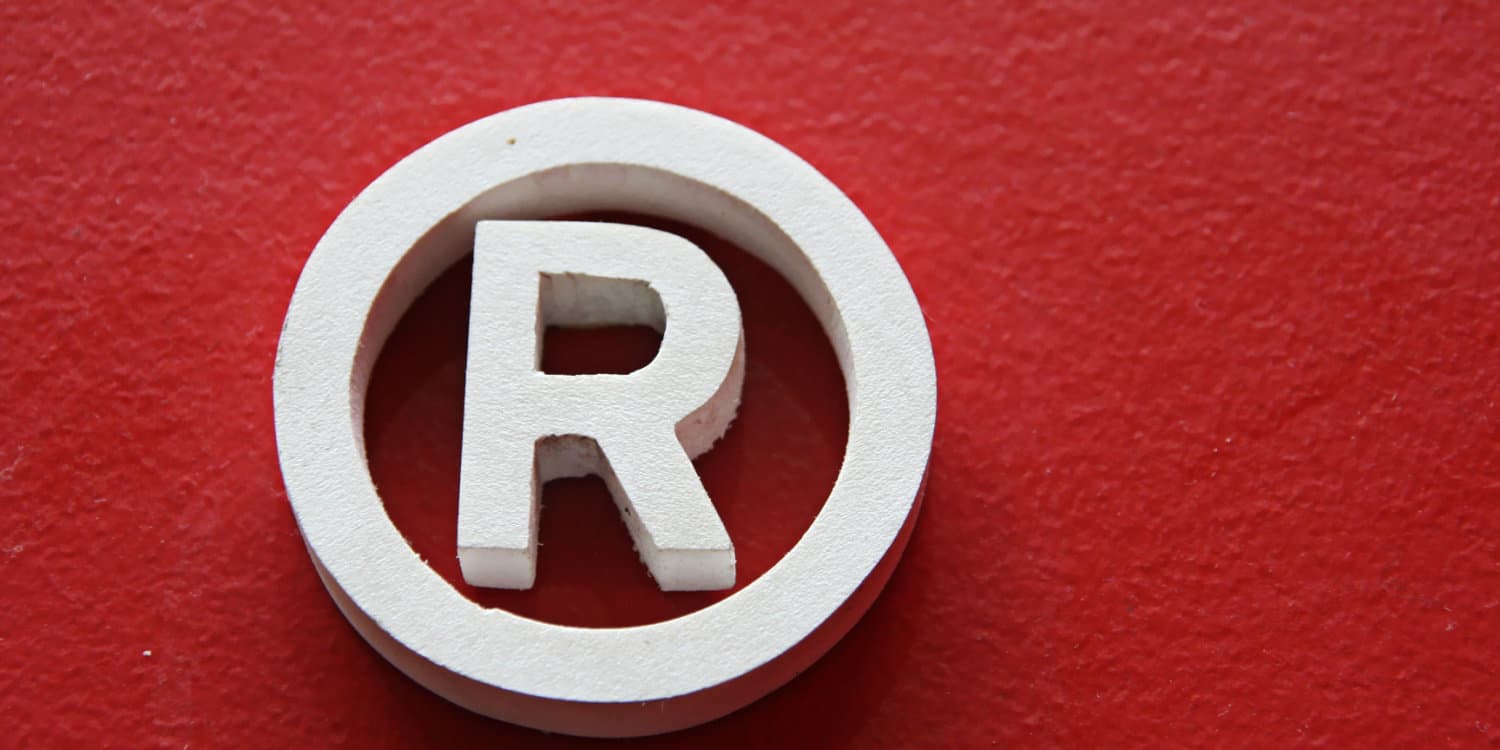
A registered trade mark symbol looks like this: ® . An unregistered or pending trade mark looks like this: ™.
Here are some examples of popular trade marks:
It must be unique to your business. You can’t trade mark:
There are 45 classes. This classification system is used worldwide to group similar products and services together. Generally, goods are in classes 1-34, and services are in classes 35-45.
Before you register your trade mark, you’ll need to know its class. You can find more details on this on the government website .
Not only are trade marks an important part of your brand identity, but they also provide your business with vital legal protection. This prevents others from using marks associated with your company to promote their own goods or services.
Once you register your mark, it is exclusive to your brand and is lawfully protected in the country of registration.
Using a registered trade mark without permission could be a criminal offence. This is called trade mark infringement or intellectual property (IP) crime.
If you suspect that another business is using your mark to promote their brand, as a first step, you could try contacting them directly to investigate the matter. Send a polite, professional, and carefully worded letter to find out why your mark is being used, and ask them to refrain from future use.
To support your letter, you should include as much information as possible, such as evidence of your trade mark being used by the other company, and a copy of your ownership certificate.
If the offending party continues to use your registered trade mark within a reasonable period of time of writing to them, you can report them to Trading Standards . This advice is for English residents only. Check what you should do if you live in Northern Ireland , Scotland , and Wales . Once a report has been filed, Trading Standards will investigate the matter and may file a court case to settle the dispute.
Another option is to contact a certified lawyer . They can advise you on trade mark law and help you find a suitable course of action if another business copies you.
If it is unregistered, unfortunately, you can’t stop others from using it – at least not by law. The only potential solution could be through what’s known as “passing off”. Passing off is the deliberate or accidental imitation of another brand, product, or service.
To be able to make a passing off claim, you’ll need to meet the following requirements:
Making a passing off claim is a lengthy and complicated process. Without legal protection, it can be very difficult to resolve the issue, which is the biggest benefit of registering your trade mark.
There are two application types: Standard and Right Start. They each have different fees.
With a standard application, a single trade mark in one class costs £170 to register online. If you’re registering by post, it’s £200. It’s then £50 for each additional class.
A standard application is suitable if you’re familiar with the rules and have registered a trade mark before. Otherwise, you should consider a Right Start application.
If this is your first time, you can use the Right Start application to check that your mark meets the correct criteria. The upfront cost for this is £100, followed by £25 for each additional class.
After you apply, you’ll be notified if your trade mark has passed or not. You’ll then need to pay another £100 plus £25 for each additional class if you’re approved and want to file an official application, or if you fail and want to appeal the decision.
There could be additional fees for:
To register an international trade mark, it costs £40 on top of World Intellectual Property Organization (WIPO) fees. You can use the WIPO calculator to estimate your application cost.
A registered trade mark is valid for 10 years. You should renew it to make sure that it remains legally protected. You can do this up to 6 months before and after it expires.
Before applying, you’ll need to know exactly what you want to trade mark. Whether it’s a logo, name, slogan, or something else, it’s fundamental to know what your mark will be and make sure that it complies with the criteria (as mentioned earlier).
Next, you’ll need to submit a TM3 application through the government website . You can this by yourself or ask a certified lawyer to do this for you.
There is a different form (MM2) for registering an international trade mark .
If this is your first registration, you’ll need to complete your details (owner type, address, etc.), or if you’ve done this before, you can simply retrieve your information. You’ll then be asked to specify your trade mark, such as its design details. This is the same for both standard and Right Start applications.
Once you’ve submitted your application, your form will be published in the Trade Marks Journal for 2 months. Essentially, this notifies the public of your pending trade mark and allows people to raise an objection.
Some of the main reasons why someone might object to your application are if your proposed mark is similar to another, or if it’s unethical. To avoid this, it’s vital that you ensure that your trade mark complies. If you’re unsure, it’s worth submitting a Right Start application or speaking to a professional.
If there are no disputes, your trade mark will be legally registered within 2 weeks and it’ll be lawfully protected for 10 years. Once registered, you should place the registered trade mark symbol on all public displays of the trade mark, to ward off plagiarism.
We hope this guide helped you understand what trade marks are and the important role they play in a brand’s identity.
If you have any advice or feedback, please share them with us and our readers in the comments below.