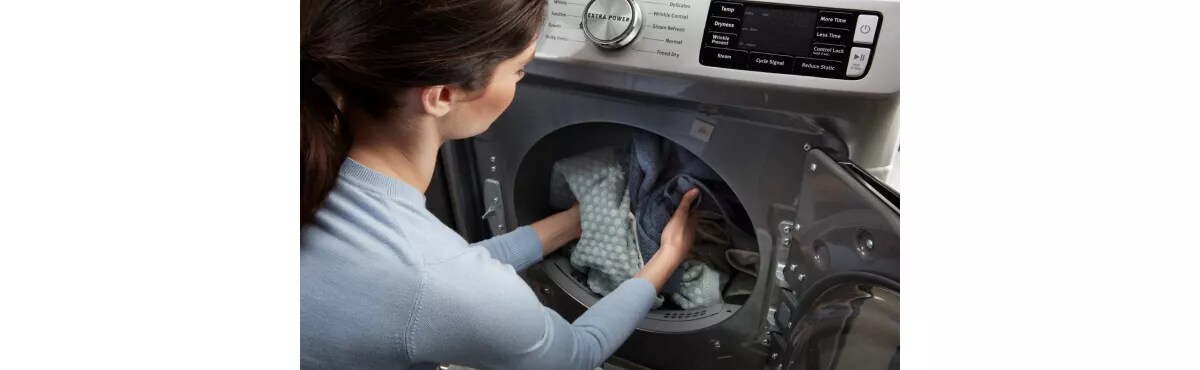
A dryer uses a combination of heat, tumbling and airflow to dry laundry by removing moisture from wet clothes. Learn more about how a dryer works, as well as features that deliver an optimal dry for all of your laundry needs. You can also reference our dryer buying guide to easily compare the different features and models available.
Most dryers function by pumping dry air into the drum and releasing moist air through the ventilation system. Good airflow and circulation help to keep your dryer running smoothly with optimal drying times. Blocked or clogged vents can inhibit airflow and affect your dryer’s performance, which is why it’s important to routinely clean your dryer and clean your dryer’s vents .
Both gas and electric dryers use electricity to power the appliance, but their source of heat differs when it comes to drying your clothes. Gas dryers require a gas connection and use propane or natural gas to generate heat, while electric dryers have metal coils that serve as the heat source to dry your laundry. Maytag brand offers a wide selection of gas and electric dryers to help you tackle laundry day. Learn how hot a dryer gets in this guide.
Along with heat and airflow, the spinning and tumbling of your clothes in the drum help to achieve an optimal dry for your laundry. The baffles, or fin-like structures extending from your dryer’s drum, help to separate your clothes and circulate heat and airflow throughout the load. Without them, your clothes may clump together and not thoroughly dry during the cycle. Learn how to troubleshoot the cause if your dryer isn’t spinning .
When choosing a cycle, refer to your garment’s care tag for recommendations on tumble dry settings for everything from heat-sensitive delicates to everyday slacks.
As your clothes are tumbling in the dryer, the heat and airflow push lint from the fabric through the ventilation system. During this process, the removable lint trap catches excess debris.
A clogged or full lint trap can affect your dryer’s performance and increase drying times. It’s important to clean your lint screen after every dryer cycle to help ensure dependable, consistent results.
Dryers with automated settings help tackle laundry day and take care of the drying for you. Select dryers from Maytag brand feature Advanced Moisture Sensing that monitors moisture and air temperatures for evenly-dried loads. Maytag ® dryers with Quick Dry Cycle settings let you dry small loads fast to get clothes ready in no time.
Sensors monitor dryer conditions to achieve an optimal dry for each load—or whatever dryness level you choose. When air reaches the right temperatures and clothes are as dry as they should be, the cycle stops. Advanced Moisture Sensing on select Maytag ® dryers measures temperature and moisture levels:
A sensor monitors incoming air temperature
Sensing strips in the dryer drum detect moisture levels in clothes
Another sensor measures outgoing air temperature
An optimal dry is whatever helps clothes last. Preventing overdrying drives how a dryer works on auto-sensing cycles. To achieve a safe moisture level for clothes, thicker fabrics, pockets and seams may come out slightly damp.
Most dryers with auto-sensing technology also offer a timed dry option that lets you select exactly how long to dry. Compare the benefits of how a dryer works with auto-sensing vs. timed dry below.
You decide cycle times for loads you know
Lets you add enough time to eliminate any damp spots
Maytag ® dryers with the Extra Power button combine the benefits of auto-sensing with the option to activate ten more minutes of drying action.
Extends time heat and tumbling on auto-sensing and timed dry cycles
Helps prevent underdrying of thick fabrics, pockets, hems and seams
GET MORE WITH A MAYTAG ACCOUNT
Sign in to unlock special savings
Your subscription was successful
Thank you for signing up. Keep an eye on your inbox for our next newsletter.
Enjoy articles like this? Get helpful guides and appliance care tips sent straight to your inbox.