Here’s the honest truth: Doing laundry isn't exactly the highlight of anyone's day. And when it comes to choosing between oxygenated bleach and chlorine bleach, things can get even more confusing. But don't worry—this guide will break down the oxygen bleach vs chlorine bleach debate for you in a way that won't make your head spin. By the time you're done reading this, you'll be armed with the right type of bleach and ready to tackle your laundry like a pro.
Chlorine bleach is a powerful cleaning and disinfecting agent made from diluted sodium hypochlorite, a chemical compound that helps remove stains, whiten fabrics, and tackle bacteria and germs. It's a strong, chemical-based solution, primarily used for cleaning white fabrics, sanitizing surfaces and fighting tough laundry stains . Unlike oxygen bleach, chlorine bleach can damage colored fabrics and delicate items, so be sure to check labels carefully and follow directions on both your item’s care tag and the household bleach product you use.
Chlorine bleach contains sodium hypochlorite, which breaks down color-causing molecules in stains. It packs a punch and can often help disinfect and whiten in one go.
Whitens and disinfects
Kills a wide range of germs and bacteria
Fights many tough stains
Sanitizes many nonporous surfaces
In general, chlorine bleach often works well:
For white cotton fabrics that need serious whitening
To disinfect heavily soiled items
When you need to sanitize your washing machine
Chlorine bleach isn’t recommended for use in some washing machines, so be sure to check your user manual to be sure you can use it. Also, before treating garments, test bleach on a small, hidden section first to see how it reacts, before treating the entire garment. And always carefully follow the directions on product labels.
Oxygenated bleach, also known as non-chlorine bleach or color-safe bleach, is a cleaning agent made from sodium carbonate and hydrogen peroxide and does not contain chlorine. Oxygen bleach helps tackle everyday stains without harsh chemicals or strong fumes. Unlike chlorine bleach, it's generally safe for many colored fabrics and is often considered gentler on the environment. Even though it’s considered a color-safe bleach, you should still always first test it on a discreet area of your item to be sure. And always follow product label directions for use.
Oxygenated bleach is typically made from sodium percarbonate, which breaks down into hydrogen peroxide when mixed with water. This creates oxygen bubbles that help lift stains and dirt from fabrics. It's like a tiny army of cleaning bubbles working to make your clothes look fresh and bright.
Safe for most colored fabrics
Typically gentler on clothes and the environment
Doesn't have as strong a smell
Great for brightening whites and colors
In general, oxygenated bleach often works well:
For regular laundry loads with mixed colors
To brighten dingy whites with less risk of damage vs chlorine bleach
When you want to pre-treat stains on colored clothes
Oxygenated bleach isn’t recommended for use in every washing machine, so be sure to check your user manual to be sure you can use it. Also, be sure to test bleach on a small, hidden section first to see how it reacts before treating the entire garment. And always carefully follow the directions on product labels.
Oxygen whitening is another way to talk about whitening with an oxygenated bleach, which harnesses the power of oxygen to help brighten fabrics. When oxygen bleach (sodium percarbonate) dissolves in water, it releases oxygen molecules. These molecules break down into ions that attack and break apart organic stain molecules, helping to lift them from fabrics. Oxygen whitening is most effective at breaking down organic stains like proteins, oils and pigments, which makes the stains easier to wash away.
Oxygen bleach comes in three main types: Hydrogen Peroxide, Sodium Percarbonate, and Sodium Perborate. While they all work as oxidizers, their forms and effectiveness differ.
Releases oxygen when exposed to catalysts
Used in various cleaning tasks
Releases a large amount of hydrogen peroxide when dissolved in water
Powerful bleaching agent often found in laundry detergents
Releases hydrogen peroxide when dissolved in water
Generally less potent than Sodium Percarbonate
Sodium Percarbonate and Sodium Perborate are essentially solid versions of hydrogen peroxide, making them more shelf-stable and easier to handle for laundry. Sodium Percarbonate is typically more concentrated, making it the stronger bleaching agent of the two.
When choosing a type of oxygen bleach, consider your specific laundry needs. For tough stains or heavily soiled loads, a product with Sodium Percarbonate might be your best bet. For more delicate items or lighter cleaning, Sodium Perborate could be sufficient.
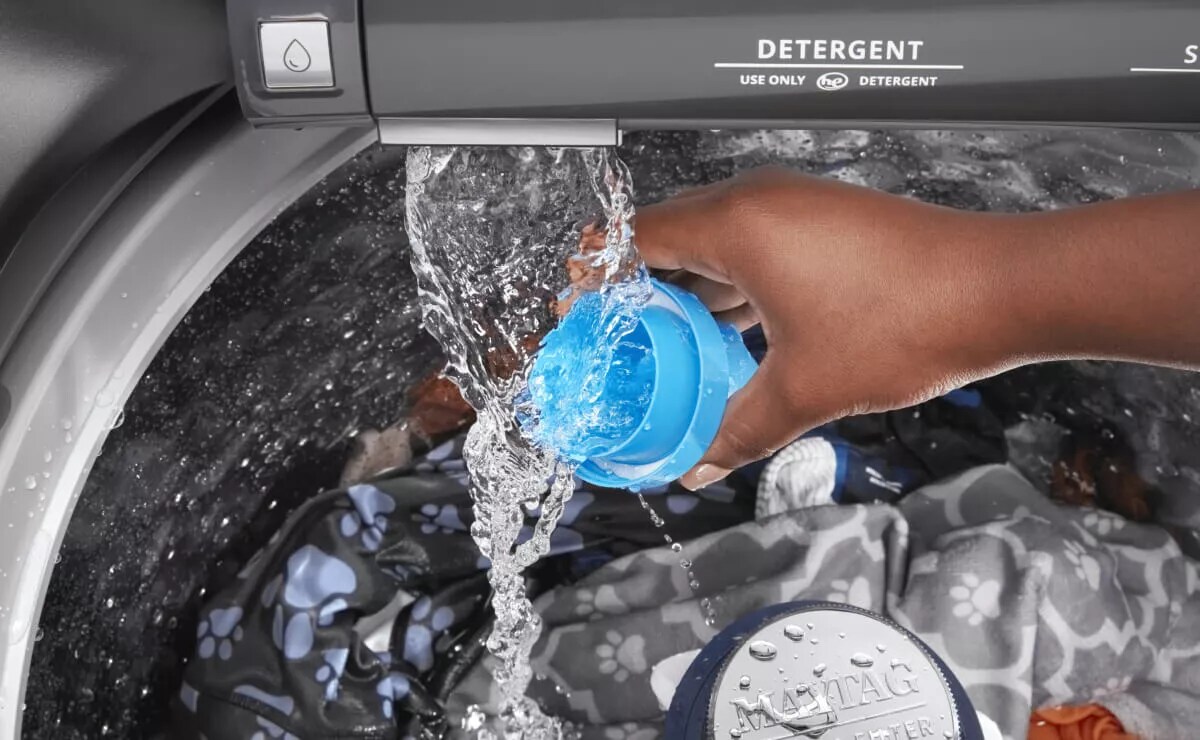
The Pet Pro Washer is engineered to remove loads of pet hair with the Pet Pro option and built-in Pet Pro Filter
In addition to slightly different chemical makeups, non-chlorine bleach also comes in various forms packaged for laundry, including:
Liquid oxygen bleach: This largely contains hydrogen peroxide but can contain other cleaning agents.
Oxygen bleach powder: This is generally more shelf-stable and easier to handle than liquid versions.
Oxygen bleach pods: These are also shelf-stable, with the added convenience of being premeasured.
These forms of oxygen bleach are typically added directly to the washing machine or used for presoaking laundry items to help remove stains before washing. Each type has its own benefits, but they all work on the same principle of using oxygen to clean and brighten fabrics. Again, check your user manual first to be sure you can use bleach in your washing machine.
Not all fabrics are created equal when it comes to bleach tolerance. Always check your product labels and garment tags first. And test the process on a small, less obvious portion of the garment to see how it reacts before treating the entire garment. Here's a quick guide:
Most color-fast colored fabrics
White items with spandex
Some synthetic whites (check the care label)
Wondering whether non-chlorine bleach is better for white clothes or colored clothes? Oxygenated bleach is a great option for both. It's gentle enough for colors but still effective on whites. To tackle tough stains and dingy whites without chlorine bleach, you may need to soak your whites in non-chlorine, oxygenated bleach for longer before adding to the washer.
Oxygen bleach is generally considered an effective yet gentle chlorine bleach alternative. However, because it is not as strong, oxygen bleach may be less effective at whitening, stain removal and disinfection vs. chlorine bleach. On the other hand, chlorine bleach has limited uses, as it may be too strong for certain types of laundry. When it comes to cleaning power, both types of bleach have their strengths:
Gradual whitening and brightening, may require longer soaking times
Effective on many organic stains like food and sweat
Often better for repeated use on fabrics
Generally color-safe
Rapid whitening and disinfecting
Powerful against tough stains and odors
Useful for occasional deep cleaning
Generally not color-safe
The Maytag ® front load washer with Pet Pro Option unleashes additional water and a deep rinse to help remove pet hair
There you have it—everything you need to know about oxygenated bleach vs. chlorine bleach, without the headache. Whether you're battling a stubborn stain or just trying to keep your whites bright, you're now armed with the knowledge to choose the right type of bleach for the job.
For more laundry tips and tricks , including how to use baking soda in laundry and how much laundry detergent to use , check out these other helpful guides.
Ready to upgrade your laundry game? Maytag ® washer and dryer sets are designed to tackle tough stains and large loads with ease. Built with major muscle from the top down, these sets work together to power through laundry, so you can get on with life.
This article includes AI-generated content that our human team has reviewed and edited to ensure quality.
Your subscription was successful
Thank you for signing up. Keep an eye on your inbox for our next newsletter.
Enjoy articles like this? Get helpful guides and appliance care tips sent straight to your inbox.