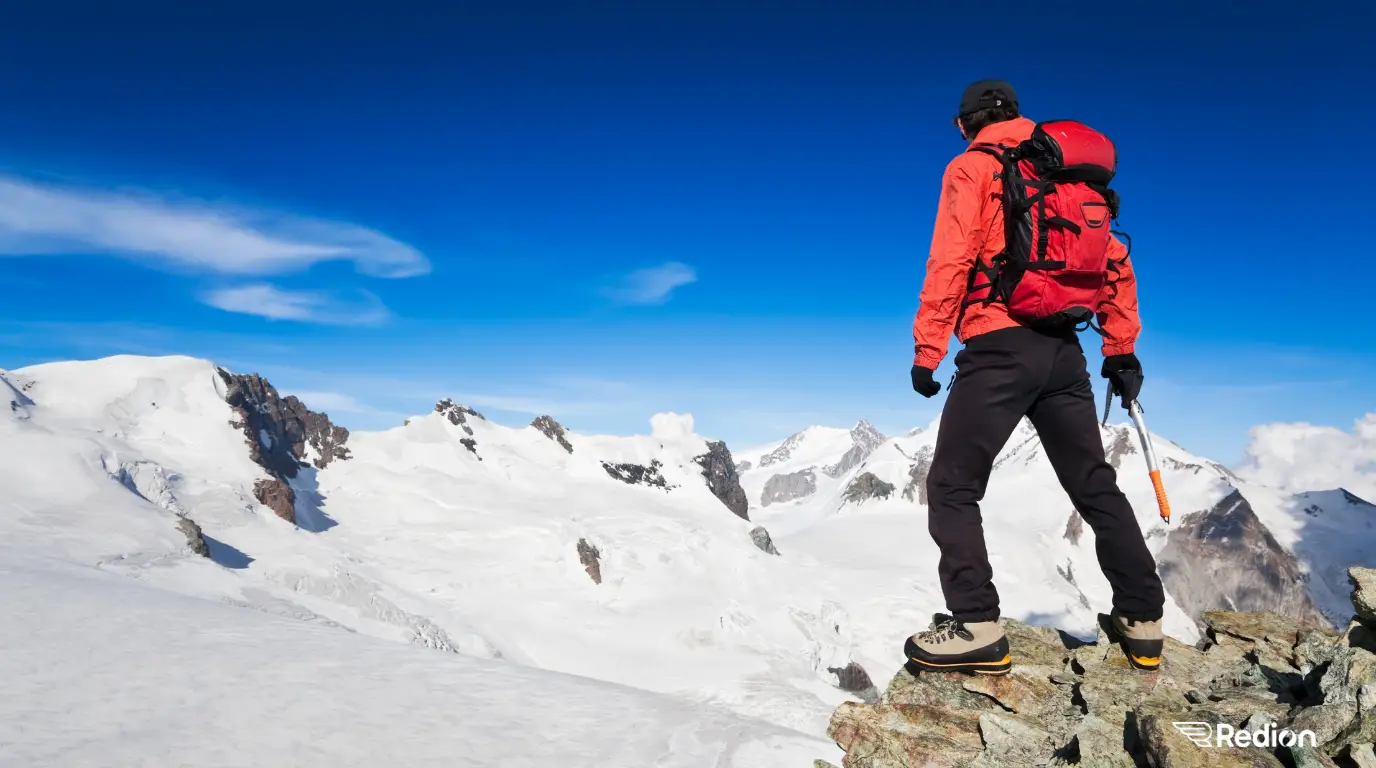
If so, it’s important to take the necessary precautions to handle high altitudes. As you probably know, mountain sickness is a common risk for both professional mountaineers and casual climbers. This condition, also known as acute mountain sickness (AMS), affects thousands of travelers every year. And don’t be fooled—being in excellent physical condition doesn’t necessarily mean you’ll avoid it!
In this guide, we’ll present the symptoms that can occur at high altitudes , along with the right steps to take to anticipate or overcome these discomforts in the mountains .
Disclaimer : The information provided in this article is for general informational purposes only and does not constitute professional medical advice.
Mountain sickness , or acute mountain sickness (AMS), is a condition caused by a lack of oxygen resulting from a rapid ascent to high altitude. As atmospheric pressure decreases, so does the availability of oxygen, which can lead to varying degrees of discomfort. It’s important to know that at 5,800 meters, the air contains only half the oxygen available at sea level.
This causes hypoxia (a lack of oxygen in the tissues), which triggers a range of symptoms that can be more or less debilitating. These symptoms may include headaches, nausea, extreme fatigue, dizziness, or shortness of breath.
In the most severe cases, mountain sickness can lead to edema, particularly pulmonary or cerebral. That’s why it’s essential to get informed before your trip, so you know how to react if symptoms appear.
Contrary to popular belief, mountain sickness is not linked to your physical condition. No—the main risk factor is the speed of ascent . The explanation is simple: ascending too quickly doesn’t give the body enough time to adapt! Sleeping altitude worsens symptoms, even more so than the maximum altitude reached during the day.
Good to know : people who have already suffered from AMS are at increased risk of recurrence.
This condition affects around 25% of people from 2,500 meters , and 40% beyond 4,340 meters—regardless of physical condition! Symptoms usually appear between 4 and 12 hours after the ascent phase .
Most travelers can ascend up to 1,500 meters, or even 2,000 meters in a day, without experiencing any particular issues. Beyond that, increased caution is necessary. But beware: although uncommon, some people may experience slight shortness of breath, disturbed sleep, or mild headaches from as low as 1,500 meters .
The first signs combine headaches with possible vomiting and nausea, as well as irritability or extreme fatigue . You may also experience dizziness , pronounced insomnia , significant loss of appetite , and abnormal shortness of breath —even when the physical effort is minimal.
These symptoms can easily be mistaken for the flu or a simple migraine – so listen to your body carefully! If you’ve recently arrived at high altitude, it’s very likely that you’re experiencing mountain sickness.
In rare cases, acute mountain sickness can progress to potentially life-threatening complications.
Both complications are absolute medical emergencies requiring immediate descent.
If you’re planning to venture into the mountains, keep in mind that prevention remains the best strategy to avoid any symptoms. It relies on gradual acclimatization to altitude through a step-by-step ascent, and on appropriate medical preparation.
Beyond this fundamental rule, you should drink plenty of fluids to maintain clear urine. Also avoid alcohol and sleeping pills during the first few days, limit intense physical effort for 1 to 2 days after arrival, favor a carbohydrate-rich diet… and never climb to high altitude alone!
A medical consultation is always recommended to get a prescription for potential medications to treat altitude sickness symptoms, or to undergo a health check and receive advice before your trip. If you have a medical history related to this condition—or any other—it’s especially important to schedule such an appointment.
You are particularly concerned if you have or have had pulmonary, cardiac, or circulatory diseases, which can lead to oxygenation problems at altitude.
Several medications can prevent or treat mountain sickness, but all require a medical prescription and should never replace gradual acclimatization.
Acetazolamide (Diamox) remains the most common preventive treatment. Its effectiveness has been shown to reduce the risk of developing mountain sickness by 50 to 75%. It can be used a few days before the ascent and during the climb, but not systematically or carelessly! Because it has certain contraindications and side effects, it is essential that a healthcare professional prescribes it.
Other medications, such as corticosteroids , may be used in emergencies to relieve severe symptoms, but only a doctor can determine the appropriate treatment for your situation. So be sure to consult a professional to guide you toward the best option.
Paracetamol or ibuprofen are the first treatments to consider for easing headaches. Make sure to stay well hydrated and rest in a calm environment.
If warning signs appear—such as headaches that resist painkillers and intensify, vomiting, coordination issues or confusion—you must descend without delay.
In high mountains, evacuation costs can be significant, depending on the duration and complexity of the operation. Suitable travel insurance allows you to travel with peace of mind by covering:
Even with maximum prevention, you’re not entirely safe from experiencing symptoms of mountain sickness. That said, as we’ve seen, gradual acclimatization significantly reduces the risk. If your doctor prescribes acetazolamide , know that this medication reduces the likelihood of developing symptoms by 50 to 75%, when combined with a cautious ascent .
The body begins to adapt to altitude within 24 to 48 hours after ascent. Proper acclimatization takes several days, and above 3,000 meters, it may take one to two weeks for the body to fully adjust. Plan a gradual ascent and, above 3,000 meters, avoid sleeping more than 300 to 500 meters higher than the previous night.
In Peru, mountain sickness—locally known as soroche—is common. This is understandable, as cities like Cusco are located at 3,399 meters! To avoid it, spend a few peaceful days exploring the area without rushing into intense activities. Let your body adjust and stay well hydrated . If you feel unwell, don’t hesitate to consult a healthcare professional and descend a few hundred meters to help ease the symptoms.
Yes, diarrhea can be one of the possible symptoms of mountain sickness. It results from the physiological stress of altitude and changes in intestinal transit due to hypoxia. It may require intensive rehydration with oral rehydration sachets.
Homeopathy offers several remedies for altitude-related issues, including Coca 5 CH (for prevention), which can be complemented by Cocculus indicus 5 CH (for nausea) and Arsenicum album 5 CH (for anxiety and sleep disturbances).
Warning : the effectiveness of homeopathy is highly debated. These remedies do not replace gradual acclimatization or conventional treatments like acetazolamide (Diamox). Acute mountain sickness can be fatal . If symptoms occur (headaches, nausea, dizziness), descend immediately and consult a doctor.
At altitude, the drop in atmospheric pressure causes trapped air in cavities, faulty fillings, or spaces created by imperfect dental work to expand. This expansion puts pressure on dental nerves, causing sometimes intense pain. This phenomenon is known as barodontalgia .
No, classic mountain sickness generally does not develop during flights. Commercial aircraft cabins are pressurized to maintain a pressure equivalent to an altitude of 1,800 to 2,500 meters—similar to an alpine ski resort. This cabin altitude remains well below the threshold where acute mountain sickness typically appears, which is above 2,500 meters.
No! Contrary to what one might think, physical condition offers no protection. Elite athletes are affected just as often as sedentary individuals. Training helps you better handle exertion but does not prevent hypoxia.
Aspirin has anticoagulant properties that thin the blood. However, retinal hemorrhages (small bleeds at the back of the eye) are relatively common at high altitude. As a precaution, it’s better to use paracetamol or ibuprofen to relieve altitude-related headaches, since these medications do not have anticoagulant effects.
Warning : If you take aspirin as a long-term treatment, never stop it without medical advice. However, consult your doctor before traveling to altitude to adjust your treatment if necessary.
European emergency number: 112 works throughout Europe, even without a SIM card, as long as a cell tower (any operator) is within range.
Specialized mountain rescue services:
Before you leave, save local emergency numbers in your phone and write them down. However, be aware: in dead zones, emergency calls may not go through. Always plan your route and inform someone of your itinerary!
You live in Switzerland and would like to take out travel insurance? Discover the policies offered by our partner Generali by clicking here .