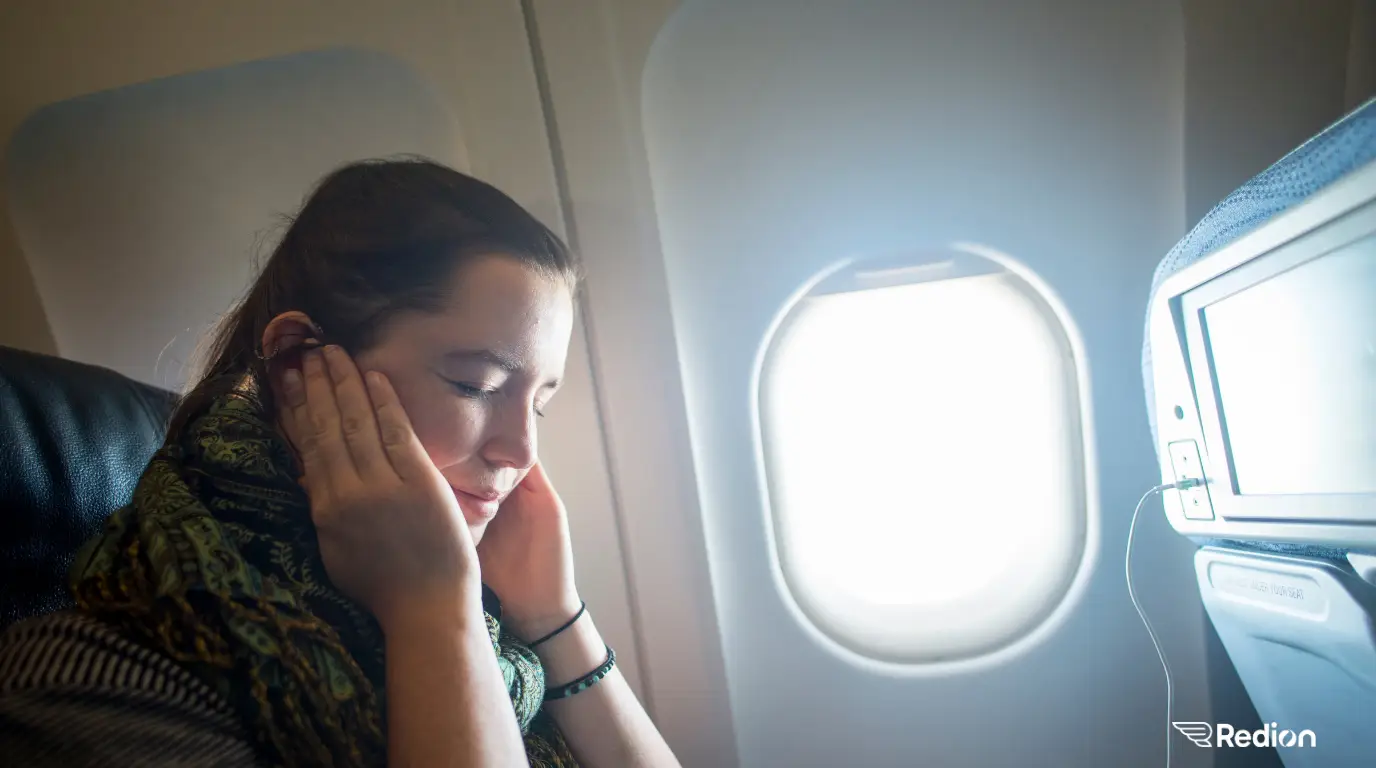
Middle ear infections affect both children and adults, although children are more frequently affected. Around 80% of children get middle ear infections at least once in the first 3 years of life, and 45% of them even up to three times. Flying with a middle ear infection can be dangerous. Many parents fear that their sick child’s eardrum could rupture or cause severe pain when flying. In this guide, we give you helpful tips on how to avoid potential problems during a flight.
When an airplane takes off and lands, the ambient pressure rises sharply, causing a large pressure difference between the outer ear and the inner ear. Normally, the Eustachian tube equalizes this pressure difference. You can help to equalize the pressure by yawning, sucking a sweet, chewing gum or swallowing. Another method is the Valsalva method: close your mouth, hold your nose shut and try to breathe out through your nose. To help equalize the pressure in your child, you can breastfeed, give them a pacifier or bottle or offer them something to chew.
Otitis media affects the Eustachian tube, which can cause painful pressure sensations when flying. It also impairs the ability of the Eustachian tube to equalize the pressure difference when flying. If the accumulated pressure is too great, the eardrum can rupture.
If your child suffers from a middle ear infection or wears tympanostomy tubes, the following scenarios should be considered:
If you are planning a flight and you or your child have symptoms of a middle ear infection, consult a doctor.
Our tip : As middle ear infections are often caused by contaminated water, good ear hygiene is important, especially if your children swim a lot. Use an ear cleaning spray or cotton buds, but don’t go too deep into the ear canal and only clean the visible part of the ear.