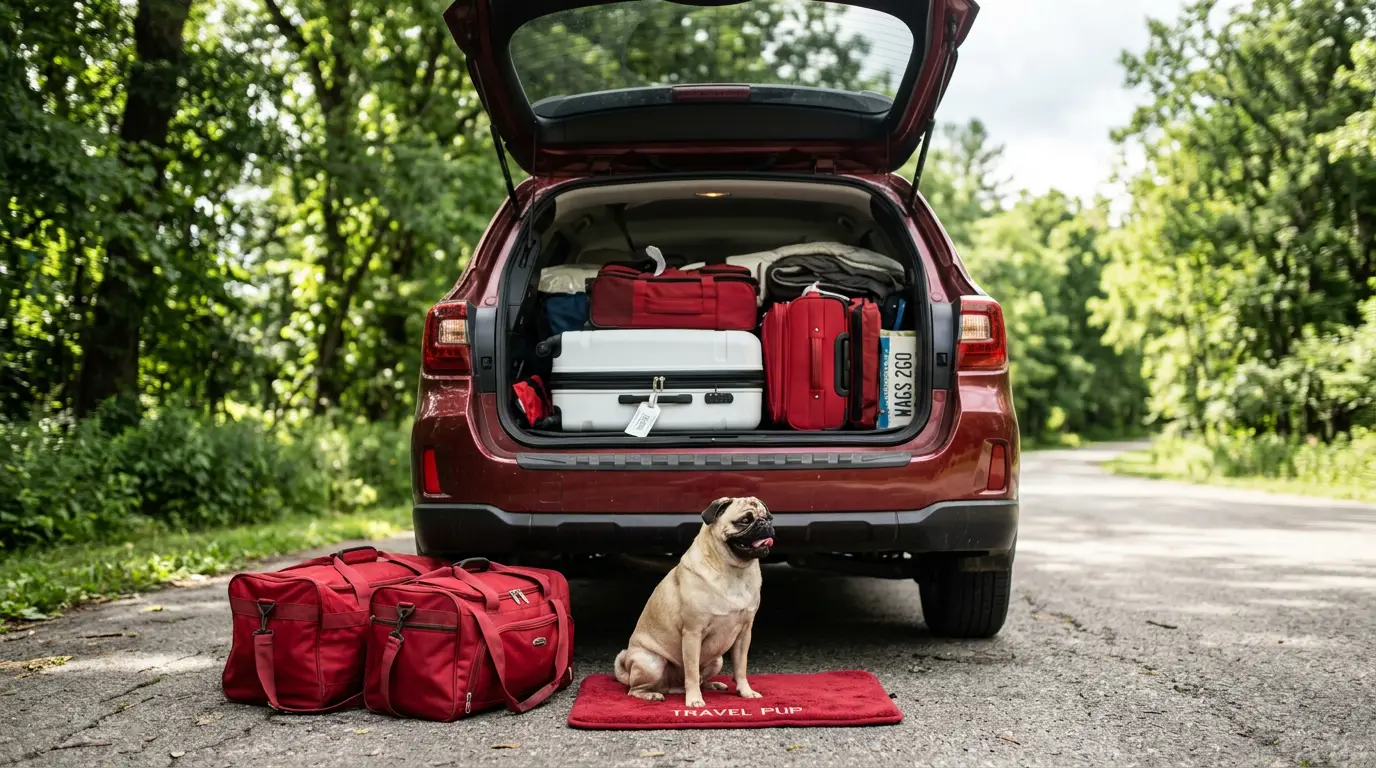
Every good preparation starts with a few basic questions: is this trip suitable for my dog, and which destinations are possible?
We guide you through all the key steps so you don’t forget anything and are perfectly prepared.
Before booking, ask yourself whether travelling is suitable for your dog. Consider their age, health condition and temperament.
An active dog will enjoy a hiking holiday in the Alps or a beach stay with plenty of exercise.
An older or calmer dog will feel better in a quiet holiday apartment with short walks. The type of transport is also important: some dogs prefer the car to the train or plane.
An elderly, sick or very anxious dog won’t enjoy a long journey and unfamiliar surroundings.
Puppies that are not yet house-trained or whose vaccinations are incomplete should stay at home. If in doubt, consult your vet before travelling.
>>Going on holiday? Calculate your COMFORT insurance premium, which includes the Pets extension <<
Many European countries are very welcoming to dogs. Here are some ideal destinations:
Choosing the right accommodation is essential to ensure well-being during your holiday with your dog.
Each option has its advantages:
Our tip : Whatever your choice, always contact the provider before booking. A simple call can clarify open questions and avoid unpleasant surprises upon arrival.
Travelling with a dog within the European Union is subject to clear and uniform rules. Compliance is essential to avoid problems at borders or even quarantine.
Here’s what you absolutely must have and follow:
For travel outside the EU, the rules are often stricter. Always check in advance with the embassy of the destination country.
For many neighbouring countries such as Norway, the passport is generally sufficient. For the United Kingdom and Northern Ireland, worm treatment is also mandatory.
Attention when returning to Switzerland:
To return from high-risk or uncertain rabies countries (e.g. Turkey, Morocco, Serbia, Egypt, Thailand), a rabies antibody test is mandatory.
For low-risk countries such as the United States, Canada or the United Kingdom, this test is not required.
Note : entry into Switzerland is only permitted via officially authorised entry points, and when travelling by direct flight, it is allowed via the airports of Basel, Geneva or Zurich.
Health preparation is the most important step in planning and a requirement for meeting entry rules.
Your vet will advise you on the best protection, such as spot-on pipettes or antiparasitic collars.
Just before departure, it’s time to take care of the final practical steps.
Create an emergency plan : Find out in advance the address and phone number of a veterinary clinic near your holiday location. This will give you peace of mind in case of unexpected events.
Good preparation also helps avoid stress. With our checklist, you can be sure not to forget anything essential in your luggage.
Leash, harness, muzzle
Toys and entertainment
Travel documents and permits
The journey is often the most stressful part for the dog. But with good preparation, you can approach this first step with peace of mind. The choice of transport depends on the destination, the duration of the trip, and your dog’s temperament. Whatever mode of transport you choose, safety is always the top priority.
Travelling by car offers great flexibility. Here are the key points to keep in mind:
On SBB trains, small dogs (up to the size of a cat) travel free in a carrier. Larger dogs must have their own ticket (2nd class half-fare or minimum transport fare), be kept on a leash and wear a muzzle.
For more information, visit the SBB website .
Tips for the journey:
Air travel is often stressful for dogs. It should only be considered if absolutely necessary. If you yourself are anxious when flying, your dog may sense that tension.
You’ve finally arrived! Now it’s important that your dog adapts quickly and enjoys the stay.
Let your dog explore the surroundings at their own pace. Show them around your accommodation and set up a space with their blanket and toys. This provides security and familiar cues.
Stick to your usual schedule for meals and walks. A long walk right after arrival helps process first impressions.
Respectful behaviour is essential for a peaceful holiday. Check local regulations regarding leashes and muzzles, which are often mandatory on beaches, in parks, restaurants and public transport.
Example: In Italy, muzzles are mandatory and leashes must not exceed 1.5 metres.
Make sure your dog doesn’t disturb other holidaymakers and always clean up after them.
Tip for families with children and dogs: Teach children to respect the dog and interact properly. Also ensure the dog has quiet moments to rest undisturbed.
Explore nature with your dog: mountain hikes, beach walks… If your dog loves water, check for dog-friendly beaches or lakes near your accommodation.
Tip : See if there’s a dog park at your destination. Your dog can run freely and you might meet other dog owners.
You’ve thought of everything: the ideal destination is chosen, dog-friendly accommodation is booked, and thanks to our tips, you’re perfectly prepared for the journey.
To fully enjoy this precious time with peace of mind, one last important step completes perfect planning: protection in case of unforeseen events.
What happens if your dog or you fall ill just before departure and have to cancel the trip? With our COMFORT travel insurance and its Dogs & Cats extension, your pet is considered a close family member: if they fall ill or have an accident that prevents you from travelling, you’re covered in case of cancellation.