A faraway trip to Vietnam or the United States evokes adventure—if only it weren’t for those long hours spent on the plane. Narrow seats, dry air, constant passenger movement to the toilets, and sometimes turbulence: a long-haul flight can be exhausting—especially if you’re traveling with a baby or young child. Good preparation will make your journey much more pleasant. We’re here to answer your most common questions about long-haul flights and offer practical tips for your comfort on board. That way, time will fly by.
Planning ahead allows you to travel more affordably and comfortably. Ideally, book about 6 to 8 months before departure —prices are often reasonable and seat selection is wide. Whether you prefer a window seat or extra legroom, booking early helps secure the best seats.
Compare airlines—even flights with stopovers can be worthwhile. When comparing, check what’s included: with low-cost airlines, luggage, meals, or seat selection often come at an extra cost. If you didn’t choose a seat during booking, use online check-in: you can often select your preferred seat 24 to 48 hours before departure.
A pleasant long-haul flight starts with a well-prepared carry-on. To have everything you need within reach while complying with your airline’s rules, good organization is essential.
Most airlines allow a carry-on bag of 55 × 40 × 23 cm with a maximum weight of 8 kg . Check your airline’s specific rules in advance—they may vary!
Liquids in carry-on luggage must be in containers of no more than 100 ml . All containers must be placed in a transparent, resealable plastic bag of one liter. Only one bag per person is allowed.
Pack your bag so you have everything you need during the flight—and are prepared in case your checked luggage arrives late.
Here’s what you should definitely bring:
Conditions on the plane can be tough on the body: dry air, limited movement, low air pressure. To prevent thrombosis, wear compression socks as soon as you board. They are available without a prescription at pharmacies or can be recommended by a doctor.
Drink plenty of water, move regularly, and use eye drops or lip balm to counteract the dry air. If you feel nauseous, ginger candies or anti-motion sickness chewing gum can help—available at pharmacies.
Many people feel anxious when flying. Breathing exercises, progressive muscle relaxation, or calming music can help. A good movie or captivating book is also a great distraction. If anxiety is severe, consult your doctor before the flight.
Our tip : nervous passengers often feel better seated near the wings—turbulence is less noticeable there. Don’t hesitate to speak to the cabin crew—they are trained to handle flight-related fears.
Choose loose, comfortable clothing in layers. Pack a light jacket or sweater in your carry-on—it can get chilly in the cabin. Comfortable shoes that are easy to remove are ideal, as feet may swell during the flight.
Our tip: a change of clothes in your carry-on is practical —especially if you’re traveling to a different climate zone or if your checked luggage is delayed.
On long-haul flights, meals and drinks are usually served several times. If you have specific dietary needs —vegetarian, vegan, gluten-free—be sure to notify the airline at least 48 hours before departure.
It’s also helpful to bring your own snacks —such as nuts, cereal bars, or dried fruit. Avoid strongly scented foods to avoid disturbing your neighbors. Be cautious with tightly sealed snacks like chips: the packaging may expand due to cabin pressure.
Make sure to drink enough water during the flight. Since bottled water is only allowed after security checks, we recommend bringing an empty water bottle and filling it at the airport.
Jet lag affects many travelers—especially when flying east. Try to adjust to the destination’s time zone during the flight: eating, sleeping, and staying awake according to the new schedule helps with adaptation.
Our tip for arrival day: take short naps (maximum 20 minutes) instead of sleeping for hours—this helps your body adjust more easily to the new day-night rhythm.
Even though many planes offer onboard entertainment, it’s often better to have your own content. Download movies, series, podcasts, or audiobooks to your phone or tablet in advance. Noise-canceling headphones ensure peace and better sound quality.
A good book or magazine is also perfect—in case technology fails. And don’t forget: put your power bank in your carry-on— it’s not allowed in checked luggage.
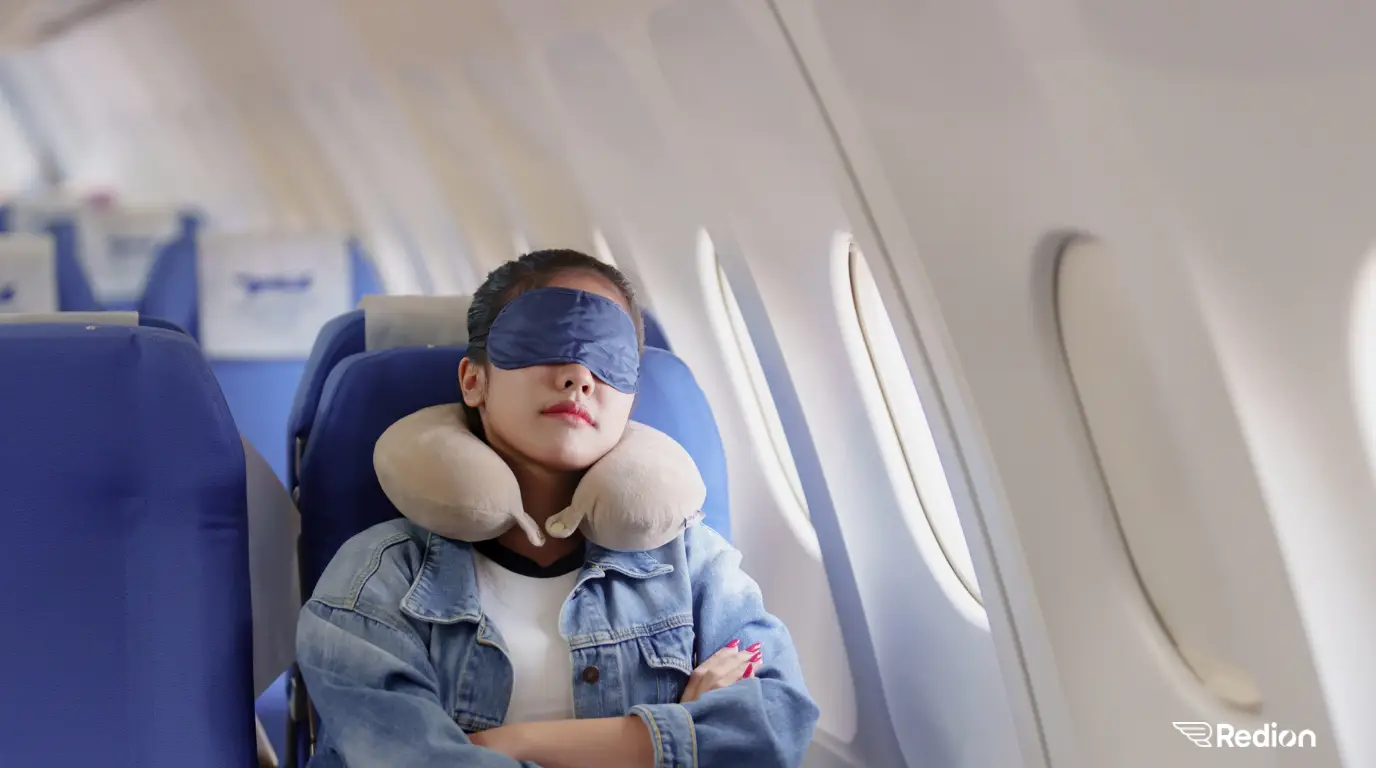
Restful sleep makes the flight more pleasant and arrival smoother. A n eck pillow, eye mask, and earplugs are reliable aids for more peace. You’ll sleep especially well near the window—less disturbance there. If you wish, you can use natural products like valerian or melatonin—but test them beforehand to check your tolerance. Sleeping pills should only be taken with medical advice and never combined with alcohol.
Our tip for peaceful sleep on a plane: fasten your seatbelt over your blanket or jacket, clearly visible . That way, in case of turbulence, the cabin crew will see you’re buckled up—and won’t need to wake you.