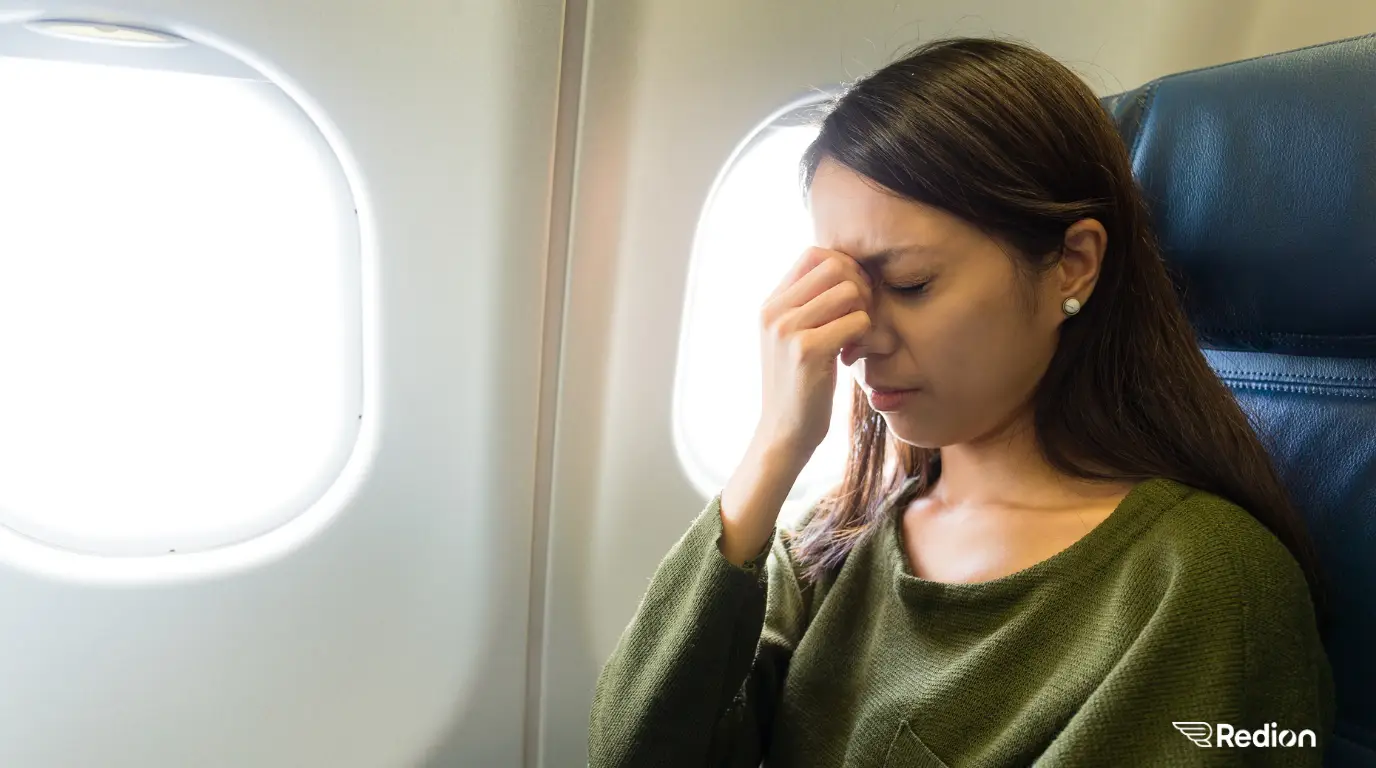
Around 1 in 3 people are affected by aviophobia (fear of flying) or aerodromophobia (fear of air travel), and 1/10 never take a plane because of this anxiety.
Unfortunately, when we like to travel, it narrows down the possible destinations, even if on paper we can travel anywhere by sea and/or land: often the time it will take is very discouraging.
Even if people suffering from this phobia are aware that their feelings are excessive and irrational, the emotional distress they experience is so great that they avoid flying altogether, despite the fact that it remains the safest and fastest means of transport. In theory, you have a 1-in-30-million chance of being involved in a plane accident (it’s 1/15000 for cars).
But what about turbulence? You don’t have to be afraid of it. Turbulence is simply turbulent air currents, comparable to a bumpy road in a car. Aircraft are designed to withstand even the most severe turbulence. They can withstand loads far greater than those actually experienced. And aircraft maintenance is regular and thorough.
Airline employees also meet high safety standards. Pilots undergo comprehensive training and are able to handle the most diverse flight situations with ease. The entire crew is also well trained and carefully selected. Added to this are the various security measures at the airport and for each individual passenger.
Before the flight, anxious travellers experience a feeling of stress and discomfort as they think about the journey ahead. This feeling intensifies as the departure date approaches.
During boarding or the flight, the following symptoms can occur: stress, sweating, trembling, nausea, dizziness, palpitations, hyperventilation, the urge to cry, etc. This can also lead to an anxiety attack.
Among the most common causes are :
Find out how aircraft are built and how they work. Find out more about air traffic control and pilot training, so you can understand everything there is to know about this mode of transport.
There are special courses to help you overcome your fear of flying. In these courses, you work with experts and other concerned people to alleviate your fears. For example, you’ll learn about aviation technology, safety protocols and coping strategies. The exchange with others is encouraging for those affected, and offers you a support network.
Relaxation exercises can be found in books on personal development or in books on cognitive behavioral therapy.
You can also fight your fear of flying by taking medication. It’s very important to seek advice from your doctor’s surgery beforehand. Only medical experts can assess your personal situation and prescribe suitable medication. Tranquilizers and anti-anxiety drugs can help alleviate symptoms. Ask your doctor for advice on the best option and possible side effects.