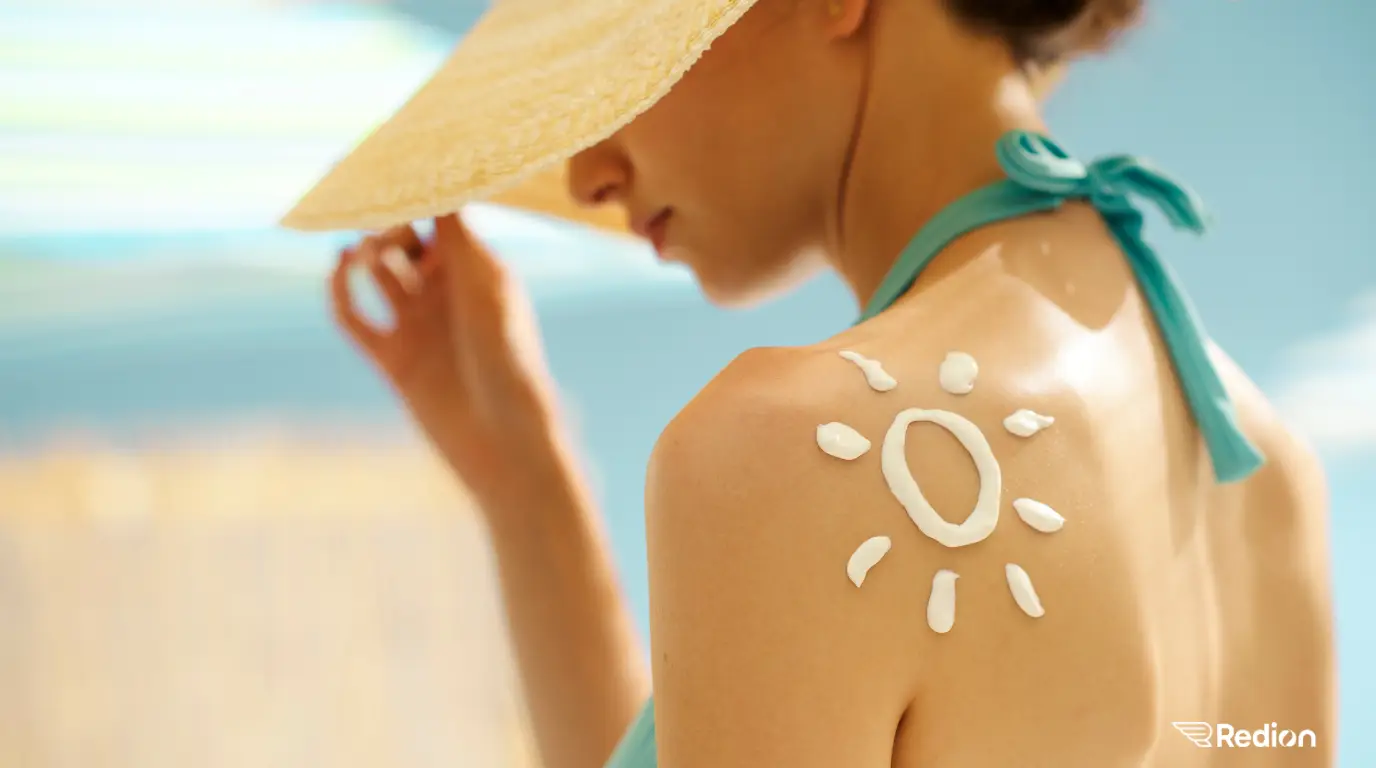
In the summer mood, we quickly forget the essential precautions. The result: bright red skin by the first evening.
Here’s what you’ll find in our article:
Even though it seems obvious, we don’t always follow it. Between 11 a.m. and 3 p.m., UV rays are at their strongest. It’s best to stay in the shade or plan activities outside of this time frame. If going out is unavoidable, wear a hat, sunglasses, and seek shaded areas.
Remember: even in the shade, UV rays can reach your skin.
The effectiveness of sunscreen depends on how it’s applied. Don’t rub it in too hard—UV filters work on the surface. Vigorous rubbing can reduce their effectiveness. Apply generously and evenly, and reapply every two hours.
Thin or transparent fabrics don’t block UV rays. Choose thick or UV-certified clothing. Polyester is especially recommended. Cover sensitive areas like shoulders, chest, and legs.
Cheap sunglasses don’t always filter UV rays. Choose models certified UV400 . Your eyes are just as vulnerable as your skin.
The sun promotes dehydration. Drink water throughout the day, even if you’re not thirsty.
The sun protection factor (SPF) should match your skin type. Here are the six phototypes defined by dermatologists:
Sunscreen is your best ally against sunburn. There are two main types:
Choose a product that is:
In Switzerland, brands like La Roche-Posay, Louis Widmer, or Daylong are highly recommended.
Hair also suffers from sun exposure. UV rays can dry it out, make it brittle and dull. Here are some tips to protect it:
In Switzerland, brands like Phyto, Klorane, or Rausch offer effective hair sun care products.
Cool the skin with lukewarm water, apply a soothing cream (aloe vera, calendula), and avoid further exposure. See a doctor if blisters appear or if you have a fever.
Aloe vera, plain yogurt, cooled black tea, or chamomile compresses can soothe the skin. Always do a patch test before applying.
A mild sunburn fades in 2 to 3 days. A more severe one can last up to a week, with peeling.
A mild sunburn causes redness and warmth. If the skin blisters, turns purplish, or if you feel nauseous, it may be a second-degree burn. Consult a healthcare professional.
Yes. Up to 80% of UV rays pass through clouds. Don’t rely on the weather—always apply sun protection.
Use products specifically for sensitive skin, without fragrance or alcohol. Pure aloe vera or thermal water sprays are recommended. When in doubt, ask a pharmacist.
Repeated exposure increases the risk of premature skin aging, pigmentation spots, and skin cancers, especially melanoma.
Yes, if the pain is intense, if the skin blisters, or if you have a fever or signs of dehydration. Better safe than sorry.