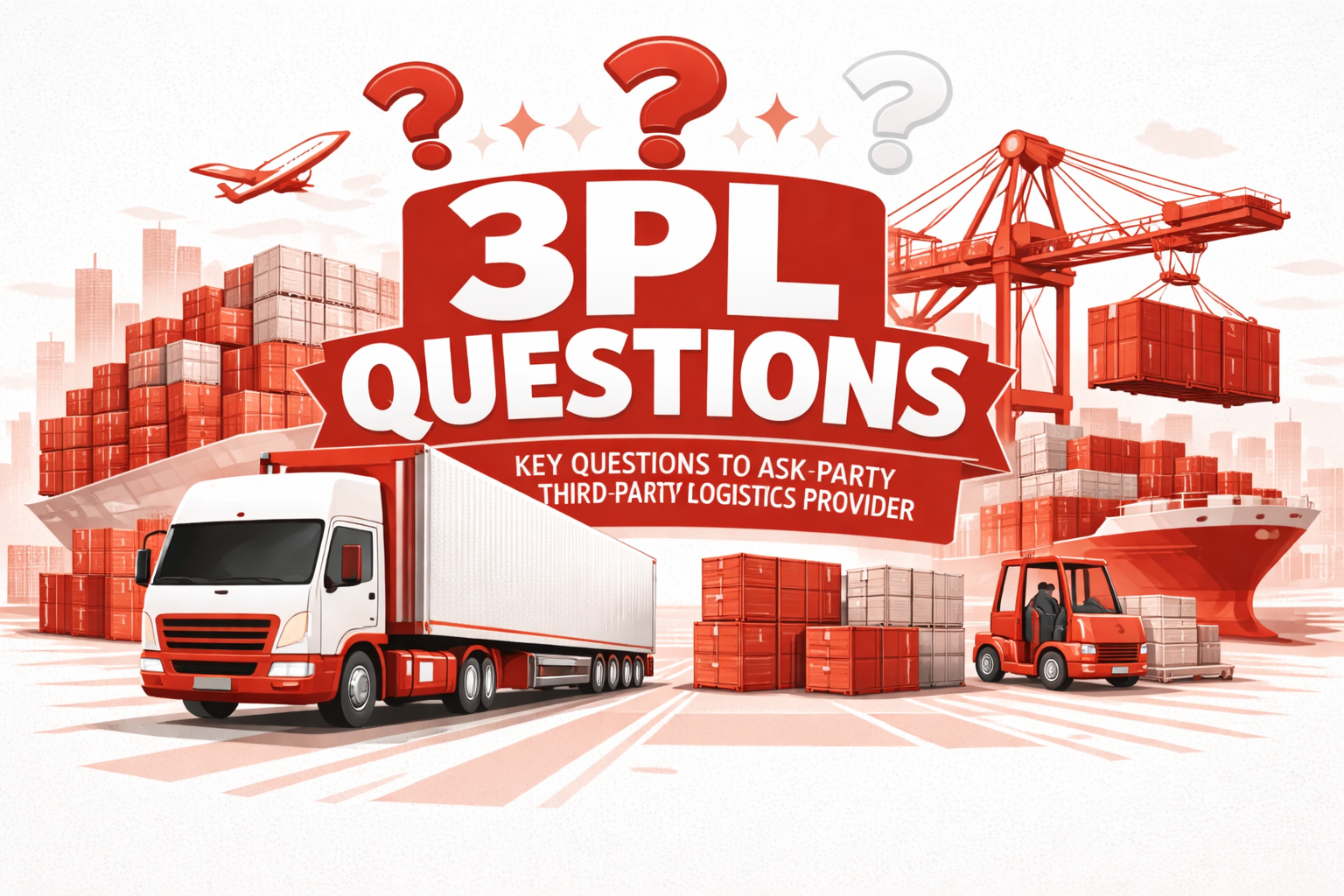
As your customers’ expectations continue to evolve, fulfilment has become more than just logistics, it’s a core part of your brand experience. Today’s customers expect speed, accuracy, flexibility, and real-time visibility at every step. These…
As your customers’ expectations continue to evolve, fulfilment has become more than just logistics, it’s a core part of your brand experience. Today’s customers expect speed, accuracy, flexibility, and real-time visibility at every step. These aren’t extras anymore; they’re table stakes.
For many growing businesses, working with a third-party logistics provider (3PL) is the smartest way to meet these expectations without overwhelming your team or draining your resources.
But here’s the thing: not all 3PLs are created equal. The wrong partner can mean delayed shipments, frustrated customers, and growth that stalls just when momentum matters most. That’s why asking the right questions upfront is so important.
We’ve put together the essential questions you should ask when evaluating a 3PL—questions that will help you find a partner who truly supports your business, not just today, but as you scale into the future. Learn more about our approach to fulfillment partnerships .
Your fulfilment partner should be able to grow alongside you. Ask how they handle seasonal peaks, promotions, and unexpected surges in order volume. A strong 3PL will have the space, people, and processes in place to flex quickly without compromising service levels.
Look for evidence of experience managing high-volume periods such as Black Friday, Christmas, or major campaign launches.
We recommend that when you pick a 3PL you go with one that has sector-specific experience will understand compliance requirements, packaging expectations, and campaign-based distribution. Explore how EC Group supports businesses across different sectors
Transparency is crucial. You should have real-time or near-real-time access to inventory levels, order status, and dispatch confirmations.
Clear data means fewer surprises — and better customer communication.
Modern fulfilment relies on seamless system integration. Your 3PL should integrate smoothly with your e-commerce platform, marketplace, or ERP system to ensure orders flow automatically and accurately.
Key considerations include:
Fulfilment accuracy directly impacts customer satisfaction and return rates. Ask for measurable performance metrics such as pick-and-pack accuracy , order error rates, and quality control processes.
A reliable 3PL will have robust checks in place — and will be transparent about their KPIs.
Returns are an unavoidable part of e-commerce. The question is how efficiently they’re handled.
An effective returns process can protect margins and improve customer loyalty.
Different sectors have different fulfilment challenges. Subscription brands, charities, and enterprise organisations all require tailored approaches.
A 3PL with sector-specific experience will understand:
Warehouses don’t run themselves — people do. Ask about staff training, retention, and company culture. A motivated, well-supported team is far more likely to deliver consistent, high-quality service.
Employee ownership and engagement often translate into greater accountability and care at every stage of the fulfilment process. We tend to find that employee ownership and engagement often translate into greater accountability and care at every stage of the fulfilment process. Discover EC Group’s employee ownership mode.
Finally, consider the relationship. The best 3PLs act as an extension of your busines s, not just a vendor. They proactively suggest improvements, flag risks, and work collaboratively to support your growth.
Ask yourself: do they understand my brand, my customers, and my long-term goals?
Choosing the right 3PL is a strategic decision that affects every customer interaction after checkout. It shapes whether your packages arrive on time, whether your inventory is visible and accessible, and ultimately, whether your customers come back.
By asking the right questions upfront, brands can avoid costly mistakes—like delayed shipments during peak season, inaccurate inventory counts, or rigid systems that can’t adapt as you grow. Instead, you can build a fulfillment partnership that delivers reliability when it matters most, insight into what’s working (and what’s not), and the flexibility to scale alongside your ambitions.