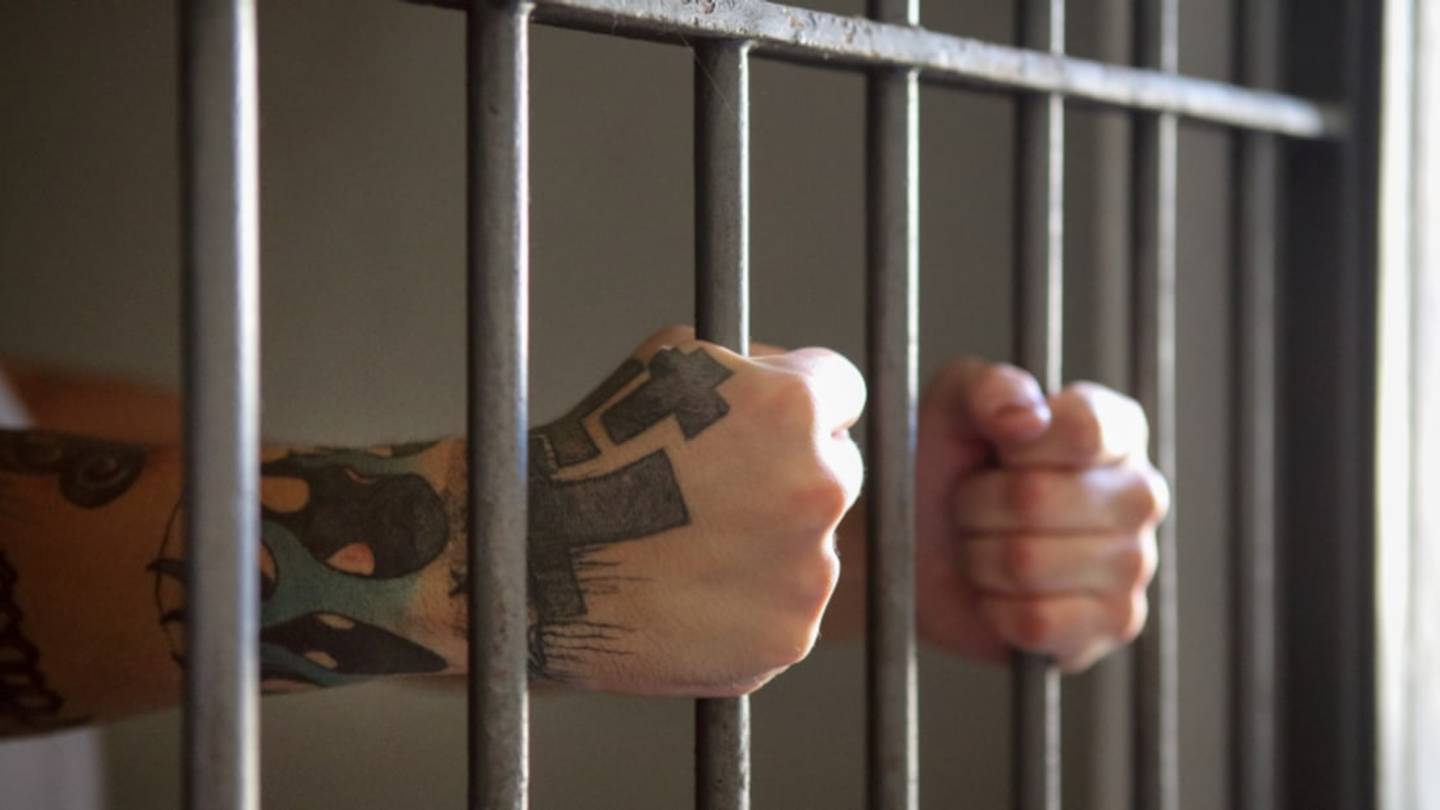
While tattoos might be becoming as popular as pierced earsâin fact, Whole Foods might soon offer inking servicesâthere are still certain ones reserved for select members of society. Jailhouse tattoos, also known as black-and-grays, are dangerous in more than one way: The process is illegal, so inmates end up creating their own equipment and ink, and studies have shown a connection between tattoos and high rates of hepatitis C among prisoners.
You wonât find any butterflies, tribal armbands, or wrongly interpreted Chinese characters here. Check out the hidden meanings behind these 11 prison tattoos.
Perhaps the most well-known tattoo associated with crime and prison, the teardrop can either be unfilled or opaque. There are many stories about why a prisoner would have this tattoo, but the most common is that an unfilled teardrop might symbolize the death of a loved one, while an opaque one might show that the death has been avenged. "Sometimes," the FBI notes , "only the wearer will know the exact meaning of the tattoo.â Teardrops might also represent mourning in general. For instance, Amy Winehouseâs were said to be for her jailed ex-husband.
Such an emblem denotes âdoing timeâ for long-time prisoners. Variations include a watch with no hands and an hourglass.
Emblazoned on the elbow, the spiderweb conveys the idea of being trapped, as well as perhaps the cobwebby passage of time.
A blue dot on the face, the borstal mark, also known as the borstalspot, proclaims a stint in a borstal , a UK system for delinquent boys that was created in 1902 . Borstals offered education, meals, and regimentationâkind of like what Americans call juvie mixed with military school. But since borstals were abolished in the early 1980s, anyone who has a mark these days is more likely a person who wasn't locked up in one but just wants to seem tough .
The ACAB tattoo might be represented by four dots on the knuckles or the letters themselves on the knuckles or elsewhere. The acronym stands for All Coppers Are Bastards, or perhaps, depending on the situation, Always Carry a Bible.
This acronym isnât necessarily specific to prison. Popular among biker gang members, itâs not surprising that the Evil Wicked Mean Nasty mark would make an appearance behind bars.
If the AB tattoo bearer tells you the letters stand for âAlice Baker,â youâll want to stay clear: That's just a nickname for the Aryan Brotherhood. The white supremacist organizationâs other nicknames include Alice, One-Two, Tip and Brand, and the Brand.
The three dots tattoo can appear under the eye or on the hand, and can represent, among Latinos, either the three words mi vida loca , âmy crazy life,â or the holy Catholic trinity. Cultural anthropologist Margo DeMello  says that the three dots might come from a French criminal tattoo, of which the trio of spots stood for mort aux vaches , or âdeath to the cowsââcows meaning the police.
Five dots have a different meaning. Often associated with Russian prisoners , a quincunx on the wrist suggests a convict (the center dot) surrounded by four watchtowers (the surrounding four dots). Of course, a quincunx tattoo isn't always a sign of a stay in prison; Thomas Edison had one on his forearm .
Another ink job popular among Russian inmates is the grin. A flagrant sign of disrespect, grins often portray Russian and Soviet leaders in bawdy or crude positions, and imply that the prisoners, often locked up for the long haul, donât give a flying fig about what authorities think.
If you think the guy with the knife through the neck tattoo looks dangerous, youâd be right: In Russian prisons, such a symbol shows the bearer is a murderer. And proud of it, evidently.
Loading recommendations... Please wait while we load personalized content recommendations