They've been spotted all over the Himalaya, yet no one has ever captured living proof of a yeti . Here are a few fascinating facts about this furry, mountain-dwelling cryptid.
Youâve got three basic ground rules. A 1959 U.S. embassy memo states that American citizens need special permits before they can legally start tracking yetis inside Nepal. Also, while photographs and live captures are OK, killing them is a big no-no, âexcept in an emergency arising out of self-defense .â Finally, any evidence that turns up (including live specimens) must be immediately handed over to the Nepalese authorities.
Gigantopithecus is a genus of massive simians whose fossils have been found throughout China, India, and Vietnam. In their heyday, these guys wouldâve made a silverback gorilla shiverâcertain species weighed an estimated 1100 pounds and could stand over nine feet tall. Gigantopithecus likely died out around 300,000 years ago.
Yeti movies almost always star shaggy white primates. This contradicts most accounts provided by alleged eyewitnesses, who describe them as reddish-brown.
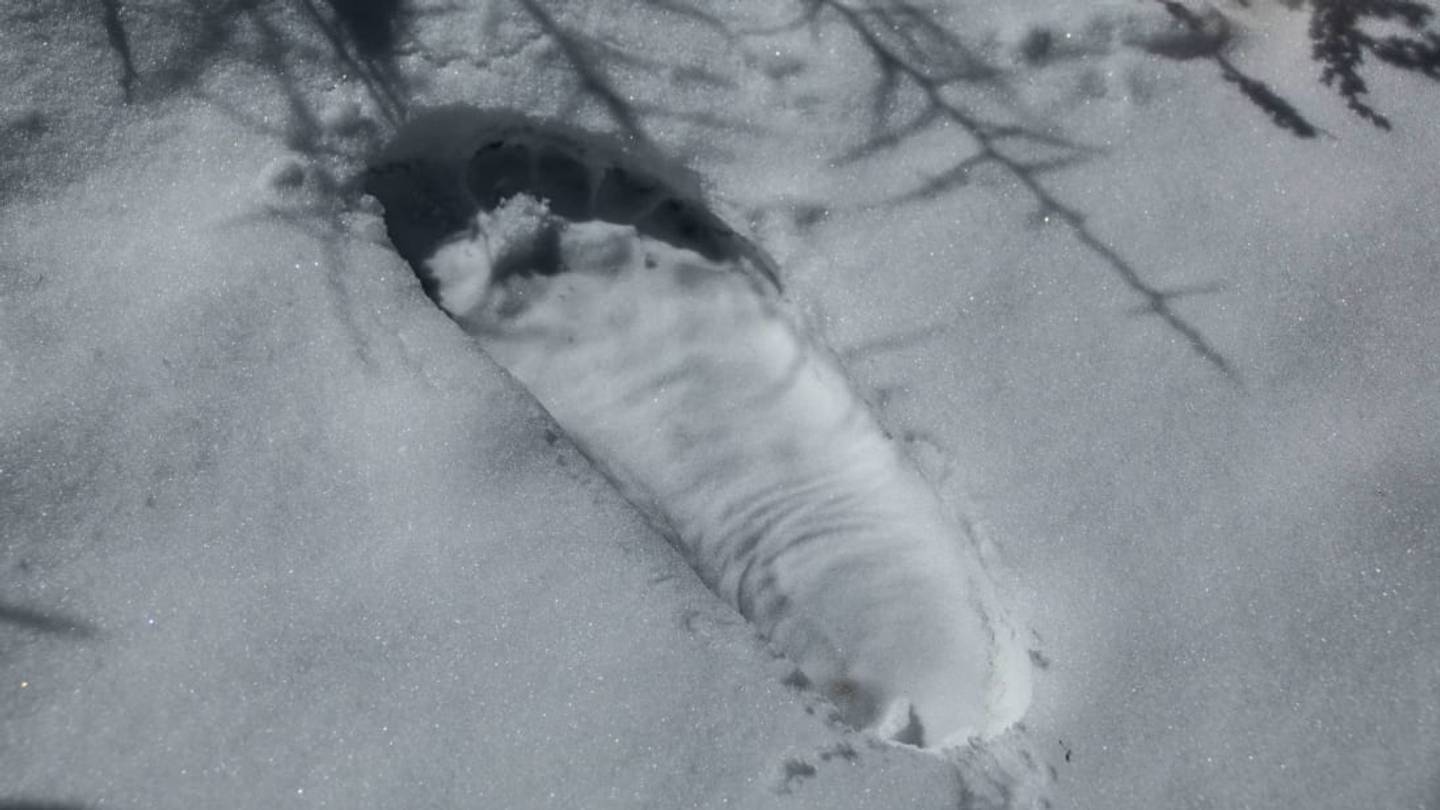
While trekking around Mt. Everest in 1921, British lieutenant-colonel Charles Howard-Bury spotted huge footprints that were roughly âthree timesâ the size of a normal humanâs. His guide said theyâd been left by a met-teh kangmi or âman-sized wild creature.â
His story was soon picked up by Henry Newman of the Calcutta Statesman , who printed the description as metch kangmi , which he mistranslated as meaning â abominable snowman .â
China, India, Nepal, Tibet, Bhutan, and Russia are all countries that night be home to yetis, according to eyewitnessesâ stories.
In 1959, adventurer Peter Byrne visited the Himalayan Pangboche Temple, where a severed yetiâs hand was said to be kept. He removed one of its fingers and replaced it with a human double heâd been given by British primatologist William Osman Hill for this purpose.
When the finger theft took place, Jimmy and Gloria Stewart were hunting in India and would be stopping in London on the way home. Byrne visited the couple and convinced Gloria to slip the finger into her lingerie case, which no customs official would dare open. The plan went smoothly, and the finger is still stored at the Royal College of Surgeons (though itâs since been proven to be a human finger, not a yetiâs).
American and Soviet teams both embarked in 1958 on organized hunts for yetis. âIt is now an international race for the yeti,â said cryptozoologist Gerald Russell, who led the U.S. campaign.
The word yeti may come from the Tibetan Sherpa phrase yeh-teh , or âsmall, man-like animal.â Japanese alpinist Makoto Nebuka suggested it stems from meti , meaning â bear â in some dialects spoken in Tibet, Nepal, and Bhutan.
On Dhaulagiri, Earthâs seventh-tallest mountain, Yeti Project Japan leader Yoshiteru Takahashi purportedly found a cave belonging to a yeti, but his camera froze before he could take a definitive image of the beast.
In 2013, newspapers reported that a yeti-themed resort was being planned for Siberia. Complete with a museum and hotel, the development at the popular Sheregesh ski resort would cater to guests who want to locate and capture a yeti. Anyone who actually did so could expect the equivalent of over $30,500 from regional governor Aman Tuleyev.
Polar and brown bears frequent the worldâs yeti belt, and theyâre also interbreeding as their ranges overlap due to climate change. Some skeptics have argued that yetis are just regular bears , or hybrid polar-brown bears. Hybrids have been documented only in North America, though.
The number was put forth by Professor Valentin Sapunov of the Russian State Hydrometeorological University in St. Petersburg.
Taken by mountain climber Eric Earle Shipton in 1951, the photos feature what appears to be several dozen footprints allegedly found 16,000 to 17,000 feet above sea level. The set was auctioned in September 2015.
In 2013, human genetics expert Bryan Sykes exhaustively gathered 30 hair samples believed to have come from yetis, sasquatches , and other cryptids. Subsequent DNA analyses revealed that every single strand had actually come from common creatures like horses, bears, raccoons, and cows.
In 2015, a mysterious Bay State personality calling themselves the Boston Yeti was seen roaming snowy streets or helping average citizens dig out their cars from massive snowdrifts. âSnowstorms are funny because a sense of camaraderie develops in the community,â the anonymous yeti told ABC news. âFor me, I wanted to lend a claw and do my part, too.â
A version of this story ran in 2015; it has been updated for 2022.
Loading recommendations... Please wait while we load personalized content recommendations