Who knew that some noises would eventually become as extinct as the dodo ? Depending on your age, you or your kids or grandchildren may have heard some of the following sounds only in old movies , if at all.
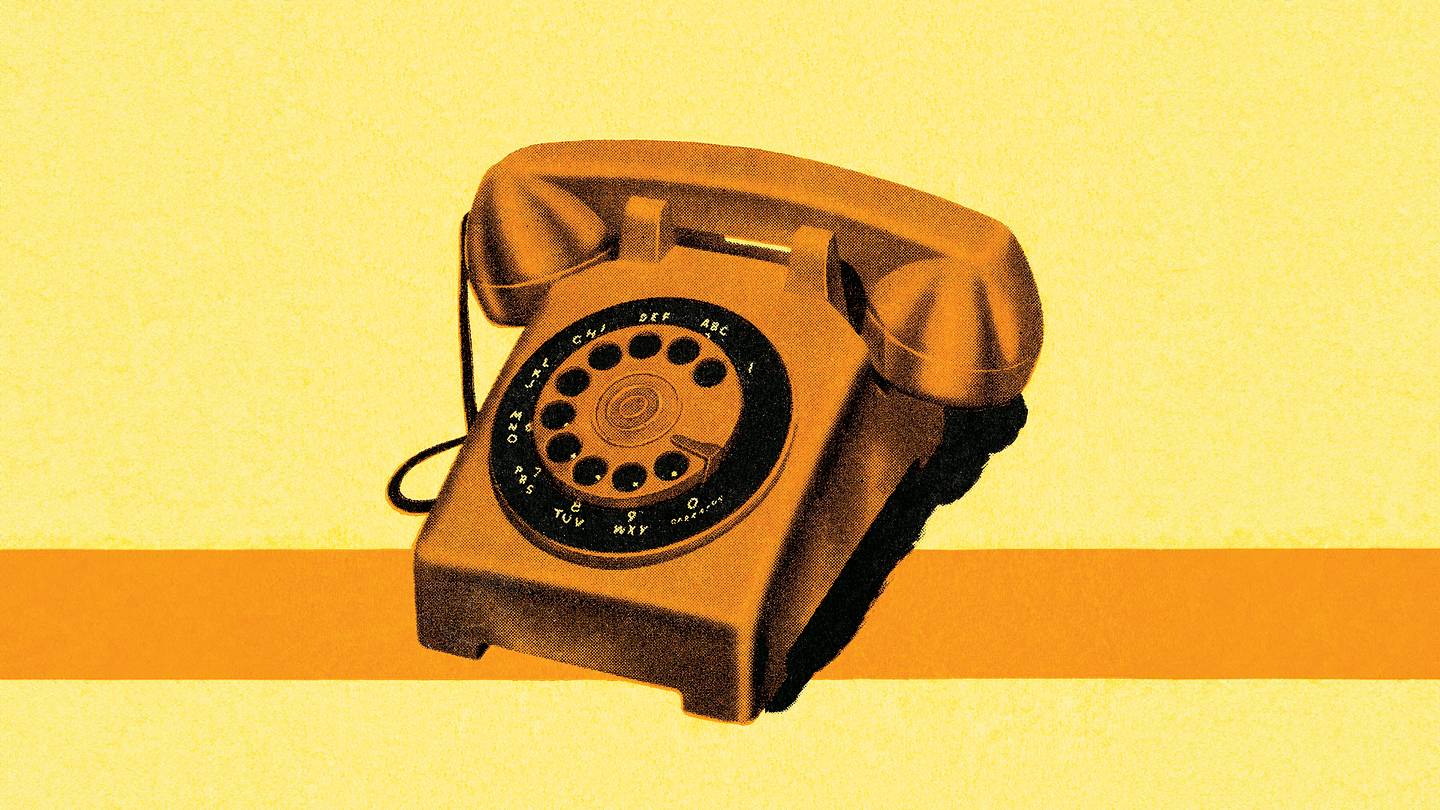
Though it might seem inefficient compared to telling a digital assistant âCall Home,â the technology behind rotary phones was actually developed to speed things up. Originally, telephone users had to rely on human operators to connect them to people on the other end of the line.Â
With rotary phones, youâd generally put your finger in a hole and rotate the dial until you got to a defined stopping point. Remove your finger and the dial would return to its starting point. Youâd go to the next number, and so on.
Those telephones could translate that mechanical action into electrical signals âso the number two might correspond to two electrical pulses, for example (although that wasnât the case in every country). That series of pulses eventually connected you to the person you were calling.Â
Almon Brown Strowger received the first patent for rotary phone technology in the late 19th century, and it didnât take long for it to become the industry standard. It remained that way until the 1960s. In 1962, at Seattleâs Century 21 Exposition, Bell Telephone showcased touch-tone dialing , and soon it had largely supplanted rotary phones.Â
The Century 21 Exposition was a huge win for Bell all around. In promotional materials [ PDF ], they laid out the next few decades of tech: âYouâll see machines âtalkingâ to machines and ⦠the picture phone, which one day may make it possible to display books, clothing, groceries, and even art treasures in your home.â
There are still mechanical typewriter aficionados out there. Tom Hanks has said he travels with at least two typewriters , for example. And Cormac McCarthyâs light blue Olivetti Lettera 32 typewriter sold for over a quarter of a million dollars back in 2009 .Â
For typewriter enthusiasts, the sound of typing up a letter must be a veritable symphony of now-rare sounds. Youâve got the pull of the paper through the rollers as you get started, the signature sound of the letters setting off the hammer up against the ink ribbon, the peppy ding when you get to the end of a line, and, perhaps best of all, that satisfying as you pull the carriage back.Â
If steampunk had an aural definition, it would be the bloop-hissss of an old-school coffee percolator.
The loud rapid-fire click-clack of an Instamatic camera equipped with a flash cube was a common background sound at any social gathering in the 1960s. It was a technological breakthrough to be able to snap off four photos in rapid succession without having to pause and install a new flash bulb after every shot. Even back then, eco-minded individuals were concerned with the amount of waste flash cubes created, so it became a common holiday craft project to repurpose the used cubes into trendy Christmas tree ornaments.
When announcers of yesteryear used to admonish viewers, âDonât touch that dial!â, they were referring to the channel selector knobs found on TV sets. The standard TV dial went from 2 to 13, and you had to click on each number as you searched for one of the three channels that broadcast in your area. That meant a lot of clunk clunk-ing interspersed with the static-y sound of âsnowâ on the blank stations.
Back in the days when all gas stations were full-service, the thin black pneumatic hose that snaked across the pavement was as familiar as the fuel pumps. When vehicles drove over the hose, a loud bell ding-dinged! inside the station, alerting the attendant that they had another customer. You can hear one here âand even order one for your home driveway if you really dislike your neighbors.
Before infomercials were invented, television stations actually went off the air for a few hours each night. Some viewers probably experienced physical withdrawal symptoms when they heard the announcer intone, âWe now conclude our broadcast day ... â around 2 a.m. or so. The format varied little from station to station across the country; first a few technical details were announced (broadcast frequency, physical address of the station), and then a recording of the national anthem played, followed by the steady beeeeeep tone of the test pattern.
Those chunka-chunka push buttons were clumsy, but veteran cashiers could check you out just as fast with these old-style machines as their modern counterparts do with todayâs scanners.
Of course, you can still hear the sound of a film projector in some cinemas, but today youâre much more likely to see a movie via digital projection , to the chagrin of Martin Scorsese and other film-loving cinephiles.Â
The general concept behind film projection is pretty simple: You show the audience a series of still images, our minds interpret the series of images as movement. But if you start to think about how the illusion of movement effect is achieved, youâll realize what little marvels of design projectors really are.
If you simply ran a film reel in front of a lens with the assistance of a strong lightbulb, you would just see a series of blurry images moving vertically past a lens . The solution to this problem is what gives us the distinct sound we associate with film projectors.
Even though the film is moving constantly inside the projector, each frame has to appear as a static imageâto pause, for a brief moment, as it gets shown on the screen.
An early solution to this problem involved something called a âGeneva gearâ (also called a âGeneva mechanismâ or âGeneva driveâ). It involves a rotating pin occasionally slotting into a groove; this enables simultaneously constant and intermittent motion. The most common explanation youâll see out there is that the fast clacking sound we associate with film projection came from the rapid (and rather violent) movement of that gear. But some projector enthusiasts counter that a properly lubricated Geneva gear is basically silent and say that what really causes the noise is the film itself. Since the film is moving constantly off the reels but has to stop for the projection, thereâs a little bit of slack film that builds up right above the light, and itâs this slack moving that causes the noise. Either way, itâs because of the intermittent nature of film projection.
The ability to advance film frame by frame explains why projected images arenât totally blurry, but why donât we see the moments, even briefly, when the frames change? The projectorâs shutter (or, in modern projectors, its multiple shutter blades) blocks the light being shone through the film, very briefly, at just the right time. Weâre actually seeing a series of alternating images and essentially black absences as the shudder blocks that light, but our brains interpret it as one continuous image.Â
Thereâs a certain kind of exaggerated ârewindâ sound effect that todayâs kids are probably pretty familiar with , but the whir of a VHS tape rewinding in a VCR was more subtle. The last movie to be released on VHS was A History of Violence in 2006, and the last VCR was made in 2016, but there are still plenty of VHS tapes that can fetch big money on the secondary market.
For years, the exciting possibilities of the Internet had a distinctive soundtrack. If youâre about 30 years or older, thereâs a pretty good chance youâre familiar with the discordant (though now, oddly nostalgic) sounds that accompanied dial-up Internet. But did you ever wonder what all of those beeps and boops were accomplishing?Â
You might very well be using a modem to connect to the Internet right now, but it probably doesnât require the kind of audible connection that underpinned dial-up connections. Those now old-fashioned noises were basically the way two different modems could speak to one another. The process started with your modem making an actual phone call . On the other end, a modem from your internet service provider would pick up.Â
Computers, at their simplest level, communicate in the binary language of 1s and 0s, but those bits and bytes can be translated into an analog format, like sound, where theyâre expressed as different volumes and wavelengths (or pitches) of sound waves. That process is known as modulationâon the flip side, the data is demodulated, hence the word modem . This process allowed information to be sent via a medium that was already available in many homes of the 1990s: telephone wires.Â
A Finnish software developer named Oona Räisänen actually dug into the International Telecommunication Unionâs standards, and translated the entire âdialogueâ between two modems into a creative commons graphic. You can follow it along second by second, if you can find a working dial-up modem.
Steps in the graphic include admittedly anthropomorphized language like, âPlease donât reduce your power by more than 6 dB.â Sure, modems wouldnât be offended by rudeness (nor do they even âspeakâ anything close to English), but as Räisänen told Popular Mechanics, âI thought every rule of etiquette should mandate a level of politeness.â
Even if a direct translation of the digital communication is, in a way, impossible, the steps necessary to create those early connections were very real. The two modems basically needed to figure out what one another was capable of and engage in some workarounds for piggy-backing onto existing telecommunication lines (which had been optimized for users who were a little bit more, ya know, human.) A little bit of testing ensued, ensuring the connection was viable, and soon you were free to enjoy Geocities to your heartâs content.
Once you were online (provided no one picked up the phone, thereby interfering with the modem dialogue I just outlined, and kicking you off the Internet), you might engage in some AOL instant messaging. Long before âslipping into the DMsâ was a familiar phrase, your heart might be sent aflutter by the simple sound of a digital door opening. The effect represented one of your buddies logging on, and if it was your crush, it might be time to put up a particularly lovelorn away message. Hopefully youâd get a message from them before hearing the dreaded door closing, indicating they had logged off.
Some kids have probably heard some of these sounds. Anyone whoâs used a fax machine, for example, has heard a dial-up modem. And faxing is actually not uncommon, today, in certain industries and countries.
Similarly, there are definitely still payphones around today, but it seems likely that a fair number of under-20-year-olds have never heard the noise a payphone makes as it returns your coin to you.Â
In the early days of telephones, youâd sometimes have a person standing by a phone taking payment to use it. That wasnât particularly popular, for what seem like pretty obvious reasons, and never caught on. By the late 19th century, but things really took off in the 1900s when pay-first,self-service coin-operated versionsphones started to proliferate (a precursor to that technology involved paying after making your call, and basically just operatedappear on the market. Sometimes, oddly enough, they relied on payment after the call, which essentially amounted to the honor system. Simpler times). That didnât stick, either. Eventually, paying for your call ahead of making it caught on and became the standard protocol.
The coin return mechanism is often credited to an engineer named Otto Forsberg, who worked for Western Electric . When you pop your coin into the phone, it basically goes into the worldâs tiniest escrow accountâin this case, a physical spaceâwhere it awaits the result of your attempted phone call. If the call is completed and you arenât owed any change, a tiny battery inside the phone powers a mechanism to send your money into the phoneâs coin collection box. If the call isnât completed, the coin gets sent down another path to get refunded.
Read More Stories About Technology:
An earlier version of this article ran in 2011; it has been updated for 2024.