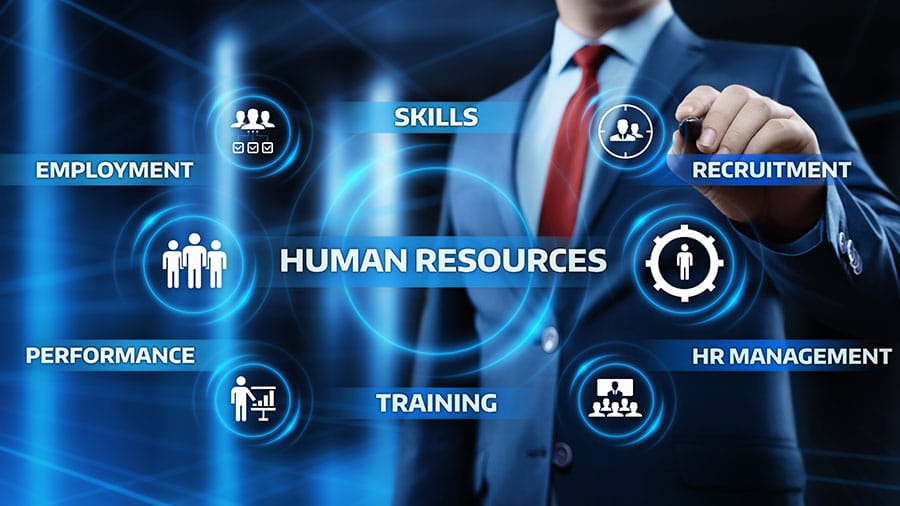
Human resources (HR) is the division of a business responsible for finding, recruiting, screening, and training job applicants while also administering employee benefit programs.
The primary goal of HR is to support employee recruitment, retention, engagement, and overall productivity, contributing to a company’s success in a competitive market. This guide will help you to learn everything you need to know about this department.
Human resource management (HRM) is the strategic approach to managing an organization’s workforce. It encompasses recruitment, hiring, deployment, and employee management.
HRM focuses on employees as valuable business assets, often referred to as human capital, with an emphasis on maximizing their effectiveness and return on investment (ROI).
HRM includes various functions such as:
Recruitment, selection, hiring, training, induction, and employee evaluation.
Managing salaries, benefits, and performance-based incentives.
Setting goals, evaluating employees, and ensuring continuous improvement.
HRM helps improve employee engagement , work-life balance, and career development, reinforcing business culture and values.
A Human Resource Information System (HRIS) is a software solution designed to manage, process, and store employee information and HR-related policies. It streamlines HR tasks, eliminating manual processes and improving efficiency in record-keeping, compliance, and employee interactions.
By eliminating paper-based processes, HRIS ensures smoother operations and better employee management.
Streamlines payroll processing, benefits management, and compliance tracking.
Reduces human error in HR documentation and reports.
Provides a self-service portal for easy access to HR services.
HR departments are responsible for multiple critical functions grouped into the following categories:
HR professionals also play an integral role in maintaining compliance with labor laws and employee well-being programs.
HR professionals take on various roles within an organization, each with distinct responsibilities:
Oversees HR functions and strategic workforce planning.
Manages talent acquisition and hiring processes.
Handles multiple HR functions, from hiring to compliance.
Develops and implements HR strategies aligned with business goals.
Administers salaries, benefits, and rewards programs.
Develops and implements employee training progrms
Manages workplace conflicts and employee engagement.
Identifies and attracts top talent for the company.
Aligns HR initiatives with business goals.
Improves company structures and efficiencies.
Effective HR management strategies help align HR functions with business goals. Key strategies include:
A good HR system combines a number of functions and processes to facilitate the management of people, business processes, and data. It provides a variety of tools that support different stages of an employee’s life cycle, ranging from recruitment and hiring to skills development and analysis.
By integrating payroll management, performance tracking, employee engagement tools, and compliance monitoring, HR systems help organizations improve efficiency, ensure data accuracy, and create a seamless workflow. Modern HR systems also incorporate artificial intelligence and automation to enhance decision-making and streamline administrative tasks.
Human resources are important in managing employees, shaping workplace culture, and driving business success. Whether through in-house HR professionals or outsourcing solutions, organizations need a well-structured HR strategy to thrive. Also, investing in a comprehensive HR system can significantly improve the whole process.
HR outsourcing (HRO) is the process of delegating HR functions to an external service provider. This allows businesses to focus on core growth initiatives while ensuring HR operations run smoothly. Common outsourced HR services include payroll processing, recruitment, benefits administration, and compliance management.
HR is essential for creating a positive work culture, ensuring employee satisfaction, and managing organizational change. Training, development, work-life balance, and diversity programs all contribute to high employee engagement, retention, and overall business success.
Regardless of business size, HR remains critical in shaping company culture, managing employee relations, and maintaining compliance with labor laws. However, companies should consider hiring a full-time HR professional when they reach around 50 employees.