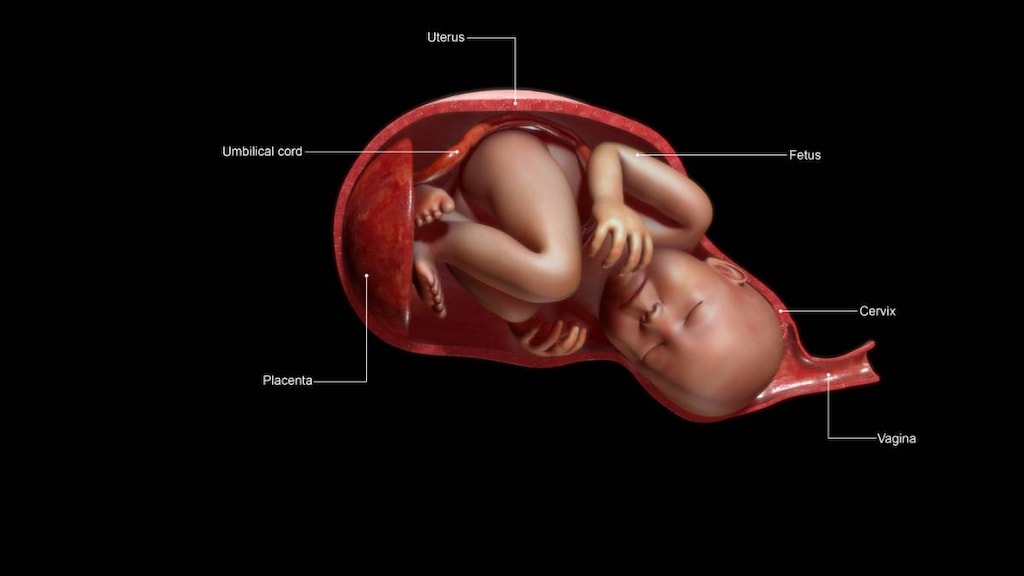
Having a baby is an exciting time, but it’s common to have some worries about labor and delivery. One thing that often causes mums-to-be concern is what position their baby will be in when the time comes for them to be born.
For a vaginal delivery, the baby must descend through the birth canal, passing through your pelvis to reach the vaginal opening. The position of the baby - or presentation of the fetus as it is also known - affects how quickly and easily the baby can be born. Some positions allow the baby to tuck their chin, and re-position and rotate their head to make their journey easier.
Here’s a guide to help you understand the language used to describe the position of babies and some tips for helping them into the ideal position for birth.
During pregnancy your baby has room to move about in your uterus or womb - twisting, turning, rolling, stretching and getting in some kicks. As your pregnancy progresses and they grow bigger there’s less room for them to move, but your baby should still move regularly until they are born, even during labor.
Sometime between 32 and 38 weeks of pregnancy, but usually around week 36, babies tend to move into a head down position. This allows their head to come out of your vagina first when they are born. Only about 3 to 4 percent of babies do not move into a head-first or cephalic presentation before birth.
Occiput anterior is the ideal presentation for your baby to be in for a vaginal delivery.
Occiput anterior is a type of head-first or cephalic presentation for delivery of a baby. About 95 to 97 percent of babies position themselves in a cephalic presentation for delivery, often with the crown or top of their head - which is also known as the vertex - entering the birth canal first.
Usually when a baby is being born in a vertex presentation the back of the baby’s head, which is called the occiput, is towards the front or anterior of your pelvis and their back is towards your belly. Their chin is also typically in a flexed position, tucked into their chest.
Occiput anterior is the best and safest position for a baby to be born by a vaginal birth. It allows the smallest diameter of a baby’s head to descend into the birth canal first, making it easier for the baby to fit through your pelvis.
Sometimes babies don’t position themselves in the ideal position for birth. These other positions are called abnormal positions. Listed below are the abnormal positions or presentations that some babies are born in.
Occiput posterior position or back-to-back presentation occurs when the occiput - back of a baby’s head - is positioned towards your tailbone or back during delivery. Sometimes this presentation is also called “sunny side up” because babies born in this position enter the world facing up. About 5 percent of babies are delivered in the occiput posterior position.
Babies presenting in the occiput posterior position find it harder to make their way through the birth canal, which can lead to a longer labor. This presentation is three times more likely to end in a cesarean section (c-section) compared with babies presenting in the ideal, occiput anterior presentation.
A breech presentation occurs when your baby’s buttock, feet or both are set to come out first at birth. About 3 to 4 percent of full-term babies are born in a breech position.
There are three types of breech presentation including:
A breech delivery can result in the baby’s head or shoulders becoming stuck because opening to the uterus (cervix) may not be stretched enough by the baby’s body to allow the head and shoulders to pass through. Umbilical cord prolapse can also occur. This is when the cord slips into the vagina before the baby is delivered. If the cord is pinched then the flow of blood and oxygen to the baby can be reduced.
If an exam reveals your baby is sitting in a breech position and you’re past 36 weeks of pregnancy then external cephalic version (ECV) might be attempted to improve your chances of having a vaginal birth. ECV is performed by a qualified healthcare professional and it involves them pressing their hands on the outside of your belly to try and turn the baby.
Most babies found to be in a breech position are delivered by c-section because studies indicate that a vaginal delivery is about three times more likely to cause serious harm to the baby.
Babies can also arrive brow- or face-first. A brow presentation results in the widest part of your baby’s head trying to fit through your pelvis first. This is a rare presentation, affecting about 1 in every 500 to 1400 births.
Instead of flexing and tucking their chin, babies presenting brow-first slightly extend their head and neck in the same way they would if they were looking up.
If your baby stays in a brow presentation it’s highly unlikely that they will be able to make their way through your pelvis. If your cervix is fully dilated then your doctor may be able to use their hand or ventouse - a vacuum cup - to move your baby’s head into a flexed position. If there are signs that your baby is becoming distressed or labor isn’t progressing then a c-section may be recommended.
More than half of the babies presenting brow-first, however, flex their head during early labor and move into a better position that allows labor to progress. Although, some babies tip their head back further and present face-first.
A face presentation is another rare position for a baby to be born in, occurring in only 1 in every 600 to 800 births.
Almost three quarters of babies presenting face-first can be delivered vaginally, especially if the baby’s chin is near your pubic bone, although labor may be prolonged.
Some baby’s presenting face-first may need to be delivered by c-section, particularly if their chin is near your tailbone, your labor is not progressing or your baby’s heart rate is causing concern.
If your baby is lying sideways across your uterus - in a transverse lie - their shoulder can present first. Shoulder presentation occurs in less than 1 percent of deliveries. Virtually all babies in a shoulder presentation will need to be delivered by c-section. If labor begins while the baby is in this position then the shoulder will become stuck in the pelvis and the labor will not progress.
A number of factors can influence the position of your baby during labor and delivery, including:
Your midwife or your obstetrician-gynecologist (OB-GYN) should be able to tell you the position of your baby by feeling your belly, using an ultrasound scan or conducting a pelvic exam.
You might also be able to tell the position of the baby from their movements.
If your baby is in a back-to-back position your belly may feel more squishy and their kicks are likely to be felt or seen around the middle of your belly. You may also notice that instead of your belly poking out there is a dip around your belly button.
If your baby is in the ideal occiput anterior presentation you’re likely to feel the firm, rounded surface of your baby’s back on one side of your belly and feel kicks up under your ribs.
Here are some tips to try to encourage your baby to engage in the ideal position for birth:
Remember to attend your antenatal appointments and contact your midwife or OB-GYN if you have any questions or concerns about the position of your baby.