Humans have always been cooking up brand new ways to slice, dice, hack, and stab. You definitely wouldnât want to tangle with any of the historical swords in this galleryâespecially the last one.
Wikimedia Commons //Â CC BY-SA 3.0
Believed to have evolved from either battle axes or farm implements , this intimidating weapon was used in ancient Egypt. Only the outer edge of the curved blade was sharp. The weapon was a symbol of authority, and several Pharaohs owned Khopeshesâincluding Ramses II and Tutankhamun, who was entombed with his.Â
Strong, lightweight, and flexible, Viking Ulfberht blades were forged with astonishingly pure metal called Crucible Steel. Even todayâs best blacksmiths have had a hard time reproducing this material, which is much better than what's found in average medieval swords. How did Viking warriors develop such an advanced sword? The juryâs still outâthough Middle Eastern trade might have helped them pick up a few technical pointers.
This weapon's tip was blunt, so it would have been bad at skewering your enemies. But Indiaâs Khanda (introduced somewhere between 300 and 600 CE) didnât need to: Its heavy construction made it a perfect chopping device, and some swordsmen upped the ante by giving the weapon serrated edges.
Back in the 19 th and 20 th centuries, European explorers made numerous sketches of tribal Congo residents decapitating prisoners with this ferocious-looking weapon. The extent to which their dramatizations reflect reality is debatable.
savagecats , Flickr // CC BY 2.0
Wavy-bladed rapiers were a Renaissance staple. Flammard fanciers mistakenly believed that this undulating design could inflict deadlier wounds. The shape did provide one genuine dueling advantage, though: When an opponentâs sword ran across one, those curves would slow it down.
Double trouble! These weapons not only feature curved tips, but sharp, hand-protecting guards as well. The weapons were commonly handled in pairs, and, according to a 1985 issue of Black Belt magazine, "When put together, two hook swords could easily tear apart an opponent." Yikes.
Wikimedia Commons  // CC BY-SA 3.0
The first Kilij appeared in Turkey around 400 CE . A perfect choice for horsemen, this style of saber went through several variations over the next 1400 years. In a skilled riderâs hands, this sword could mutilate those with their feet on the ground with devastating efficiency.
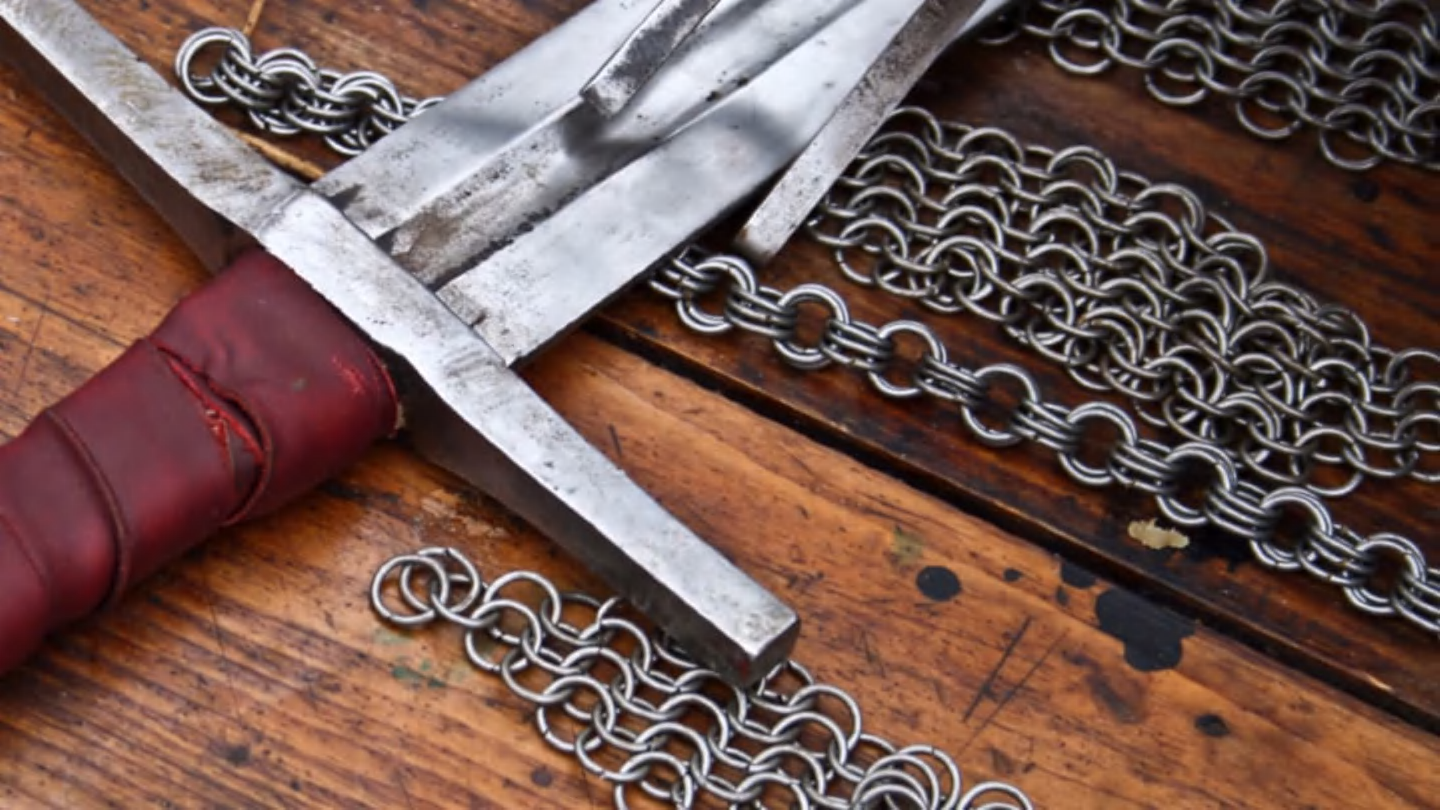
Armor doesnât always guarantee safety. Renaissance swordsmen could split through the links with the estoc , a dull-edged thrusting sword designed specifically for this purpose.
Zweihander means âtwo hand,â and these weapons were so large that swordsmen did indeed need two hands to wield them. According to one tale, the swords were so powerful that they could behead up to seven victims with a single stroke .
The best bladed weapons are at least somewhat flexibleâbut the urumi is downright floppy. When swung, it acts like a whip. A metal whip. A metal whip with two sharp edges. If that description doesnât scare you, this demo reel should do the trick:
Invented during Indiaâs Mauryan Dynasty (circa 350-150 BCE), urumis have undergone plenty of variations over the centuries. Today, several blades are often attached to the same grip for added effectiveness. The constant risk of accidentally slicing yourself up makes the urumi anything but user-friendly.
Loading recommendations... Please wait while we load personalized content recommendations