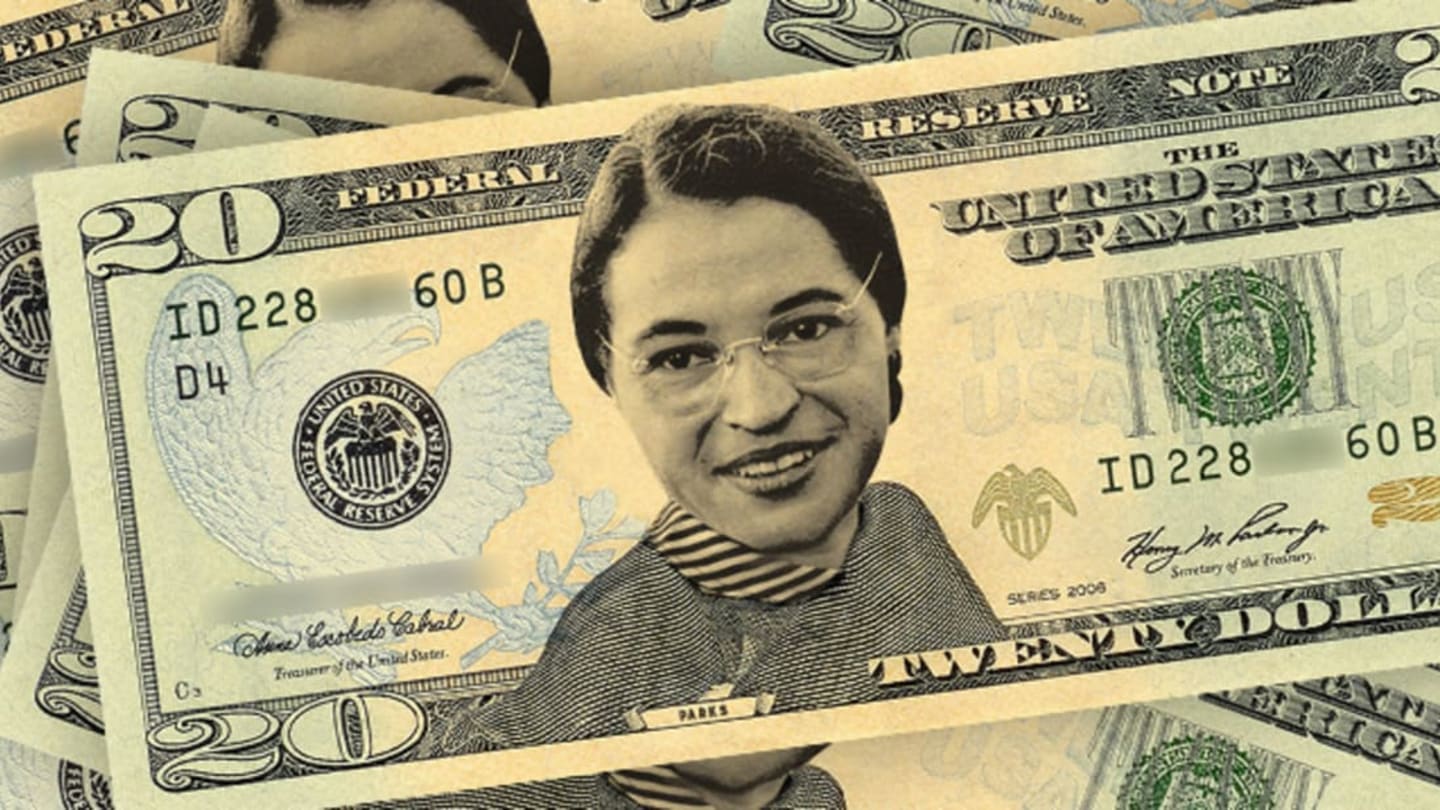
Andrew Jackson isnât short on accomplishments. In addition to being the seventh President of the United States, he was a military hero, the godfather of the modern Democratic Party, and, since 1928, the literal face of our $20 bill. But a new campaign by Women on 20s , an online group intent on seeing a female face grace a piece of paper currency, is hoping to make that last of Old Hickoryâs achievements a thing of the past.
âBarbara [Ortiz Howard] came up with this idea a few years ago,â Susan Ades Stone, an award-winning journalist and Women on 20sâ executive director and campaign strategist, told The Billfold of the campaignâs origins. âOriginally, she was thinking of the ten-dollar bill. But then she realized that the centennial [of womenâs suffrage] was coming up in 2020. She said, âHmmm, whoâs on the 20?â When she started looking into Andrew Jackson, he seemed like a better person to replace. She e-mailed friends of hersâI was one of themâasking what we thought of the idea and who they might like to see on the $20.â
The result is a list of 15 stellar female candidates , from activists to ecologists to nurses to politicians, each of whom is well deserving of a currency commemoration.
âWe stuck very closely to this rubric of evaluating every candidate by the breadth of their impact: how transformational was their contribution?â Ades Stone told Time . âAnd the other factor we asked people to consider were âWhat were the challenges these people faced?ââ
Starting with approximately 100 names, the candidate list was slowly whittled down to a mere 15; Amelia Earhart, Harriet Beecher Stowe, Helen Keller, Jane Addams, Lucretia Mott, Mother Jones, Maya Angelou, Nellie Bly, and Sally Ride were among the women who didnât make it to the primary round of voting, a distinguished group that includes:
Leader of the National Womenâs Party for half a century, itâs largely because of Alice Paul that women have the right to vote today.
The publication of Betty Friedanâs The Feminine Mystique in 1963 is often credited as the single moment that kickstarted the second wave of American feminism.
After becoming the first African-American woman elected to Congress in 1968, Shirley Chisholm strove to make history a second time just a few years later when she entered the 1972 Democratic presidential raceâa first for both women and African-Americans.
Born into slavery, Sojourner Truth escaped to freedom with her infant daughter in 1826, then sued the white man who illegally sold her sonâand won.
The godmother of eco-consciousness, there would be no EPA (or Earth Day) without biologist/zoologist Rachel Carsonâs groundbreaking 1962 book Silent Spring , which detailed the dangers of synthetic pesticides.
Rosa Parksâ refusal to move to the back of a bus in Montgomery, Alabama in 1955 became an iconic symbol in the fight for civil rights, and led to her being deemed âthe mother of the freedom movement.â
In 1976, Barbara Jordanâthe first African-American woman elected to the Texas Senateâadded to her list of âfirstsâ when she became the first black woman to deliver the keynote address at the Democratic National Convention. She paid tribute to the importance of the moment by noting that, âMy presence here is one additional bit of evidence that the American dream need not forever be deferred.â
Despite being taught that contraceptives should be criminalized, Margaret Sanger knew better, and fought loudly and proudly for a womanâs right to âown and control her body.â She introduced the idea of âbirth controlâ (and the term itself), helped to found Planned Parenthood, and played a key role in the development of the birth control pill.
As the first woman of color elected to the U.S. House of Representatives and the first Asian-American woman in Congress, Patsy Mink co-wrote, sponsored, and spearheaded the passage of Title IX, which prohibited gender discrimination in federally funded institutions. After her passing in 2002, it was renamed the Patsy T. Mink Equal Opportunity in Education Act.
Better known as âThe Angel of the Battlefield,â Clara Barton wasnât afraid to bring food and medical supplies to the front lines during the Civil War, then channeled that charitable spirit into the creation of the American Red Cross.
Whereas other escaped slaves would never dare to look back, Harriet Tubman returned to her enslaved past an estimated 19 times in order to help others follow her path to freedom, making her one of the most famous conductors of the Underground Railroad.
FDR may have gotten most of the headlines for the New Deal, but it was Frances Perkins (the first female U.S. Cabinet member and longest-serving labor secretary in the history of the job) who championed its major innovations, including unemployment benefits, welfare, minimum wages, and overtime pay.
As First Lady, Eleanor Roosevelt did more than just smile at the cameras and wave to the crowds; she pioneered the position as one with the power to make real changes, paving the way for all of the women who called The White House home after her.
Elizabeth Cady Stantonâs declaration that âThe best protection any woman can have ⦠is courageâ helped secure her place at the forefront of the womenâs equality movement, most famously when she presented her Declaration of Sentiments at the Seneca Falls Convention in 1848.
Sure, Susan B. Anthony had her face minted on a dollar coin. But that doesnât mean that paper money should elude her. Working alongside Elizabeth Cady Stanton for 50 years, Anthony was a tireless (and successful) abolitionist and suffragist.
According to Time , more than 72,000 people have already cast their votes for the most deserving candidates. Once that number reaches 100,000, âwe can get the Presidentâs ear,â indicates the Women on 20s Website . They also note that, âFortunately, it doesnât take a messy act of Congress to change a portrait on paper money. It requires an order from the Secretary of the Treasury. With the stroke of a pen, the President can direct the Treasury Secretary to make the change.â
For his part, President Obama has already publicly stated his support for the idea of putting a lady on some loot. Last July, while giving a speech at the Uptown Theater in Kansas City, Missouri, Obama shared that, âa young girl wrote to ask me why arenât there any women on our currency, and then she gave me like a long list of possible women to put on our dollar bills and quarters and stuffâwhich I thought was a pretty good idea.â
The argument for â tender equality â is hardly a new concept, particularly when one considers the fact that Martha Washington is the only woman to have ever appeared on a piece of paper currency in the U.S.âand that was more than 125 years ago. Females have fared better in the coin department, with the United States Mint citing six occasions of female portrayals , though only half of those were circulating coins (the most recent being Helen Keller on the back of the 2003 Alabama quarter).
âThere is a disconnect possibly between women and money,â Barbara Ortiz Howard tells Fast Company . âHaving a woman on money helps connect the dots a little bit more in our everyday lives.â
Loading recommendations... Please wait while we load personalized content recommendations