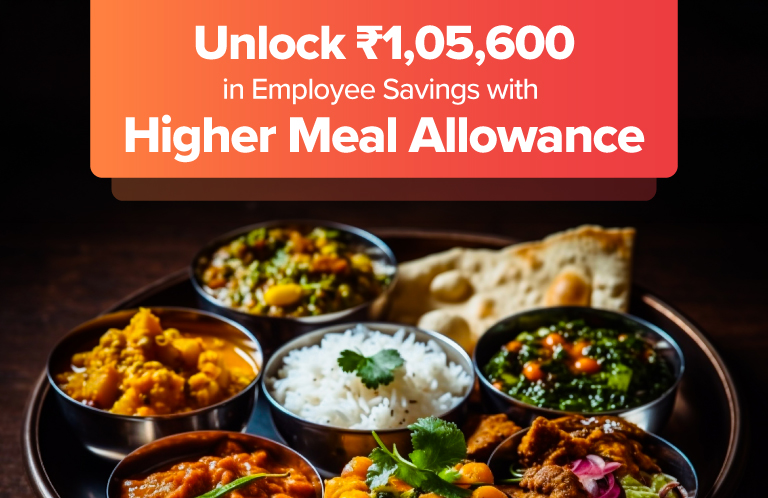
During a compensation review at a mid-sized technology firm, the HR team noticed something unexpected. Employees often focused on major salary components such as basic pay, bonuses, or housing allowances, but rarely paid attention to smaller benefits like meal allowances. Yet when the team examined the numbers more closely, the impact was far from small.
Under the updated framework, the Income Tax Rules 2026 have raised the meal allowance limit to ₹200 per meal. On the surface, the change from ₹50 to ₹200 may appear modest. However, when applied across a full working year, the cumulative value can become meaningful.
Consider a typical workplace scenario where employees receive two meals during a working day. For organisations operating on a five-day workweek, the annual tax-exempt value can look like this:
This means employees could potentially receive over ₹1.05 Lakhs annually in tax-exempt meal benefits, depending on how allowances are structured within their salary packages.
For HR teams reviewing compensation frameworks, this example demonstrates how smart tax planning can turn employee benefits into bigger take-home pay .
Even benefits that appear small individually can have a noticeable impact when calculated across an entire year. This is precisely where the updated meal allowance tax exemption under the Income Tax Rules 2026 becomes relevant for both employers and employees designing tax-efficient salary structures.
Recent updates to tax provisions have increased the exemption limits applicable to meal-related benefits provided to employees during working hours. For many years, the tax treatment of meal benefits remained largely unchanged despite rising workplace costs.
The revised framework updates the meal allowance tax exemption in India, aligning it with current urban costs. The higher limits also make meal benefits more relevant within salary structures.
This revision also strengthens the tax exemption on meal allowances, making everyday employee benefits more relevant in salary planning.
The revised threshold allows organisations to provide higher-value meal benefits without increasing employees’ taxable income within the permitted limits. For employees receiving benefits through meal vouchers, prepaid meal cards, or corporate cafeteria programmes, this change strengthens the tax efficiency of meal allowances.
When combined with other allowances such as housing benefits, education allowances, meal allowances help employees optimise multiple tax exemptions available within compensation structures. Ultimately, the objective of structured allowances remains straightforward: less tax, more in-hand .
Although meal allowances offer relatively simple benefits, organisations must ensure proper compliance when implementing them.
Payroll Configuration
HR and finance teams must configure payroll systems so that meal allowances are correctly recorded and taxed within prescribed limits. Incorrect treatment of allowances can result in inaccurate tax deductions.
Mode of Benefit Delivery
Meal benefits may be provided through:
Each method must comply with applicable income tax meal voucher rules to ensure correct treatment under the Income Tax Rules 2026.
Monitoring Allowance Usage
Organisations with large workforces may need systems that track benefit utilisation across employees. Centralised reporting helps ensure that the available tax exemption on meal allowances is applied correctly across salary structures.
Managing allowances such as meal benefits across multiple teams and payroll systems can become complex. Zaggle helps organisations manage employee allowances and reimbursements within a unified system.
The platform enables organisations to:
With structured workflows and centralised oversight, organisations can implement revised meal allowance tax exemption provisions in India efficiently while maintaining compliance with the Income Tax Rules 2026.
What is the meal allowance tax exemption in India?
Meal allowance tax exemption is the tax-exempt value of meals provided to employees during working hours. Under the most recent framework within the Income Tax Rules 2026, the exemption limit is ₹200 per meal.
How does a meal allowance reduce taxable income?
When provided within permitted limits, the value of meals, meal vouchers, or meal cards is not included in taxable salary, reducing the employee’s taxable income.
How are meal allowances usually provided?
Meal allowances are commonly given through meal vouchers, prepaid meal cards, or employer-operated cafeteria facilities.
Do meal allowances apply to all employees?
Meal benefits depend on organisational policies and may be offered as part of employee compensation or benefits programmes, subject to applicable income tax meal voucher rules.
Why should organisations review meal allowance structures?
Revised exemption limits increase the relevance of meal benefits within salary structures. Organisations reviewing allowance frameworks can help employees access available tax exemption on meal allowances while maintaining compliance with the Income Tax Rules 2026 .
Expert contributor and editor at the Zaggle Knowledge Hub, specializing in corporate spend management, expense compliance, and B2B fintech solutions.
Posted on : Sep 22, 2026
Posted on : Sep 15, 2026
Posted on : Aug 5, 2026