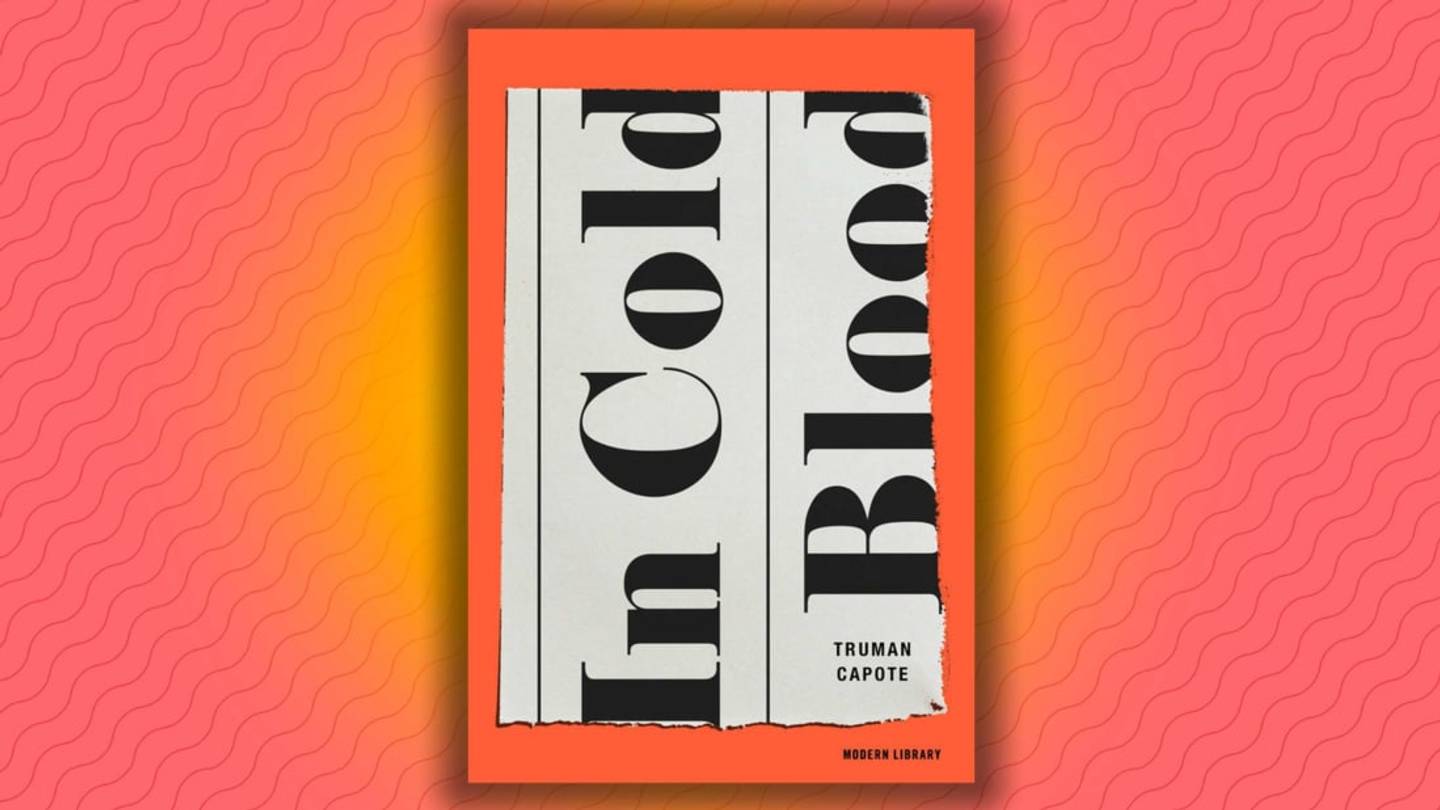
More than half a century after its publication, Truman Capote âs In Cold Blood remains one of the most remarkable achievements in modern American literature. Capoteâs meticulously detailed account of the grisly murders of four members of a Kansas family is as harrowing and fascinating today as it was in 1965, when it was first serialized in the pages of The New Yorker . As of 2016, In Cold Blood was the second-bestselling true crime book ever, topped only by Helter Skelter , Vincent Bugliosi and Curt Gentryâs account of the Manson Family murders.
But the writing of In Cold Blood has captured our imagination almost as much as the grim story recorded in its pages. At least two moviesâ2005âs Capote and the following yearâs Infamous âhave dramatized Capoteâs six-year undertaking, and numerous biographies have examined the odd relationship Capote formed with the two drifters who were eventually tried, convicted, and hanged for the murders. (One of them even willed all his belongings to Capote.)
Here are seven things you should know about one of the most influential true crime books ever written.
According to an interview published in The New York Times in January 1966, Capote considered In Cold Blood the first book of its kind. âIt seemed to me that journalism, reportage, could be forced to yield a serious new art form,â Capote told interviewer George Plimpton. Capote called his experiment a ânonfiction novel,â which he defined as âa narrative form that employed all the techniques of fictional art but was nevertheless immaculately factual.â Some scholars agree with Capoteâs assessment, but others trace the form back to earlier works, including John Herseyâs Hiroshima and Argentine journalist Rodolfo Walshâs Operation Massacre .
When Capote first arrived in Holcomb, Kansas, on December 15, 1959âone month to the day after four members of the Clutter family were shot to death in their homeâto begin his research for In Cold Blood , his reputation didnât exactly precede him. According to The New Yorker , Capoteâs publisher, Random House, had tried to get the FBI to grease the skids for him by essentially sending along a note promising that Capote was âa legitimate writer assigned to do a story.â But the FBI refused to help, and since Capote hadnât even bothered to bring press credentials, he was initially shut out by locals and law enforcement alike.
Fortunately, the flamboyant journalist had brought someone along who could vouch for him: a charming, eminently likeable young writer named Harper Lee , who had just sent the final draft of To Kill a Mockingbird to her publisher and didnât quite know what to do with herself. Capote and Lee had been close friends since childhoodâLee modeled the character of Jem and Scout Finchâs friend Dill Harris after Capoteâand she had agreed to accompany him to Kansas to help with research for a fee of $900.
Years later, Capote would sometimes seem dismissive of Leeâs role, saying that âshe kept [him] companyâ during his time in Kansas and âwas extremely helpful in the beginning ⦠by making friends with the wives of the people I wanted to meet.â But some accounts indicate Lee played a much larger role than Capote acknowledged. In 2009, Holcomb resident Bob Rupp, who was the last to see the Clutter family alive, told The Guardian that Capote âwasn't the kind of person I wanted to spend time with,â and remembered that it was Lee, not Capote, who asked most of the questions when he was interviewed for Capoteâs book.
âHarper Lee was invaluable to him out there,â Ralph Voss, author of Truman Capote and the Legacy of In Cold Blood, said in a 2011 interview. âShe knew how to meet and talk to people, and she kind of helped smooth the way for him.â
Capote arrived in Kansas to research In Cold Blood just weeks after the November 1959 murders, and he spent time with the killers in the hours before they were hanged at Kansas State Penitentiary in April 1965. During the years that stretched between those book-end events, he conducted exhaustive research, talking to anyone whoâd sit down with him and poring over court records, newspaper articles, letters, and other documents. He supposedly compiled 8000 pages of notes and amassed a collection of files and memorabilia that, in his words , âwould almost fill a whole small room, right up to the ceiling.â
Capote believed that using a tape recorder or taking notes during an interview âartificialize[d] the atmosphere.â He spent years training himself to memorize lengthy conversations by having a friend read passages from a book and then attempting to transcribe the passages from memory. He claimed he could recall a six-hour conversation with greater than 90-percent accuracy, and that he never used a tape recorder or took notes during the many hours of interviews he conducted for In Cold Blood .
Movie studios were vying for the film rights to In Cold Blood even before the bookâs release in January 1966. One of the interested parties was Otto Preminger , director of such films as Laura and Anatomy of a Murder . Preminger was eyeing the project as a vehicle for Frank Sinatra , who had played a recovering drug addict in Premingerâs 1955 film The Man With the Golden Arm . The director was reportedly livid when he learned that Capoteâs famously ruthless agent, Irving âSwiftyâ Lazar , had sold the rights to Blackboard Jungle director Richard Brooks instead. According to a report in The New York Times , Preminger was seated at a table next to Lazarâs at the 21 Club in New York City when things got heated. Preminger told Lazar that Sinatra wanted to âpunch him in the noseâ; the exchange escalated until Lazar stood up and hit Preminger with a water glass, sending the filmmaker to the hospital for 50 stitches. Preminger pressed charges, and Lazar was arraigned for âfelonious assault.â The agent eventually pled down to a misdemeanor and received a suspended sentence.
In Cold Blood was a huge hit with readers and critics alike, but the bookâs success came at an enormous personal cost for its author. âNo one will ever know what In Cold Blood took out of me,â Capote told his biographer, Gerald Clarke. âIt scraped me right down to the marrow of my bones. It nearly killed me. I think, in a way, it did kill me.â In the years following the bookâs publication, Capote became increasingly dependent on drugs and alcohol, and some of his most cherished personal relationships languished. Even his friendship with Harper Lee deteriorated , partly because of his lifestyle, partly because he failed to acknowledge her contributions to In Cold Blood , and partly because he resented the success of To Kill a Mockingbird . Capote never finished another novel; he died of liver failure in 1984, at the age of 59.
In a disturbing epilogue to the story chronicled in Capoteâs book, the bodies of Richard Hickock and Perry Smith were exhumed in 2012, 47 years after the two were executed. Authorities have long suspected the pair in the slaying of a Florida family just weeks after the murders in Kansas and were hoping that DNA from Smithâs and Hickockâs remains could be compared to samples taken from a Florida victimâs body. Unfortunately, the Florida case remains unsolved; only partial profiles could be extracted , and investigators were unable to make a definitive match.
Loading recommendations... Please wait while we load personalized content recommendations