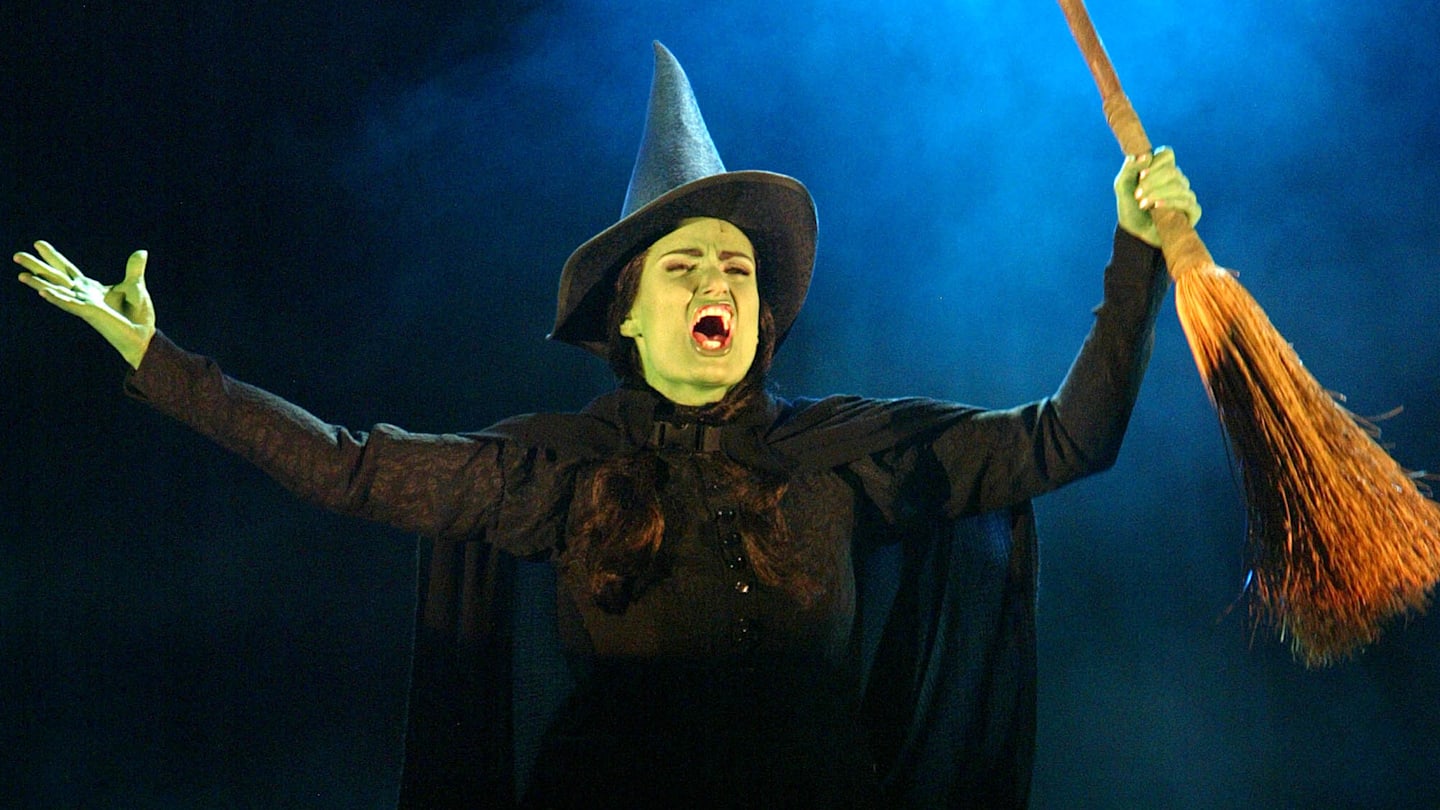
This November, movie theaters will finally play host to the event that Broadway fans have been screaming about for years: Wicked , with Ariana Grande in pink, Cynthia Erivo in green, and Jonathan Bailey in between.
The film, part one of two, is Hollywoodâs latest big Broadway-musical-to-movie-musical experiment. But before the Wicked Witch of the Westâs origin story was a musical, it was a novel written by Gregory Maguire. In honor of this latest adaptation, here are 20 facts about how the book and the musical came to be.Â
To avoid spoilers for the book and musical, skip facts 7, 8, and 9.
Anybody whoâs read Wicked: The Life and Times of the Wicked Witch of the West knows that itâs not trite or flippant entertainment centered on a childrenâs stock villain, but a philosophical investigation of the nature and societal exploitation of evil. Maguireâs inspirations reflect the gravity of that theme.
One was the Gulf War. âAt the time, there was so much worry about Saddam Hussein, and I remember seeing a newspaper article that said, âSaddam Hussein, the next Hitler?â â Maguire told BroadwayWorld . He recognized that invoking Hitler could quell even his own pacifist sensibilities, which got him thinking about how we use evil âas a legitimization of our inclination toward greed and self-involvement and self-rationalization.â It was also in the early 1990s that 2-year-old James Bulger was murdered by two 10-year-olds boys in Liverpool, England. âEveryone was asking: how could those boys be so villainous? Were they born evil or were there circumstances that pushed them towards behaving like that? It propelled me back to the question of evil that bedevils anybody raised Catholic,â Maguire told The Guardian in 2021.
Maguire, a childrenâs book author by trade, decided to explore those questions by dismantling a one-dimensionally evil character weâve all known from youth. âI thought ⦠âWhoâs the worst of them?â â he told BroadwayWorld. âAnd coming down from the sky on a cloud, approaching me in a heavenly vision, was not the Virgin Mary for whom Iâve been waiting for most of my adult life, but the Wicked Witch of the West, saying, âIâll get you and your little dog!â And I thought, âJesus, Mary, and Joseph, Iâve had a religious vision, and itâs Elphaba.â â
Maguire created the name Elphaba from the initials of L. Frank Baum , author of The Wonderful Wizard of Oz (and the rest of the Oz series). âI tried Lafaba , I tried Lafeyba . And then I tried Elphaba . As soon as I got Elphaba , I thought, oh, thatâs it,â he told WGBHâs Morning Edition , explaining in another interview that âItâs clean and simple, but not pretty, and with connotations of otherworldliness.â (The Cowardly Lionâs name, Brrr , evokes the characterâs frightened tremorsâand itâs also a tribute to Bert Lahr, who played the lion in the film.)
As Maguire said on The Geekâs Guide to the Galaxy podcast, some âdiehard Oz enthusiastsâ were wary of his darkly political take on Baumâs whimsical fantasy. The International Wizard of Oz Club went so far as to send a representative to one of his book events seemingly to suss out whether his manipulation of this âsacred materialâ had been done in bad faith.
âShe was very tall, she had a trench coat, a brim-snapped hat on, and she came to me, and she peered down into my face, and she said, âI have a confession to make,ââ he recalled. âShe looked this way, she looked that, she said, âIâm from the official International Wizard of Oz Club, and Iâve come to spy on you and report back to our minions, but Iâve become a convert!â And then she threw off her hat and bought three books and had them all signed for her mother and her husband and her children.â
Maguire had a feeling Hollywood would come calling if he could pull off the Wicked Witchâs tale at least âto a minimum level of success,â and he even cast the roles while writing to âhelp [him] visualizeâ the story. Elphaba was k.d. lang, who âcould singâ and âhad a very pointed and spiky kind of individual beautyâ; Fiyero was Antonio Banderas; Madame Morrible was Angela Lansbury; and Glinda was Melanie Griffith.
Hollywood did come calling: Demi Mooreâs production company and Universal Studios optioned the film rights, but their attempts to translate the novel to the screen proved fruitless. As Universalâs thenâpresident of production (and the musicalâs eventual producer) Marc Platt explained in David Coteâs Wicked: The Grimmerie , âThe screenplay was kind of dense, and I kept wanting to go deeper into the story of the relationship between [Glinda] and Elphaba ⦠we needed inner dialogue, which is very hard to accomplish cinematically.â
It was Stephen Schwartz, composer of Broadwayâs Godspell and Pippin âand a collaborator of Alan Menkenâs for the music of Pocahontas (1995) and The Hunchback of Notre Dame (1996)âwho suggested to Platt that Wicked be a musical instead of a movie. Not only had The Wizard of Oz (1939) primed audiences for songs in Oz, but music would also allow the characters to simply sing their inner dialogue.Â
As it turned out, Maguire, a musical theater fan, needed little convincing to green-light a stage production. Schwartz floated his idea for the opening song, âNo One Mourns the Wicked,â and Maguire was hooked. âWith those words, he sold the project to me,â Maguire told The Guardian . âHe knew I had not written Wicked to be a parody of The Wizard of Oz but that I wanted to honor and unpack that story instead.â
Maguireâs novel is a sweeping Dickensian epic that tracks Elphabaâs life from birth to death in snapshotsâher infancy, her college years, her adulthood revolutionary phase and reconnection with Fiyero, etc.âoften filling in the gaps later through narration or dialogue. The musical (its flashback of Elphabaâs birth notwithstanding) condenses Elphabaâs wicked descent into her college years and the period immediately after that. It also focuses the plot, as Platt intended, on Elphaba and Glindaâs friendship, centralizing Glinda and inventing a love triangle with Fiyero for added tension and character development. (Stealing her best friendâs boyfriend is pretty much the extent of Elphabaâs wickedness in the musical; she gets to actually kill someone in the book.)
Naturally, there are myriad small differences between the book and musical. In the book, for example, Elphabaâs sister, Nessarose, has no arms; the musicalâs Nessarose (who has arms) is in a wheelchair. In the book, the sisters have a little brother (though readers never meet him); Fiyero has a wife and children (whom readers spend ample time with); and Elphaba and Fiyero have a son (whom Fiyero never meets). In the book, Doctor Dillamond, the anthropomorphic goat, is murderedâin the musical, heâs just fired from his teaching post at Shiz University. Book Elphie is no great shakes at magic; musical Elphie is an exceptionally gifted sorcerer. And so on.
Another big difference involves Dorothyâs companions. (Excluding the Cowardly Lion, whose origin story remains more or less the same: Elphie and friends rescue him from inhumane experimentation at Shiz.) In the book, Elphie blames herself for Fiyeroâs murder by government agents, and when she sees the Scarecrow, she desperately hopes heâs somehow her lover returned (heâs not). In the musical, Elphie herself saves a tortured Fiyero by transforming him into the Scarecrow. The bookâs Tin Woodman is a fleeting aside; the musicalâs is Boq, a fairly central character and the victim of a spell gone wrong.
But the starkest departure from page to stage is the ending. In the book, like the film, Dorothy kills the witch by dumping a bucket of water on her (though in much more complex and morally ambiguous circumstances). The musical sends Elphie off with a bittersweet but still somewhat happy ending: After faking her death (again by bucket of water), she and Scarecrow Fiyero escape into the distance.Â
While Maguire was always gracious and understanding in letting the musical depart from its source material, finding out during an early workshop that Elphaba would survive made him âinitially sorry about agreeingâ to the project. âI felt that Wicked the novel was a tragedy.â he said in The Grimmerie . âSheâs young, sheâs powerful, sheâs slightly misguided, but her heart is in the right place. And she dies. And thatâs what makes it a tragedy.â But seeing how the finale went over in a crowded theater made him come around to it, partially because the story was still, so to speak, a horseâjust a horse of a different color. â[If] you think of Wicked the musical as the story of the friendship between Glinda and Elphaba, then the fact that they are separated from each other, never to speak again, is almost as good as a death. Itâs still poignant and dreadful and sad,â he said.
The musicalâs writer, Winnie Holzman (creator of My So-Called Life ), originally finished the script with two scenes playing out simultaneously. Upstage, people celebrate Elphabaâs death at the Wizardâs palace. Downstage, Elphaba runs into Doctor Dillamond on a far-flung farm. Heâs now lost all powers of speechâa product of the Wizardâs stripping of animal rightsâand Elphie, without her spellbook to help her, must look within to restore them. âIâm limited, Iâm sorry, but Iâm limited,â she sings, in contrast to her earlier âUnlimited, my future is unlimited.â Dillamond then manages a stilted âEl-pha-baaaa.â
To Schwartz, it regrounded Elphie in a way that perfectly culminated her arc. âItâs the fact that itâs completely anonymous and sheâll never get any credit for it and sheâll never get any public affection for it, but she does it anyway,â he said in Carol de Giereâs Defying Gravity: The Creative Career of Stephen Schwartz, From Godspell to Wicked . But director Joe Mantello, realizing the scene would bloat an already busy denouement, decided it was best left on the cutting room floor. âThe musical structuralist in me knew it had to go, but the philosopher in me really misses it,â Schwartz said.
Because Baumâs book was in the public domain, the musicalâs creators were free to use and remix its content with abandonâbut anything that originated in MGMâs film was strictly off limits. Just a week before previews began in San Francisco, the legal team delivered a list of lines and scenes that were too close to violating copyright law for comfort. The creators were told to cut them or shut down the show.
Most of the casualties were winking movie references made by Glinda. âMaking poppy fields for people to fall asleep in; what was that all about?â she uttered at one point. She could also no longer say âGoodbye, Dorothy,â or mention Elphabaâs disappearance âin a puff of nasty-smelling smoke.â As these moments always garnered lots of laughter during read-throughs and rehearsals, the creatorsâand Kristin Chenoweth, who had played Glinda from the very first workshopâwere incredibly upset.
But they did prevail in saving a few oblique nods to the film. Though Wicked âs ruby-red slippers couldnât actually be red (theyâre silver in Baumâs book), the bejeweled shoes are illuminated by red spotlights. And when Nessarose asks Boq whatâs in the punch at a party, Boq says, âLemons, and melons, and pears!â âOh my!â Nessarose replies.Â
Schwartz also used the first seven notes of âOver the Rainbow,â albeit with a different rhythm, as a leitmotif throughout the show. For example, the lyric âUnlimited, my futureâ in âThe Wizard and Iâ matches âSomewhere over the rainbow.â
With Chenoweth in mind for Glinda from the get-go, Schwartz had started writing music for her as a â high belter .â But once Chenoweth actually signed on to the project, she expressed that sheâd also love to use her impressive operatic soprano. Integrating a whole other vocal style in a way that made sense for the character initially stumped Schwartz.
âI didnât know how you can come out and belt sometimes and then all of a sudden sing [ Candide âs] â Glitter and Be Gay ,â â he said . âAnd then one day I had a concept.â Glindaâs soprano could be her public-facing voiceâher mask of perfection when singing to a crowdâwhich she drops to a lower, more natural register in her regular life. âI would never have conceived of doing soprano material for this character if it hadnât been for the fact that Kristin Chenoweth was cast,â Schwartz said.
Though Stephanie J. Block played Elphaba during Wicked âs workshops, sheâd never performed on a Broadway stage, and producers wanted someone more seasoned to carry the production. Idina Menzel, already acclaimed for Rent , was the first to audition (the date was rescheduled from September 12, 2001, to later that month). â[I] wore green eye shadow and some green lipstick and made myself look kind of dreary: smoky black eyes, dark, ratty clothes, to feel a little grungy,â she said in The Grimmerie .Â
The creators loved her, but while singing âDefying Gravityâ during her second audition, her âvoice cracked really badly,â Mantello recalled. â[I] actually swore in the middle of the song because I cracked,â Menzel said. âI thought, âEither theyâll love it and think, âBoy, thatâs one good witch there.â Or theyâll think I was completely inappropriate. So I left kicking myself.â Mantello said it âsort of made her more endearing.â (Menzel won the role, but Block got to play Elphaba on the national tour and also later on Broadway.)
To showcase Glindaâs lack of depth early on in her arc, Schwartz wanted an âempty caloriesâ song. It was Holzman and Plattâs idea to accomplish that by having herâpretty, popular, and blondeâgive her uncool roommate a makeover, Ã la 1995âs Clueless (itself playing off Jane Austenâs Emma ). Holzman eavesdropped on teen girls in coffee shops to nail the sceneâs dialogue, and Schwartz wrote âPopular,â Glindaâs standout solo, in part based on his own memories of a perky-nosed, blonde homecoming queen in high school. âSo we call this the Clueless section,â Schwartz said.
Fiyeroâs musical introduction as the irresistible playboy prince went through a number of iterations (rejects included âWho Could Say No to You?â and âEasy As Winkie Wineâ) before Schwartz landed on a dance number as the right approach. The version seen at San Francisco previews, with Adam Garcia as Fiyero, was âWhich Wayâs the Party?â, which evolved into âDancing Through Lifeâ before Wicked âs Broadway debut with Norbert Leo Butz in the role.
But even once Schwartz had settled on lyrics that clarified Fiyeroâs philosophy âto party through life,â he struggled to choose the ideal musical vibe for Butz. âI did one that sounded like a Frank Sinatra tune; one that was a little bit like âThey Canât Take that Away From Meâ sung by Fred Astaire; one that was Billy Joelâesque; one that was atonal, but people felt it was too much like Stephen Sondheim,â Schwartz explained , âand then I did what I called the âStingâ version. It has a steady bass line, like in âEvery Breath You Take.â â The Sting version won out, in part because it was best suited for choreography.
Glinda and Elphabaâs farewell song about changing each other âfor goodââboth for the better and foreverâgrew out of a conversation Schwartz had with his daughter. He asked her to imagine what sheâd say to her long-distance childhood best friend if they knew theyâd never speak again. âPretty much the entire first verse of âFor Goodâ is what she said: People come into our lives for a reason, there are things we learn from each other, and we help each other to grow,â Schwartz said .
Eugene Lee was Saturday Night Live âs production designer from its premiere in 1975 to his death in 2023 (save for a half-decade hiatus in the 1980s that corresponded with Lorne Michaelsâs). Lee also had a storied Broadway career building sets for the likes of Sweeney Todd , Ragtime , and Wicked .
For Wicked , he drew inspiration from W.W. Denslowâs original illustrations in Baumâs series and also plenty of detail from Maguireâs novelâespecially for the mechanical smoking dragon and the clock gears and cogs that form the bulk of the set. In the book, Lee explained in The Grimmerie , this Clock of the Time Dragon is âa kind of medieval pageant wagon with small doors and prosceniums, pushed around by dwarves and clowns. Although they donât go into this in the show, the Clock of the Time Dragon is part of a kind of heretical religion in Maguireâs version of Oz.â The fact that this had no place in the musical was a sticking point for its creators. âThey really fought the dragon over the proscenium,â Lee remembered.Â
âThe first thing you see is this great big dragon hanging over the set, and what the hell is it?â Schwartz said . Instead of scrapping the beast, they decided to just work it into the script: In one of Glindaâs very first lines, she mentions that âAccording to the Time Dragon Clock, The Melting occurred at the thirteenth hour.â
Though a lot of the animal sound effects didnât make it past previews, the flying monkeys are still loud and clear on Broadway. But theyâre not actually monkey noises. âWe created those by recording creaking wood,â sound designer Tony Meola said . âWhen I saw Eugeneâs set, with all that wood, I started playing around with different types of wood: creaking, crunching, twisting it. Taking balsa wood and crunching [it] in your fist in front of a microphone, or stepping on it. Itâs amazing the sounds you can create to represent a thing that looks nothing like the thing itself.â
Since the Wizard appears in Oz during the early 20th century, costume designer Susan Hilferty developed a slightly askew sartorial universe she dubbed âtwisted Edwardian.â âItâs Edwardian-era suits and dresses, but asymmetricalâthe collar might be off center, or the cut of the dress twists around crazily,â she said . These elements are on spectacular display among the occupants of Emerald City, but the glitz and glamour of those ensembles obscures something pretty grotesque.
âIf you look closely, many of the costumes have fur and feathers. Thematically, I thought it was important to show how people in the Emerald City, who have money and live the high life, have animal remnants in their couture. Itâs despicable, like having somebodyâs scalps on your sleeves,â Hilferty explained . âAnimalsâ rights are being taken away, but the people of Oz let it happen because the Wizard keeps them wealthy and entertained.â
More than two decades after its 2003 Broadway premiere, Wicked is now considered a modern classic. Itâs the fourth longest-running Broadway show in history, after The Phantom of the Opera , the 1996 revival of Chicago , and The Lion King . But while Hilferty, Lee, and Menzel all took home Tonys for their work on the production, Wicked itself left empty-handed: The Best Musical award went to Avenue Q .
Discover More About Musicals: