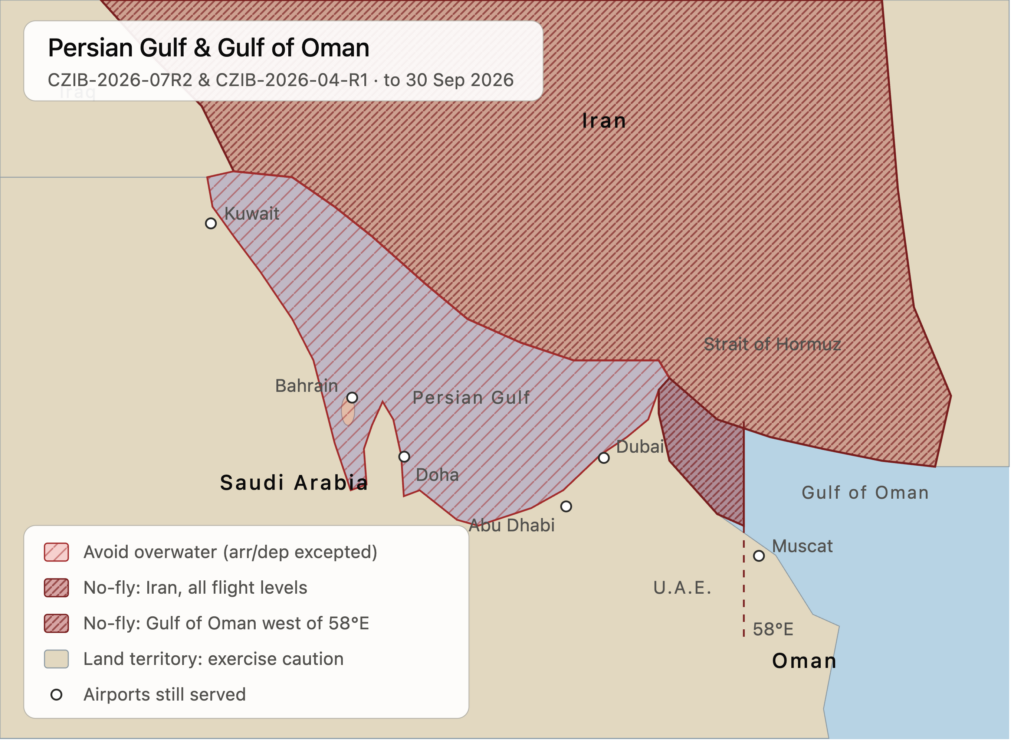
Europe’s aviation regulator has re-cut its conflict-zone guidance for the Gulf, and the picture is less restrictive than it was over the summer.
Flights into and out of airports in Bahrain, Kuwait, Qatar and the UAE are once again considered manageable, provided operators hold a current risk assessment, monitor the situation continuously and stay ready for short-notice instructions from local authorities. What has not changed is the treatment of the sea: en-route flying across the Persian Gulf itself is still something EASA wants crews to avoid, and the Gulf of Oman west of 58°E remains a straight no-go at every level. Over the land territory of the four states, the advice is simply to exercise caution and factor in missile, drone and air-defence activity. Iranian and Iraqi airspace continue to carry blanket avoid recommendations at all altitudes under separate bulletins, and the current Gulf text runs until 30 September 2026 unless it is revisited sooner.