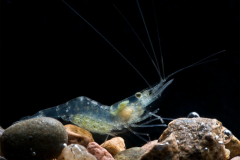
Freshwater ghost shrimp from the genus Palaemon , also known as grass or glass shrimp, are hardy shrimp often used as feeders due to their low price. However, they're also easy, fun additions to the aquarium and make a great choice for anyone looking to gain some experience in shrimp keeping. Even first-time aquarists can keep ghost shrimp alive!
Keep reading for everything you need to know about ghost shrimp care and keeping these underrated translucent shrimp in your aquarium.
As with many common names in the aquarium hobby, you may find "ghost shrimp" slapped on all sorts of translucent shrimp. That's why scientific denominations come in handy when browsing your local fish store. True ghost shrimp belong to the genus Palaemon , of which Palaemon paludosus (formerly Palaemonetes paludosus , also called grass shrimp or glass shrimp) is most commonly found in the aquarium trade. Many other Palaemon species prefer brackish or even full marine water.
Whisker shrimp in particular, and Amano shrimp to a lesser degree, may be mislabeled as ghost shrimp. The latter is not a problem, as Amanos are peaceful, easy to keep, and particularly efficient algae eaters. The former can be an issue, however, because whisker shrimp grow significantly larger and are much more aggressive than ghosts. Make sure you're buying the right shrimp — we explain how in our guides to Amano vs ghost shrimp and whisker vs ghost shrimp .
A true ghost shrimp grows to around 2" in length, although the ones at the store may be smaller juveniles that still have some growing to do. It will have a translucent body with fine speckling, plus a humped back rarely seen in other freshwater shrimp. Look for orange bands around the antennae and front claws: if those are present, it's definitely a Palaemon .
Did you know that the ghost shrimp is naturally found in North America? It's perfect for a USA native species-centered aquarium! Palaemon paludosus calls the eastern part of the country home, occurring from Massachusetts to Wisconsin in the north and Florida to eastern Texas in the south.
When it comes to habitat type, ghost shrimp are far from picky. Their only real requirement is the presence of plenty of aquatic and marginal vegetation, as the shelter offered by plants helps hide them from predators. The shrimp can be found in shallow, slow-flowing or stagnant lakes, ponds, streams, and similar. Although P. paludosus is considered a freshwater shrimp, it's not unusual for them to pop up in lightly brackish estuarine or tidal waters.
The IUCN Red List considers Palaemon paludosus to be a species of Least Concern, meaning it's not threatened in the wild. The population appears to be stable; ghost shrimp are actually an introduced species in parts of the country. In fact, the government introduced it in the lower Colorado River itself to serve as food for the local fish population.
One of the reasons ghost shrimp are one of the most popular invertebrate species in the aquarium hobby is because they're so easy to keep alive. They don't require a specialized aquarium set-up and a tank of at least 10 gallons (38L) should be large enough to sustain a colony. You can keep around three ghost shrimp per gallon without any issues. Any substrate works.
Like all shrimp, this prey species can become skittish if the aquarium lacks hiding places. Palaemon shrimp love a heavily planted tank! If you want to see your shrimps' natural foraging behavior, be sure to use plenty of live plants, hides like shrimp tubes and flats, driftwood, and natural rocks.
Your ghost shrimp starter pack:
Palaemon shrimp are popular as feeder shrimp because they're known to be hardy and can handle bad water quality fairly well. This makes it easy to ship and house them in massive amounts; after all, if a few die, it's not like a lot of money is lost. T
Obviously, things are a little different if you keep these shrimp in your display aquarium. If you want them to live a long and happy life, it's important to keep the water quality high. That means the tank should always be filtered, fully cycled (zero ammonia, zero nitrite, and nitrates as low as possible), and the water parameters kept stable.
Overstocking is not much of a worry if you only keep ghost shrimp, as their bioload is very low, but it's something to keep in mind if you're going for a community tank that includes other fish and invertebrate species. Room temperature works fine for these hardy shrimp, though you might still want to use a thermostat heater to prevent stressful temperature swings.
Temperature: 65-82 °F/18-27.5 °C
Water hardness: 3-15 dkh
Because they are significantly larger than dwarf shrimp, there is less risk of your Palaemon shrimp being eaten by their tankmates. That being said, you should still avoid keeping them with any fish that might have an appetite for scampi and a mouth large enough to make their desires reality! Small, peaceful tankmates are a must for any shrimp. If you're interested in actively breeding your ghost shrimp, you'll to consider setting up a single-species tank — the larvae are very vulnerable, both to predation and to accidents like getting sucked into the filter.
Keep in mind that ghost shrimp are known to be somewhat more aggressive than dwarf shrimp. They're omnivores that will eat whatever they can get their little claws on, including slow-moving, long-finned fish (see our post on keeping ghost shrimp with betta fish ).
Yes, they can. Palaemon and Neocaridina are compatible and won't harm each other, nor will they interbreed. You can also keep ghost shrimp with Amano shrimp and dwarf crayfish .
No, we don't see the possibility of a harmonious co-existence there. A small goldfish (they're usually sold as juveniles) might not be able to do any damage yet, but these are omnivorous underwater vacuums. They'll consume their ghost shrimp tankmates as soon as they're large enough to do so.
Do ghost shrimp eat algae? Are they a good addition to your aquarium as part of your cleaning crew? Good news: the answer is yes to both! Palaemon shrimp aren't just used as feeders, but also make for excellent aquatic janitors.
These shrimp are omnivorous scavengers that will eat pretty much anything they come across. They will consume leftover foods, decaying plant matter, and yes, algae too. In fact, algae make up the bulk of their diet in the wild. Although it's still your responsibility to keep your tank clean, your ghost shrimp might help you out by sifting through fish poop.
Although they'll spend most of their time browsing for biofilm and other edible bits, most aquariums are too small and clean to sustain (a) ghost shrimp without supplemental feeding. Make sure your ghost shrimp don't go hungry by regularly offering anything from algae wafers to frozen foods like mosquito larvae.
Breeding Palaemon shrimp is a little different from breeding dwarf shrimp. They don't hatch as miniature versions of their parents like many other shrimp species do. They're what's called a "lower order" genus that passes through a larval stage and needs to metamorphose before turning into "real" shrimp. The larvae are very small, very vulnerable, and easily accidentally damaged or killed.
If you want your ghost shrimp larvae to survive, you'll have to set up some private digs for them, using a sponge filter so they don't get sucked in. Make sure your shrimp colony contains both males and females and plant the tank heavily to provide the larvae with a place to hide and feed on infusoria and biofilm. As long as the parents are well-fed and the water quality is high, you should soon start seeing females carrying small green eggs between their swimmerets. That's it: they'll take care of the rest themselves.
Ghost shrimp eggs hatch in around three weeks. You won't see much of the larvae much at first, but they should come out of hiding once they're large enough to feel safe out in the open. Congrats, you've got grandshrimp!
Tip : Still not sure how to get your shrimp to reproduce? You can find all the details you need and more in our full-length guide to breeding ghost shrimp .
Palaemon shrimp lifespan isn't quite as long as that of some of the other invertebrates we've discussed here on the blog. They can live for 1-1.5 years, but that's their potential lifespan — your mileage may vary. A ghost shrimp kept in a dirty feeder tank may not make it more than a couple of weeks, but there's no guarantee either way.
That depends. Because various species from the genus Palaemon are sold in aquarium stores while still small and difficult to tell apart, there's a chance your shrimp can end up growing larger and more aggressive than expected. Be sure to ask the pet store if they know what kind of shrimp their ghosts are. Palaemon paludosus , the American glass shrimp, is the peaceful species you're after.
Palaemon paludosus , the true ghost shrimp, is sometimes found in lightly brackish estuarine waters. That's not its preferred habitat, though. If you'd like to try your hand at a brackish shrimp, why not try the tiny but colorful opae ula ?
Molting frequency decreases with age, but even mature shrimp molt around once a month. You might not see your shrimp during shedding time, as they feel vulnerable and tend to hide for a day or two. Leave the molted skin in the tank for the shrimp to eat, as it contains essential nutrients it'll need for the next cycle.
The common American glass shrimp, Palaemon paludosus , is officially considered nocturnal. Luckily that doesn't mean you won't see yours at all during the day. In the aquarium, they're still relatively active when it's light; you can consider a blue night light if you want to see what your shrimp get up to after the normal lights go out.
There are many possible causes. Are you buying low-quality Palaemon shrimp meant as feeders? They may have been weakened from being kept in dirty water or even be one of the species that lives in brackish water. And speaking of low water quality, have you tested yours using a liquid water testing kit yet? Have you double-checked you're following all the instructions in this care guide? If you're truly stumped, feel free to leave a comment below describing your situation. We've been keeping ghost shrimp for a very long time and might be able to help out!
These shrimp can turn white when they're about to molt. It may also happen when they're at the end of their lifespan (due to old age), if they're stressed due to low water quality, or if they're suffering from bacterial infection. Time to whip out the water test kit! It's not unusual for a Palaemon shrimp to change color, but a normal color shift usually involves them developing more brown pigment rather than going milky white.
Palaemon shrimp are one of the most common shrimp species in the aquarium hobby, so you shouldn't have too much trouble finding them. Your local aquarium store may carry them very cheap, though it's best to find a place that sells them as pets and not as feeders. Feeder shrimp may have been through the wringer and not live much longer even with excellent care — if they're the right species in the first place.
You can also find 100% healthy freshwater ghost shrimp that don't turn into huge monsters ( Palaemon paludosus ) at The Shrimp Farm with live arrival guarantee. This way, you can have your shrimp shipped straight to your doorstep without ever leaving the house!