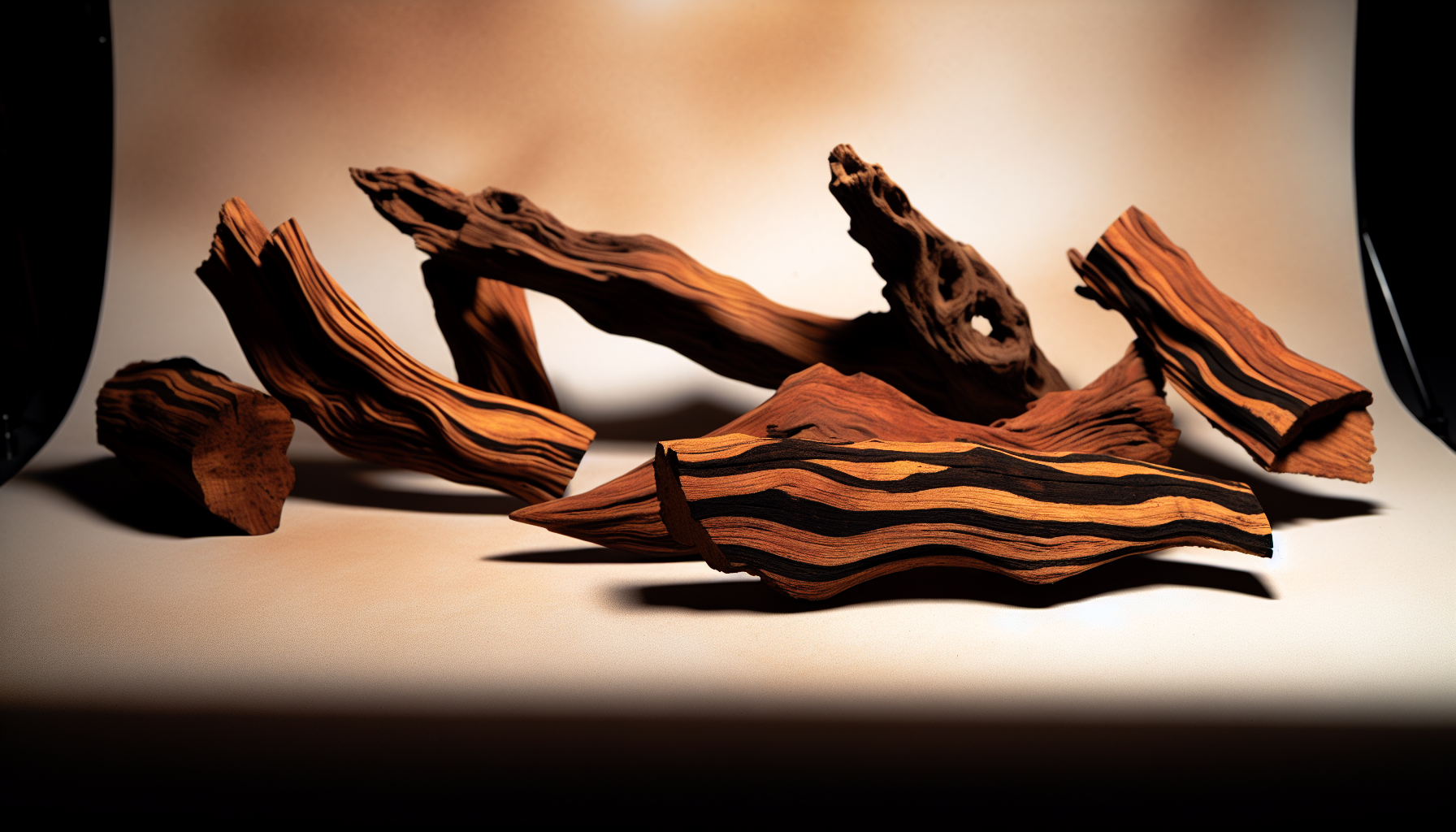
Aquarium driftwood is a multifaceted element that offers both aesthetic charm and practical benefits for your water dwellers. Whether it’s replicating natural habitats or adjusting water properties, every driftwood type has its unique perks. In this concise guide, we’ll look at popular driftwood varieties, unpack their advantages, and provide tips on incorporating them into your aquascape effectively.
Imagine a piece of driftwood that can effortlessly create a flowing aesthetic in your aquarium, contributing to a dynamic and organic visual appeal. That’s exactly what Tiger Wood achieves. Its natural, raw beauty is loved by aquarists, primarily for the shelter and hiding places it offers for fish and other aquarium inhabitants, mimicking their natural environment. Additionally, Tiger Wood allows for the attachment of plants, reinforcing the intricate and naturalistic design of the aquascape.
From its spindly stump-like form to its complex root structure, Tiger Wood drift wood creates an underwater tree appearance in aquascapes, capturing the essence of a vibrant, thriving natural habitat. Its unique shapes, sizes, and colors breathe life into any aquascape, adding an element of intrigue and natural aesthetic appeal. Whether you opt for small (XXS) pieces of 4-6 inches in length or large (3XL) pieces measuring 22-24 inches, Tiger Wood drift wood can cater to a variety of design choices in aquascaping.
One of the most appealing characteristics of Tiger Wood drift wood is its versatility. Its wide range of shapes and sizes enables you to create unique collections that can perfectly cater to your aquascape’s requirements. From slender, intricate pieces to robust, large formations, Tiger Wood drift wood offers a range that allows you to customize your aquarium, regardless of its dimensions.
These large pieces of rocks can transform your tank, adding natural elements that mimic an underwater forest, making it a perfect home for your aquatic life.
Adding Tiger Wood drift wood to your aquarium offers several benefits:
Moreover, Tiger Wood driftwood contributes to enhanced oxygen levels and serves as a medium for beneficial bacteria, which are essential for a balanced and thriving aquarium ecosystem.
Venturing from the underwater forests of Tiger Wood, we find ourselves admiring the unique shapes, attractive colors, and textured appearance of Manzanita driftwood. This type of drift wood is increasingly popular for aquarium use due to its ability to enhance aesthetic appeal when wet. Manzanita wood is considered safe for aquatic and terrestrial animals as it is non-toxic and chemically inert, making it suitable for both fish and reptiles. Not only is this wood visually appealing, but it is also highly resistant to decay and can last for decades underwater without rotting or releasing harmful chemicals into the water.
Unlike many other types of driftwood, Manzanita wood has some unique features that make it a preferred option for aquariums:
Manzanita drift wood’s complex shapes serve more than just aesthetic purposes. They mimic riverbanks and other natural aquatic environments, providing numerous nooks and crannies that can be used by fish for breeding or as a food source for species that scrape off bits of wood. Moreover, when submerged, Manzanita wood leaches natural tannins into the water, which can help lower the pH level, creating an environment similar to many fish’s native waters and promoting their natural behavior.
As we delve deeper into the world of driftwood, we encounter the Driftwood Stump. A notable feature of this type of driftwood is that it can instantly transform your aquarium into a natural look, resembling an Amazon riverbed when combined with washed sand. The unique shapes of driftwood stumps can provide a focal point in an aquascape, offering an artistic element to the underwater environment.
Driftwood stumps offer more than just a visual spectacle. They offer:
Next, we shift our focus to the captivating Dragon Drift wood. This type of driftwood provides a natural environment in freshwater aquariums, which can help fish feel less stressed. It comes in various sizes, ranging from small (3.5”-12”) to large (19.5”-23.5”). Unlike other driftwoods, Dragon Drift wood is softer and more porous, which may cause it to leach quickly and affect water quality.
It’s essential to clean Dragon Driftwood thoroughly, removing any dirt or debris, before introducing it to an aquarium. This can be achieved by:
These methods effectively sterilize the wood, ensuring it is safe for your aquatic life.
Once prepared, Dragon Driftwood can be easily incorporated into your aquarium. Aquatic plants such as Moss, Anubias, and Java Fern can be beautifully attached to Dragon Driftwood to enhance the aquascape.
Additionally, a white fungus might develop on Dragon Drift wood when first placed in an aquarium, which is normal and may be consumed by fish.
Next on our aquatic journey is Malaysian Drift wood. It is a traditional favorite in the planted tank hobby and a versatile choice for crafting natural environments. Its features include:
Malaysian driftwood is known for its natural appearance, which makes it a popular choice for bold nature aquarium style aquascapes. It can be found in a range of sizes from small (4”-9”), medium (9”-14”), to large (14”-20”), making it suitable for tanks of various dimensions.
Its dark coloration provides a stark contrast which enhances the visual impact of aquatic plants in the aquarium.
It is of utmost importance to correctly prepare Malaysian driftwood before introducing it to the aquarium to guarantee the safety and wellbeing of your aquatic life. Here are the steps to follow:
By following these steps, you can ensure that your Malaysian drift wood is ready to be added to your aquarium.
Let’s diverge a bit and examine Spider Wood, a distinctive complement to any aquascape. Spider Wood’s unusual root-like configuration and multiple branches make it a popular and striking choice for aquascaping enthusiasts who want to enhance the visual appeal of their site.
Each piece of Spider Wood is a unique type, with varying sizes, shapes, and hues ranging from brown and reddish to light tan, contributing to its distinctive addition to any tank collection.
Spider Wood goes beyond enhancing the aesthetic appeal of your aquarium. It provides hiding spots for fish and shrimp , contributing to their natural behavior and sense of security. Additionally, a beneficial biofilm naturally forms on Spider Wood after submersion, serving as a food source for shrimp and beneficial for other invertebrates.
Adding Spider Wood to your aquascape demands a sharp eye for detail and a dash of creativity. Its lightweight nature makes it easy to handle and clean, which is beneficial when setting up an aquascape. Spider Wood is a great addition to any aquascape design.
You can break apart and reconstruct Spider Wood into shapes like sculptures, arches, trees, and bridges within an aquascape for unique customizations.
We now arrive at the artistic realm of Bonsai Driftwood on our journey. Crafted by hand from natural driftwood that is safe for aquarium use, Bonsai Drift wood is where art meets aquascaping. The attention to detail and craftsmanship involved in creating these miniature underwater trees make each piece unique, with artisans creating a wide variety of shapes and sizes to fit almost any aquarium tank.
Bonsai Driftwood is often paired with aquatic plants such as:
This combination of Bonsai Driftwood and verdant aquatic plants, which has been sold to many satisfied customers, gives your aquarium an enchanting, mystical vibe that’s sure to captivate anyone who lays eyes on it.
The creation of bonsai drift wood involves detailed craftsmanship, where artisans shape the wood to resemble miniature trees. The complex shapes and intricate designs that can be achieved with this type of driftwood are nothing short of artistic masterpieces.
Aquatic plants are strategically attached to the bonsai driftwood to create the appearance of leaves and to enhance the overall aesthetic appeal.
A few crucial steps are required in the care of Bonsai Driftwood to guarantee its durability and the safety of your aquatic life. It does not release any harmful chemicals, ensuring a safe introduction to the aquarium environment.
After soaking bonsai drift wood to eliminate buoyancy, it can be used in the aquarium with aquatic plants attached using aquarium-safe super glue.
As our driftwood journey draws to a close, we uncover the distinct characteristics and advantages of Cholla Wood. This desert treasure is the dried inner skeleton of the Cylindropuntia cacti family, comprising over twenty different species. Its structure is uniquely lightweight and porous, featuring a tubular shape with a variety of natural holes along its length.
Cholla Wood is a 100% natural and organic resource commonly sourced from New Mexico. It’s available at pet stores, specialty aquarium shops, and online marketplaces. Before adding Cholla Wood to the aquarium, it’s important to clean it thoroughly to remove any debris or dirt. This can be achieved by boiling it for at least 10 minutes.
It’s important to choose Cholla Wood products that are pest-free and untreated when sourcing. After purchasing, the preparation process for Cholla Wood involves:
Cholla Wood provides several benefits for aquatic life. It acts as a natural water conditioner, slowly releasing tannins that have antifungal and antibacterial properties, which can benefit the health of the aquarium inhabitants.
The tannins released by Cholla Wood can create a more natural environment for fish and shrimp by simulating the conditions of their native habitats.
As our journey concludes, we come across Corcovado Wood, a tropical choice for aquascaping. Corcovado Wood is considered an exotic option because of its origins in tropical ecosystems. Its adaptability makes it perfect for crafting unique and natural habitats in both aquariums and terrariums.
Known for its unique characteristics and appearance, Corcovado Wood offers a unique addition to aquascapes due to its variability and exotic appearance. Each piece of Corcovado Wood is distinct in shape and appearance, ensuring that no two aquascapes will be exactly the same.
To include Corcovado Wood in your aquascape, choose the appropriate size and shape to match your current decor. It is available in various sizes, with pieces suitable for large setups measuring 18 inches and medium ones at 16 inches. Each piece is unique, offering numerous natural shapes for personalizing aquascapes.
From the flowing aesthetics of Tiger Wood to the exotic charm of Corcovado Wood, we’ve embarked on an exciting journey through the world of aquarium driftwood. Each type of driftwood we explored has its own unique characteristics, benefits, and preparation methods, demonstrating the vast array of options available for aquascaping enthusiasts. Whether you’re looking to create a serene underwater landscape or a vibrant, dynamic aquascape, the right piece of driftwood can help transform your aquarium into an aquatic masterpiece.
Your aquarium driftwood starter pack:
No, it is not recommended to put driftwood in an aquarium as it can cause stress to the aquarium inhabitants and require major adjustments. This can be a large inconvenience.
To make driftwood safe for your aquarium, boil it for 1-2 hours to sterilize it and kill any algal or fungal spores. Once prepared, the driftwood can be safely placed in the aquarium.
No, it's not necessary to boil driftwood before putting it in the aquarium. Simply rinsing it under hot water will suffice. Boiling may be done to remove tannins, but these can also be beneficial for the tank and will dissipate over time with water changes.
You should keep driftwood in the aquarium for around 2 to 5 years before replacing it, as it begins to show signs of deterioration after being submerged for 2 years, with a potential replacement needed after roughly 5 years.
The safest driftwood for aquariums includes Azalea wood, Spider wood, Tiger wood, Mopani wood, Manzanita wood, Redmoor wood, Sumatra wood, and Malaysian driftwood, which is widely associated with bogwood. Choose from these options to ensure the safety of your aquarium inhabitants.
https://en.wikipedia.org/wiki/Aquascaping