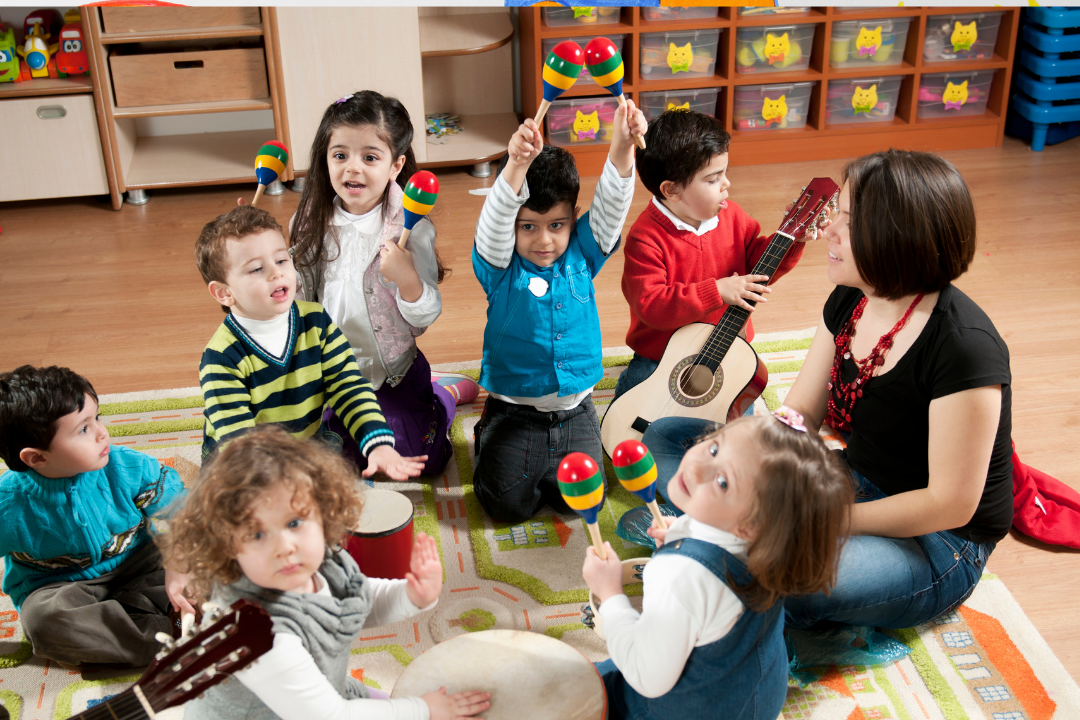
When children get the chance to create, they make magic.
In a heartwarming TikTok video that’s making waves across the Internet, a class of young children perform the original song they wrote to honor the beginning of spring . “This is a song we wrote together as a class,” teacher Rodney Tristan (a singer-songwriter based in Seattle, Washington), explains before strumming a few chords and leading the class in their charming performance.
It’s a delightful ode to spring, with lyrics like, “When it is spring, we’ll be outside with smiles so wide” and “When it is spring, we’ll be outside, we’ll play in the sun.” They class sings with wide-eyed enthusiasm , their faces beaming with pride.
The heartwarming performance isn’t the only thing that makes this video special. It’s the collaborative process behind it, the fact that this piece of art could happen with input from everyone in the class. When children create together, whether that’s song, story, acting, painting , dance, or other art, they develop crucial life skills and lay the groundwork for a fulfilling adult life later on.
Soviet psychologist Lev Vygotsky (1896-1934) researched children’s learning in social and cultural contexts, particularly the importance of social interactions in a child’s cognitive development. According to Vygotsky’s 2004 paper, “ Imagination and Creativity in Childhood ,” he believed that creativity comes alive whenever human activity produces something new—from something as grand as a symphony, to a rock with googly eyes glued onto it. He also believed that creativity is a gift that exists in all people—not just adults, but very young children, too.
“Creativity is scientifically linked to cognitive, emotional, and social development in children. Creativity arises from accumulating diverse experiences, enabling children to synthesize ideas and make novel discoveries.” – Lev Vygotsky
Vygotsky would have absolutely loved the children’s song to spring since it exemplifies the collaborative creativity he championed. By working together on the lyrics and then performing it for an audience, these kids were having more than fun: without even knowing it, they were building neural pathways for critical thinking and adaptability.
Creating leads to neural pathways for critical thinking. Photo by Hal Gatewood on Unsplash
Another thing that’s absolutely beautiful about this video is the fact that teacher Tristan highlights that this song was a collective effort—a project whose joys lie not with the performance itself, but with writing, practicing, and collaborating on the song as active creators.
This highlights the difference between “process art” and “product art.” While “product art” is all about skill development (adults give step-by-step instructions with the expectation that they will be followed directly), “process art” centers around the creative experience. This type of creativity allows the child to create with little to no direction and allows space for self-discovery and freedom. The process becomes relaxed and free of pressure, giving the child the opportunity to enjoy creating and to feel proud of their efforts no matter how the final piece turns out.
It's all about enjoying the process. Photo credit: Canva
When kids create art together, the limits are boundless. A cardboard box becomes a rocket ship. The inside of a family home can turn into a prestigious art gallery with just enough imagination. What sounds like gibberish to adults could be an entirely new language for kids. When children engage their brains and practice creativity, they:
The Learning Through Play initiative notes, “Creativity is instinctive in children—and just as essential in adults. Children flex it instinctively: everything is new to them and they spend every waking second working—and playing—hard at connecting the dots between their experiences, ideas, and imagination.”
Fostering a creative space starts at home. Photo credit: Canva
Are you inspired by this delightful classroom collaboration? According to the Kids Care Club , here are ways that parents, teachers, and others can encourage creativity in the young ones around them:
The creative process is messy with children and adults. So the next time you’re tempted to remind your child to “color inside the lines” or “play the correct way,” try taking a step back. It might be time to present them with the gift of creating something truly their own, or collaboratively, like this inspiring classroom so beautifully did. The results might surprise you.
Who knows? Your kid might surprise you. Giphy
By subscribing, you accept beehiiv's Terms of Use & Privacy Policy . Our site's Privacy Policy applies.