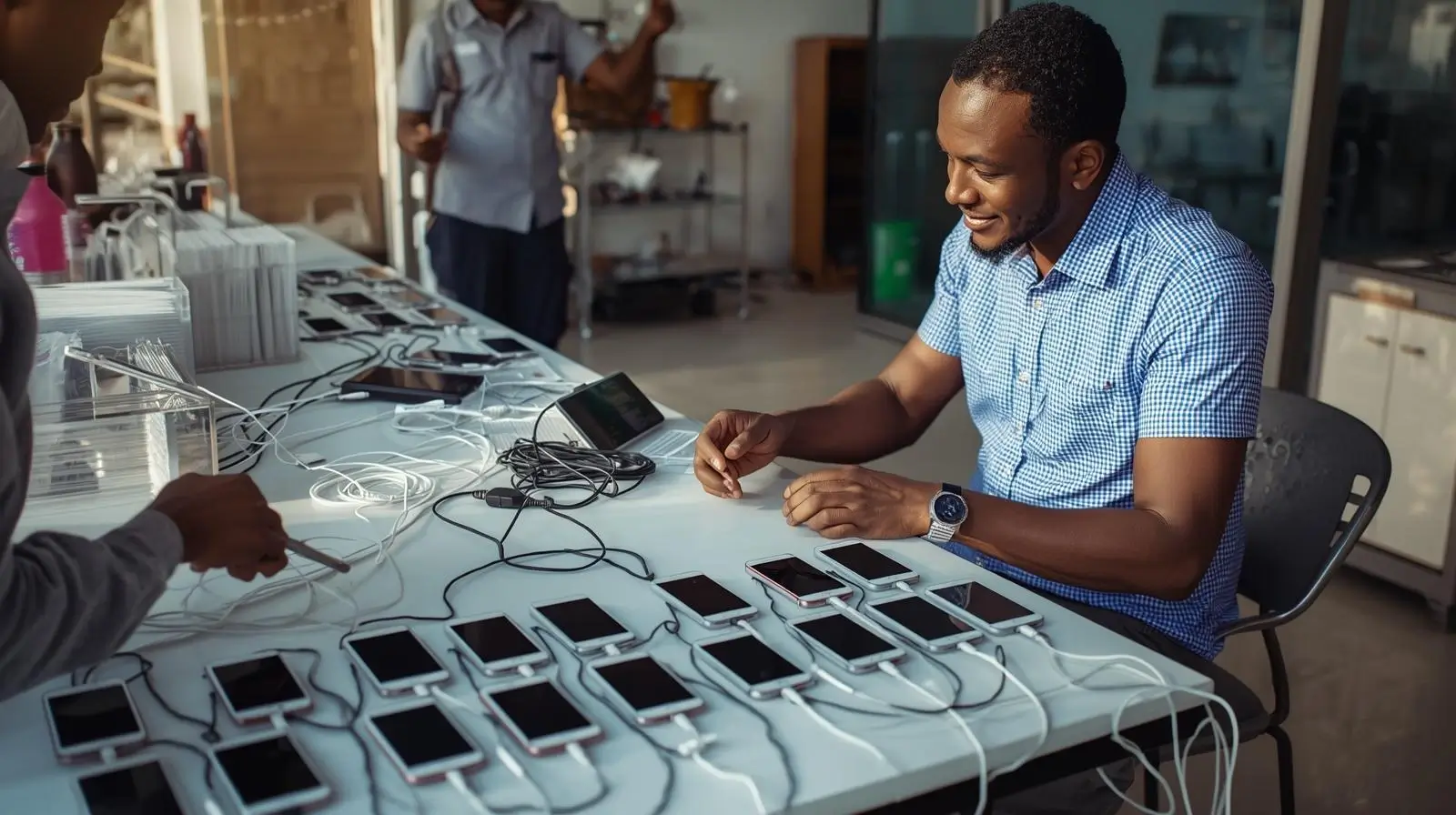
Nigeria’s unreliable power supply has created one of the most consistent business opportunities in the country. While others complain about NEPA’s inconsistency, smart entrepreneurs are building profitable phone charging stations that serve millions of Nigerians who need their devices powered daily.
The phone charging business thrives because it solves a universal problem. From Lagos Island to Kano markets, from Port Harcourt campuses to Abuja suburbs, Nigerians need their phones charged daily. Your business becomes essential infrastructure.
Nigeria’s power challenges create guaranteed demand. The national grid supplies electricity inconsistently, leaving millions without reliable charging options at home or work. Mobile penetration exceeds 90%, meaning virtually every Nigerian owns a device requiring daily charging.
Consider these daily scenarios across Nigerian cities:
Lagos: Office workers in Victoria Island queue at charging stations during lunch breaks when office generators fail. Students at UNILAG campus seek charging services between classes. Market traders in Alaba need power for their business phones throughout trading hours.
Abuja: Civil servants working in ministries without stable power patronize charging centers. Taxi drivers operating from Wuse Market require constant phone charging for ride-hailing apps.
Kano: Traders in Sabon Gari Market depend on charging services for mobile banking and communication. University students at Bayero University seek affordable charging during ASUU strikes when campus power is unreliable.
Recent research from the European Journal of Energy Research confirms that phone charging stations are “critical infrastructure needed across Nigeria” where mobile connectivity drives economic activities.
Phone charging business involves operating multiple charging points where customers pay fees to charge their mobile devices, power banks, and small electronics. The business model is straightforward: provide reliable power when customers lack access.
Successful operators charge ₦100-200 per phone, ₦50-100 for earbuds or smartwatches, and ₦300-500 for laptops. With 50-100 charges daily, operators earn ₦8,000-20,000 in revenue. After expenses, daily profits range from ₦5,000-15,000.
The business works best in high-traffic areas with limited power access. Popular locations include:
This basic setup handles 20-40 phones simultaneously. Daily fuel costs range from ₦800-1,500, significantly impacting profits.
Solar systems eliminate daily fuel costs and operate silently, attracting more customers. The initial investment pays for itself within 3-6 months through fuel savings alone.
Companies like Beebeejump and Ecowatt Nigeria offer complete solar charging station packages specifically designed for businesses.
Comprehensive Setup:
Premium setups include phone repair services, mobile accessories sales, and internet cafes. These diversified businesses earn ₦20,000-40,000 daily.
Conservative Scenario (50 devices daily):
Moderate Scenario (80 devices daily):
Optimistic Scenario (120 devices daily):
Generator-Based Operation:
Solar-Based Operation:
Generator Setup Profits:
Solar Setup Profits:
Solar systems deliver 40-50% higher profits by eliminating fuel costs. A successful entrepreneur in Warri reported on Facebook earning ₦15,000+ daily with solar-powered charging stations.
University Areas: Universities offer consistent customer bases, especially during academic sessions. Students require daily charging for research, communication, and entertainment. Peak demand occurs during examination periods and when campus power fails.
Target areas near lecture halls, hostels, and recreational centers. Obtain necessary permits from university management and maintain good relationships with security personnel.
Commercial Markets: Traders depend on phones for mobile banking, supplier communication, and customer service. Markets like Alaba International (Lagos), Ariaria (Aba), and Sabon Gari (Kano) generate high daily traffic.
Position near market entrances, food courts, or areas where traders congregate during breaks. Ensure security measures prevent theft in crowded environments.
Transportation Hubs: Bus stations, motor parks, and airports attract travelers with depleted phone batteries. Long journey passengers particularly need charging services.
Focus on departure lounges, waiting areas, and food courts. Coordinate with transport operators for preferential positioning.
Residential Areas: Areas with poor power supply create consistent demand from residents. Target neighborhoods in cities like Port Harcourt, Benin, and Ibadan where power outages are frequent.
Power Supply Status:
Security Considerations:
Popular hidden business opportunities in Nigeria often exist in underserved areas where others avoid operating due to perceived challenges.
Multiple Device Support: Modern charging stations must accommodate various device types. Purchase USB-A, USB-C, micro-USB, and Lightning cables. Include wireless charging pads for newer smartphones and smartwatches.
Organized Charging Systems: Create numbered charging slots with secure phone holders. Use clear labeling for easy device identification. Implement queue management for peak periods.
Power Management: Install smart power strips with individual switches for each charging point. Use surge protectors to prevent equipment damage. Monitor power consumption to optimize system efficiency.
Panel Selection: Choose monocrystalline panels for maximum efficiency in Nigeria’s climate. Position panels for optimal sun exposure throughout the day. Plan for seasonal sun angle variations.
Panels from Jumia Nigeria offer reliable performance with warranty coverage. Consider 400W panels as the optimal size for phone charging businesses.
Battery Storage: Deep cycle batteries store power for nighttime operation and cloudy days. Lithium batteries cost more initially but offer longer lifespan and better performance than lead-acid alternatives.
Calculate battery capacity based on daily power consumption. A typical charging business needs 400-800Ah storage for consistent operation.
System Integration: MPPT charge controllers maximize solar efficiency and battery life. Pure sine wave inverters provide clean power for sensitive electronics. Install monitoring systems to track performance and identify issues.
Device Protection: Install lockable charging boxes with individual compartments. Use transparent materials allowing customer visibility while preventing theft. Number each compartment clearly for easy identification.
Surveillance Systems: Position CCTV cameras covering all charging areas and customer zones. Use systems supporting remote monitoring via smartphone apps. Ensure adequate lighting for camera effectiveness.
Access Control: Implement customer identification systems before device acceptance. Take phone numbers and ID details for valuable devices. Use receipt systems documenting device details and expected pickup times.
A successful operator in Abuja shared that security investments reduced theft incidents by 90%, significantly improving customer trust and repeat business.
Customer Documentation: Record customer details including name, phone number, and alternative contact. Photograph device serial numbers for expensive phones and laptops. Issue numbered receipts with pickup times.
Physical Security Measures: Use charging stations with individual locks for each device. Position charging areas within constant staff view. Install alarm systems triggering when devices are removed without authorization.
Staff Training: Train staff to identify suspicious behavior and handle theft incidents. Establish clear protocols for device handling and customer disputes. Maintain incident logs for pattern identification.
Transparent Operations: Display charging prices clearly at business entrances. Show operating hours and contact information prominently. Explain security measures to concerned customers.
Insurance Coverage: Obtain business insurance covering customer devices up to specific limits. Display insurance certificates to reassure customers about device safety.
Customer Service Excellence: Provide accurate pickup time estimates based on device battery levels. Offer priority charging for urgent situations. Maintain clean, organized charging areas.
Many customers choose charging services based on security reputation rather than price alone. Positive word-of-mouth from satisfied customers drives business growth more effectively than advertising.
The Daily Trust newspaper profiled a successful operator who emphasized that customer trust, not just competitive pricing, determines long-term business success.
Phone Accessories Sales: Stock popular accessories like charging cables, power banks, phone cases, and screen protectors. Partner with wholesale suppliers for competitive pricing. Focus on fast-moving items with good profit margins.
Basic Repair Services: Offer simple repairs like screen protector installation, battery replacement, and software troubleshooting. Partner with qualified technicians for complex repairs. This creates additional revenue without major investment.
Many operators find that starting a phone accessories business alongside charging services doubles their daily income.
Mobile Banking and Digital Services: Provide mobile money services, bill payments, and airtime sales. Partner with banks and fintech companies for commission opportunities. These services attract customers who stay longer and spend more.
Mobile Apps and Digital Payments: Develop simple mobile apps allowing customers to check charging status remotely. Integrate mobile payment options including bank transfers, mobile money, and cryptocurrency.
Automated Systems: Install smart charging stations with automatic payment collection. Use systems sending SMS updates about charging progress. Implement reservation systems for busy locations.
Data Analytics: Track customer patterns, peak hours, and device preferences. Use data to optimize pricing, staffing, and equipment placement. Identify expansion opportunities based on demand patterns.
Multiple Location Strategy: Start with one successful location before expanding. Choose locations within easy management distance. Standardize operations for consistent customer experience.
Partnership Opportunities: Partner with existing businesses like POS operators, barbershops, or restaurants. Share space and costs while expanding customer reach. Cross-promote services for mutual benefit.
Successful entrepreneurs often discover that combining phone charging with daily income businesses in Nigeria creates multiple revenue streams and reduces business risk.
Franchise Development: Once proven, develop franchise systems allowing others to replicate your success. Provide training, equipment packages, and ongoing support. Earn royalties while expanding brand presence.
Time-Based Pricing: Charge premium rates during peak hours (7-9 AM, 5-7 PM) when demand exceeds capacity. Offer discounted rates during slow periods to maintain equipment utilization.
Service Level Pricing:
Volume Discounts: Offer package deals for regular customers. Provide bulk charging discounts for businesses bringing multiple devices. Create loyalty programs rewarding frequent customers.
Value-Added Services:
Corporate Contracts: Partner with nearby businesses to provide employee charging services. Offer monthly contracts for offices with unreliable power. Provide on-site charging during corporate events.
Special Event Services: Provide mobile charging services at concerts, sports events, and conferences. Rent portable charging equipment for outdoor events. Partner with event organizers for exclusive charging rights.
Research shows that businesses offering online business models that pay daily alongside physical services create more stable income streams.
Solar System Limitations:
Device Theft and Loss:
Overcrowded Markets:
Business Registration: Ensure proper business registration with Corporate Affairs Commission (CAC). Obtain necessary permits from local government authorities. Maintain proper tax records and compliance.
Safety Standards: Follow electrical safety standards for customer protection. Ensure proper grounding and surge protection. Train staff on emergency procedures and fire safety.
Insurance Requirements: Obtain comprehensive business insurance covering equipment, customer devices, and liability. Display insurance certificates prominently. Update coverage as business grows.
Many operators find that consulting POS business guides helps understand similar business compliance requirements.
IoT Integration: Modern charging stations incorporate Internet of Things (IoT) technology allowing remote monitoring and control. Operators can track power consumption, charging status, and customer usage patterns in real-time.
Mobile App Development: Successful businesses develop mobile apps allowing customers to:
Automated Payment Systems: Install contactless payment systems accepting bank cards, mobile money, and digital wallets. Reduce cash handling risks while providing customer convenience.
Advanced Solar Technology: New solar panel technology offers higher efficiency and better performance in tropical climates. Flexible panels work in space-constrained locations. Bifacial panels capture reflected light for increased output.
Battery Technology Improvements: Lithium iron phosphate (LiFePO4) batteries offer superior safety and longevity compared to traditional options. Fast-charging capabilities reduce customer waiting times.
Energy Management Systems: Smart inverters optimize power usage and extend battery life. Load management systems prioritize essential services during low power conditions.
Subscription Services: Offer monthly charging subscriptions for regular customers. Provide unlimited charging for fixed monthly fees. Create tiered subscriptions with different service levels.
Corporate Partnerships: Develop partnerships with telecommunications companies offering bundled services. Collaborate with fintech companies providing integrated payment solutions.
Research indicates that businesses adapting modern technology alongside legitimate online jobs create stronger market positions and higher profitability.
Solar System ROI: Initial solar investment of ₦200,000-300,000 typically recovers within 6-12 months through fuel savings and increased capacity. Monthly fuel savings of ₦25,000-40,000 accelerate payback periods.
Equipment Upgrade Planning: Plan equipment replacement every 3-5 years for optimal performance. Budget 10-15% of monthly revenue for maintenance and upgrades. Monitor equipment performance to identify replacement needs early.
Multi-Location Strategy: Successful operators typically expand to 2-3 locations within 18 months. Choose locations requiring minimal additional management complexity. Standardize operations for consistency across locations.
Investment Requirements for Growth:
Revenue Projections:
Record Keeping: Maintain detailed daily revenue and expense records. Track customer patterns and peak performance periods. Use accounting software for accurate financial reporting.
Cash Flow Management: Maintain 2-3 months operating expenses in reserve funds. Plan for seasonal variations in customer demand. Diversify revenue sources to reduce dependency risks.
Tax Planning: Work with qualified accountants for proper tax compliance. Take advantage of small business tax incentives. Plan equipment purchases for optimal tax benefits.
Many successful entrepreneurs combine phone charging with remote work opportunities to create additional income streams during slow business periods.
Community Engagement: Participate in local business associations and community events. Sponsor small local events or sports activities. Build relationships with community leaders and influencers.
Word-of-Mouth Marketing: Provide exceptional customer service encouraging positive recommendations. Offer referral bonuses for customers bringing new clients. Maintain visible social media presence showcasing customer satisfaction.
Strategic Partnerships: Partner with nearby businesses for mutual referrals. Collaborate with phone repair shops and accessory vendors. Work with universities and event organizers for bulk services.
Social Media Presence: Create Facebook and Instagram business pages showcasing services. Share customer testimonials and success stories. Post updates about new services and promotional offers.
Local SEO Optimization: Register business on Google My Business for local search visibility. Encourage satisfied customers to leave positive reviews. Optimize online listings with accurate contact information.
Content Marketing: Create helpful content about phone maintenance and charging tips. Share information about power outages and alternative charging solutions. Position business as expert resource for mobile device needs.
Loyalty Programs: Implement point-based systems rewarding regular customers. Offer discounted rates for frequent users. Provide exclusive services for VIP customers.
Customer Service Excellence: Train staff to handle customer concerns professionally. Respond quickly to complaints and suggestions. Maintain clean, organized business premises at all times.
Service Innovation: Regularly introduce new services based on customer feedback. Stay updated on mobile technology trends. Adapt services to meet evolving customer needs.
Successful operators often find that combining excellent service with student-focused online opportunities helps attract younger customers who become long-term clients.
Kano State Opportunities: Kano’s commercial markets offer excellent opportunities for charging businesses. Sabon Gari Market, Kurmi Market, and university areas generate consistent demand. Consider cultural sensitivities and prayer times when planning operating hours.
Kaduna State Potential: Kaduna’s mix of industrial and educational institutions creates diverse customer bases. Target areas around Ahmadu Bello University, industrial estates, and government offices.
Abuja Federal Capital Territory: Government workers and business professionals require reliable charging services. Focus on ministry areas, business districts, and residential areas with poor power supply.
Plateau State (Jos): Jos’s cooler climate requires different solar system planning. University of Jos and surrounding communities offer steady customer bases. Tourist areas provide seasonal opportunities.
Benue State (Makurdi): Agricultural trading centers and Benue State University area provide consistent demand. Consider seasonal variations in agricultural activities affecting customer patterns.
Lagos State Dynamics: Lagos offers the highest population density and business opportunities. Competition is intense, requiring superior service and strategic location selection. Focus on areas like Alaba International Market, university campuses, and emerging suburbs.
Rivers State (Port Harcourt): Oil industry presence creates customers with higher spending power. University of Port Harcourt and industrial areas offer good opportunities. Consider security challenges in location selection.
Delta State (Warri): Oil-related activities and educational institutions provide customer base. Consider partnership opportunities with existing businesses in commercial areas.
Anambra State (Onitsha/Awka): Major commercial hub with significant market opportunities. Onitsha Main Market and Nnamdi Azikiwe University areas offer high traffic. Strong entrepreneurial culture supports business growth.
Imo State (Owerri): University town dynamics and government presence create diverse customer needs. Federal University of Technology Owerri and state government offices provide steady demand.
Enugu State: Coal City University and government offices offer opportunities. Consider the city’s layout and transportation patterns when selecting locations.
Regional success often depends on understanding local business cultures and adapting services accordingly. Many entrepreneurs start locally before expanding to multiple state markets as their experience and capital grow.
Yes, a basic generator-powered setup costs ₦50,000-80,000. This includes a small generator, charging cables, security box, and initial operating capital. However, daily fuel costs will reduce profits significantly compared to solar systems.
With good location and management, recovery typically takes 3-6 months for generator setups and 6-12 months for solar systems. Solar systems recover investment faster through fuel savings and higher customer capacity.
Yes, obtain business registration with CAC, local government permits, and ensure compliance with electrical safety standards. Some locations require additional permissions from landlords or community leaders.
Basic setups handle 20-40 phones, while advanced systems accommodate 80-150 devices. Solar systems typically support more simultaneous charging than generator-based operations.
Implement clear policies about unclaimed devices. Take detailed customer information and contacts. After reasonable waiting periods (typically 48-72 hours), contact customers or follow local authority procedures for abandoned property.
Generator systems have lower initial costs but higher ongoing fuel expenses. Solar systems cost more initially but offer virtually free operation after installation. Solar systems are quieter, more reliable, and environmentally friendly.
Quality lithium batteries last 5-10 years with proper maintenance. Lead-acid batteries require replacement every 2-4 years. Battery life depends on usage patterns, charging cycles, and maintenance quality.
Market saturation varies by location. Urban areas have more competition but also more customers. Rural and underserved areas often lack adequate charging services. Success depends more on service quality than market saturation.
For more business combination ideas, explore profitable businesses requiring minimal startup capital that complement charging services perfectly.
The phone charging business represents one of Nigeria’s most reliable opportunities for generating consistent daily income. With over 200 million mobile phone users and persistent power challenges, demand for charging services continues growing across all Nigerian regions.
Your success depends on three critical factors: choosing the right location with high foot traffic and poor power supply, investing in reliable equipment that minimizes operating costs, and providing excellent customer service that builds trust and loyalty.
Start smart with these immediate actions: Conduct thorough location research in your area, beginning with a modest ₦50,000-80,000 generator setup while planning your transition to solar power within six months. Focus on building strong customer relationships and maintaining excellent security standards that prevent theft and disputes.
Scale systematically for maximum impact: Once you achieve consistent daily profits of ₦8,000-15,000 from your first location, reinvest earnings into solar equipment upgrades and additional service offerings. Successful operators typically expand to multiple locations within 18 months, creating monthly incomes exceeding ₦500,000.
The time to start is now. Nigeria’s power challenges aren’t disappearing anytime soon, and mobile device dependency continues increasing. Every day you delay starting means missed opportunities to serve customers and build your business reputation.
Take action today: Visit potential locations in your area this week, speak with current charging business operators, and begin planning your setup. The combination of essential service provision and proven profit potential makes phone charging one of Nigeria’s most dependable business opportunities.
Your journey to financial independence through daily income generation starts with serving your community’s most basic need: keeping their devices powered and connected. The opportunity is real, the demand is proven, and the profits are waiting for entrepreneurs ready to take action.
Transform Nigeria’s power challenges into your daily income opportunity. Start building your phone charging business today.