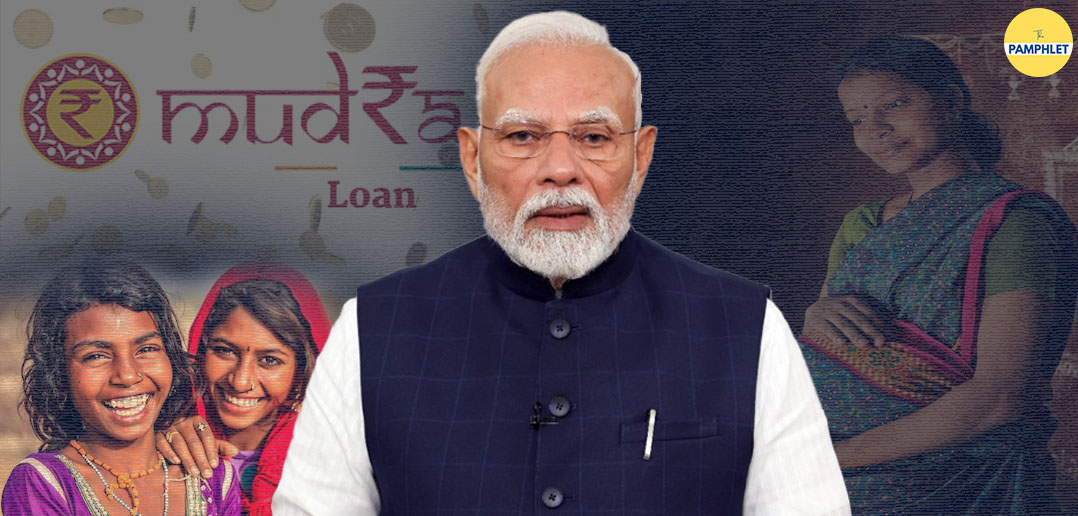
“गर्भस्थे चैव जन्तौ च वृत्तिं सृजति वै विधिः…”
Rooted deeply in Sanatan Dharma is the eternal truth that the Cosmic order (vidhih) designs a soul’s sustenance well before it enters the physical world; a design mirrored beautifully in how a mother’s milk precedes a newborn’s first breath.
Over the last 12 years , Indian governance has attempted to operationalise this timeless philosophy into a modern, state-backed reality. Welfare is no longer a series of isolated political handouts; it has been re-engineered into an automated, infrastructure-level companion tracking a citizen’s entire life journey. From the first heartbeat to the final flame, this is the story of Womb to Welfare: How good governance met the citizen at every milestone.
The state’s intervention begins before the child even draws their first breath. Historically, rural welfare was reactionary, waiting for a citizen to fall into distress. Today, the system is predictive. The core focus here is shifting the very locus of birth from unsafe, unmonitored settings into a structured, digital medical ecosystem.
The micro-details of onboarding life:
As the child grows, the state’s role shifts from biological tracking to structural stability. The underlying governance philosophy is simple: a child cannot learn, stay healthy, or break the cycle of poverty if their domestic container is constantly precarious.
Rewriting the Domestic Blueprint:
Act III: The velocity (youth to livelihood)
This phase marks the most visible paradigm shift of the last 12 years: the complete democratisation of the marketplace and the weaponisation of economic mobility. Welfare transitions from keeping citizens afloat to launching them into the formal grid.
When global macroeconomic shocks, pandemics, or sudden medical emergencies strike a household, the state shifts roles from a growth facilitator to an absolute shock absorber. The objective is to stop a family from sliding backwards into poverty due to a single catastrophic event.
The Frictionless Safety Net:
The lifecycle framework concludes by ensuring old-age autonomy for informal labourers and maintaining absolute human dignity at the final moment of life, closing the circle precisely where Sanatan philosophy dictates.
The true baseline legacy of the last 12 years is a fundamental redefinition of what “sustenance” actually means in a modern society. Historically, survival for millions of Indians meant navigating an agonising, lifelong friction. To get a basic birth certificate, to prove a medical emergency, to secure a crop loan, or to claim a relative’s funeral aid required a citizen to cross an adversarial terrain of middlemen, physical offices, and political patronage.
The profound shift of this decade is that the state made life easy by making it automatic.
By translating welfare into sterile lines of code, unconditional banking triggers, and real-time smartphone registries, governance stopped being an event you had to beg for. Sustenance was woven directly into the state’s background infrastructure. Just as the ancient verse from the Hitopadesha recognises that nature builds the mechanism for a child’s survival before they arrive, this digital lifecycle architecture ensures that the modern Indian state is already waiting for its citizens at every crossroad; quietly anchoring their dignity from the first heartbeat in the womb to the final ash of the pyre.