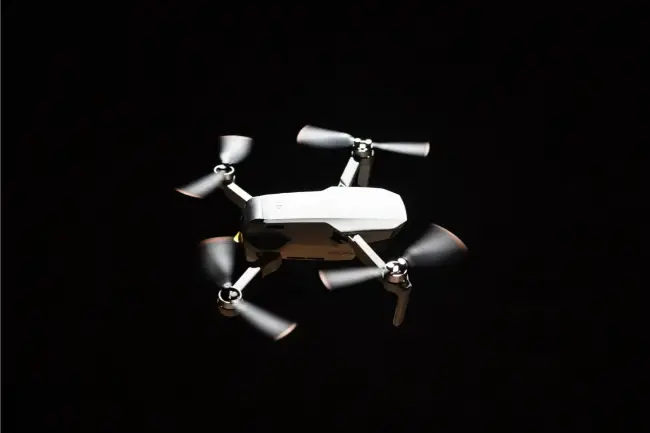
A generation ago the drone industry didn’t exist. Today it’s pilots in the cockpit that are vanishing. Currently valued at $36.41 billion, the military drone sector is projected to triple by 2030. Meanwhile, the consumer drone market is set to more than double. This growth reflects drones' diverse applications and increasing accessibility.
Nations are strategically boosting domestic dual-use (military and civilian) drone production and building complex international trade networks for advanced systems.
China’s DJI dominates the consumer and commercial drone space, along with US firms General Atomics, Northrop Grumman, and AeroVironment. These companies have blazed trails through complicated trade policies and geopolitical tensions, that follow-on competitors can use to their advantage. This is a fast moving trade space, maybe moving even faster than the drones themselves.
The strategic use of drones is reshaping global power play and alliances:
Sanctions, such as those by the US against entities aiding drone technology transfer to Russia, illustrate the difficulty of making trade embargos stick. Drone proliferation in concert with these steeply rising trade numbers is probably unavoidable. The question is when will drones and their manufacturing components become commodified to the point where they can’t be controlled. Are drones the AK-47 with wings? Emerging alliances around drone technology, like the US-led Partnership for Drone Competitiveness, are at best a temporary brake on proliferation even as they accelerate technological innovation.
The debate on AI autonomous drones, a convergence of technology, economics, and geopolitics, features nations seeking legal limits at the UN against the resistance of powers like the U.S., China, and Russia. This will significantly impact drone technology's future in military and civilian use.
Drones are increasingly prevalent in civilian sectors, driven by technological advancements, these growing sectors may eventually outpace the importance of military sales:
The consumer drone market is experiencing significant growth, with North America leading and the Asia Pacific region expanding to catch up. Collaborations, like the recently announced partnership between Montana based Skyfish and Japan’s Sony Electronics (with huge US based assets), are enhancing drone capabilities, further propelling market growth.
Drones symbolize a technological leap not unlike the 20th century military-to-civilian transition of aviation, electronics, computers and communications. Drones are the leading example of this transition in the 21st century. As their use in agriculture and environmental monitoring expands, they offer solutions to contemporary challenges like sustainable agriculture and climate change mitigation. However, drone warfare and its “fire and forget” tactical ease of operation will demand responsible innovation, with ethical considerations and international cooperation. Adapting strategies and policies to ensure the drone sector’s positive contribution to global stability and peace will be a principal challenge of this century.